
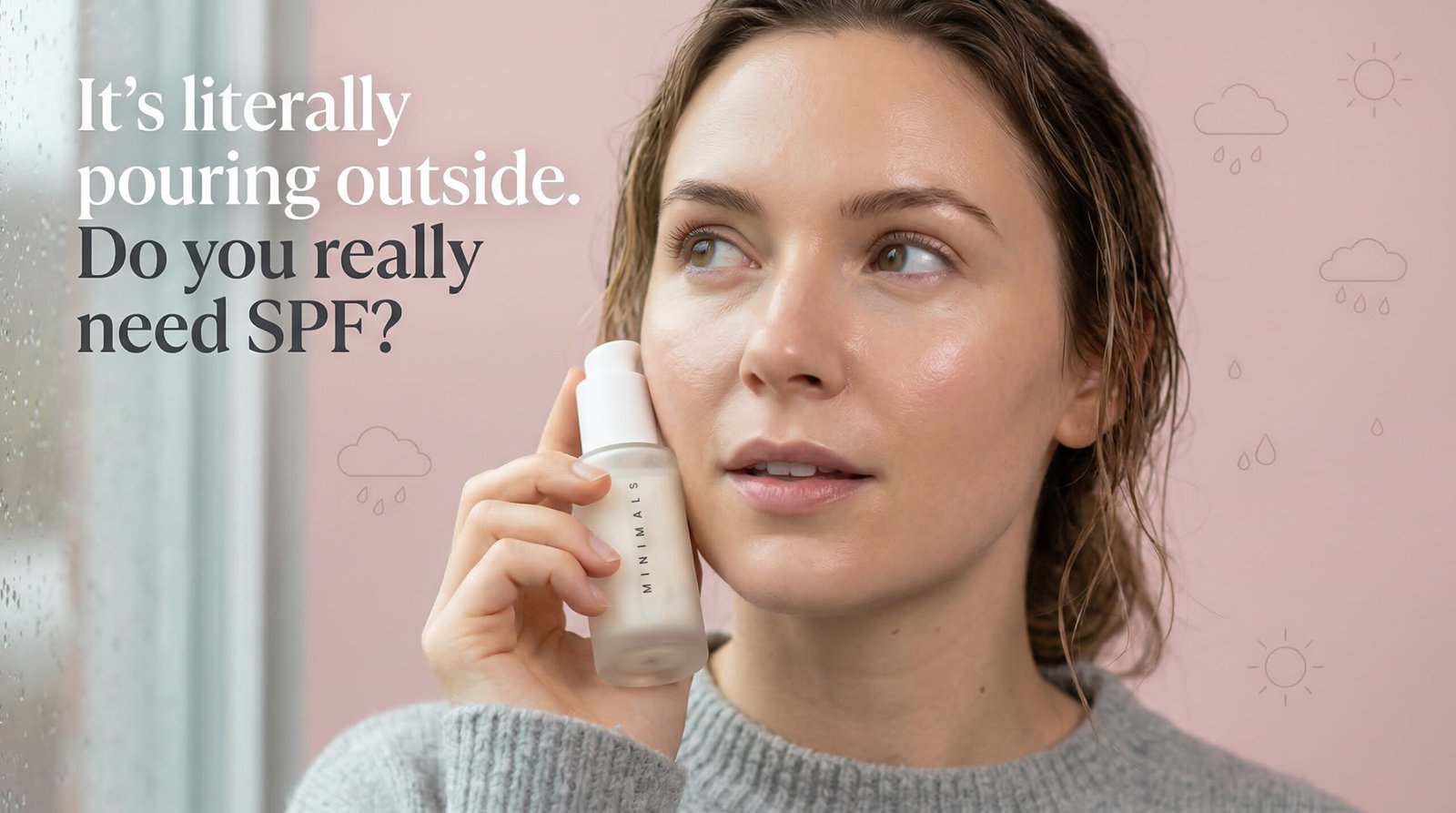
A rainy day reality check
I’m sitting here watching the rain streak down the window, and honestly? The last thing on my mind is sunscreen. It’s gray. It’s gloomy. The sun hasn’t made an appearance all day.
You’re probably looking at your SPF bottle on the bathroom counter and thinking, “Not today. I’ll save it for the beach.”
It feels logical, right? If you can’t see the sun, it can’t see you.
But there’s a little more to the story than what we see through the clouds.
The honest truth
Here’s the thing: clouds are excellent at blocking light, but they’re actually pretty bad at blocking UV rays.
It’s one of those annoying “skincare rules” that feels like a marketing ploy, but it’s actually just physics.
Even on the dreariest, most rain-soaked Tuesday, those rays are still making their way down to your skin.
It’s not about getting a tan or avoiding a burn today.
It’s about the quiet, invisible stuff that happens over time.
Think of it like a slow leak in a faucet. You don’t notice the water bill going up after one hour, but after a year? It adds up.
SPF on a rainy day isn’t about the now. It’s about how your skin feels five or ten years from now.
What’s actually happening
To keep it simple, the sun sends out two main types of “energy” that reach us: UVA and UVB.
Think of UVB as the “Burn” rays. These are the ones that give you a painful red sunburn in July. Clouds actually do block a good chunk of these. That’s why you rarely get a sunburn when it’s pouring rain.
Then there are UVA rays. Think of these as the “Aging” rays.
These guys are persistent. They are longer, stronger, and much more stubborn.
Clouds? They breeze right through them. Glass windows? They pass through those, too.
Up to 80% of these rays still reach your skin even when the sky looks like a wet wool blanket.
They don’t hurt. They don’t make your skin feel hot. They just quietly break down the collagen that keeps your skin bouncy and firm.
How to handle it
You don’t need a complicated 10-step routine just because it’s raining.
In fact, we believe the simpler you keep it, the more likely you are to actually do it.
Here is how to handle protection without the fuss:
Most weather apps show this. If it’s 3 or higher, your skin is definitely feeling it.
If you’re covered in a raincoat and boots, don’t worry about your body. Just focus on your face, neck, and the backs of your hands.
If you hate the feeling of heavy beach sunscreen, find a lightweight daily version.
Most weather apps show this. If it’s 3 or higher, your skin is definitely feeling it.
Common mistakes we all make
We’ve all been there, but here are a few things to keep in mind:
A simple rainy day checklist
Frequently Asked Questions
Usually, no. If you applied it in the morning and you aren’t sweating or sitting directly in a sunbeam by a window for hours, one application is generally enough for a rainy day.
Most doctors agree that even with SPF, enough UV rays reach your skin to help with Vitamin D. Plus, you can get it from your diet or supplements if you’re worried.
It offers some protection against UVB (the burning rays), but very little against UVA (the aging rays).
Yes. SPF 30 is a great sweet spot for daily wear. It blocks about 97% of UV rays, which is plenty for a day without direct, harsh sunlight.
Yes, but look for a “non-comedogenic” or oil-free formula. Sun damage can actually make acne scars stay dark for longer, so SPF helps keep your skin tone even.
Closing thought
At the end of the day, skincare shouldn’t feel like a list of scary rules.
It’s just about taking care of the one layer of skin you’ve got.
The rain might be falling and the sky might be gray, but your skin is still working hard to protect you. A little SPF is just your way of saying thanks.
Keep it simple. Don’t overthink it.
Sometimes, the best thing you can do for your skin is the smallest thing.