
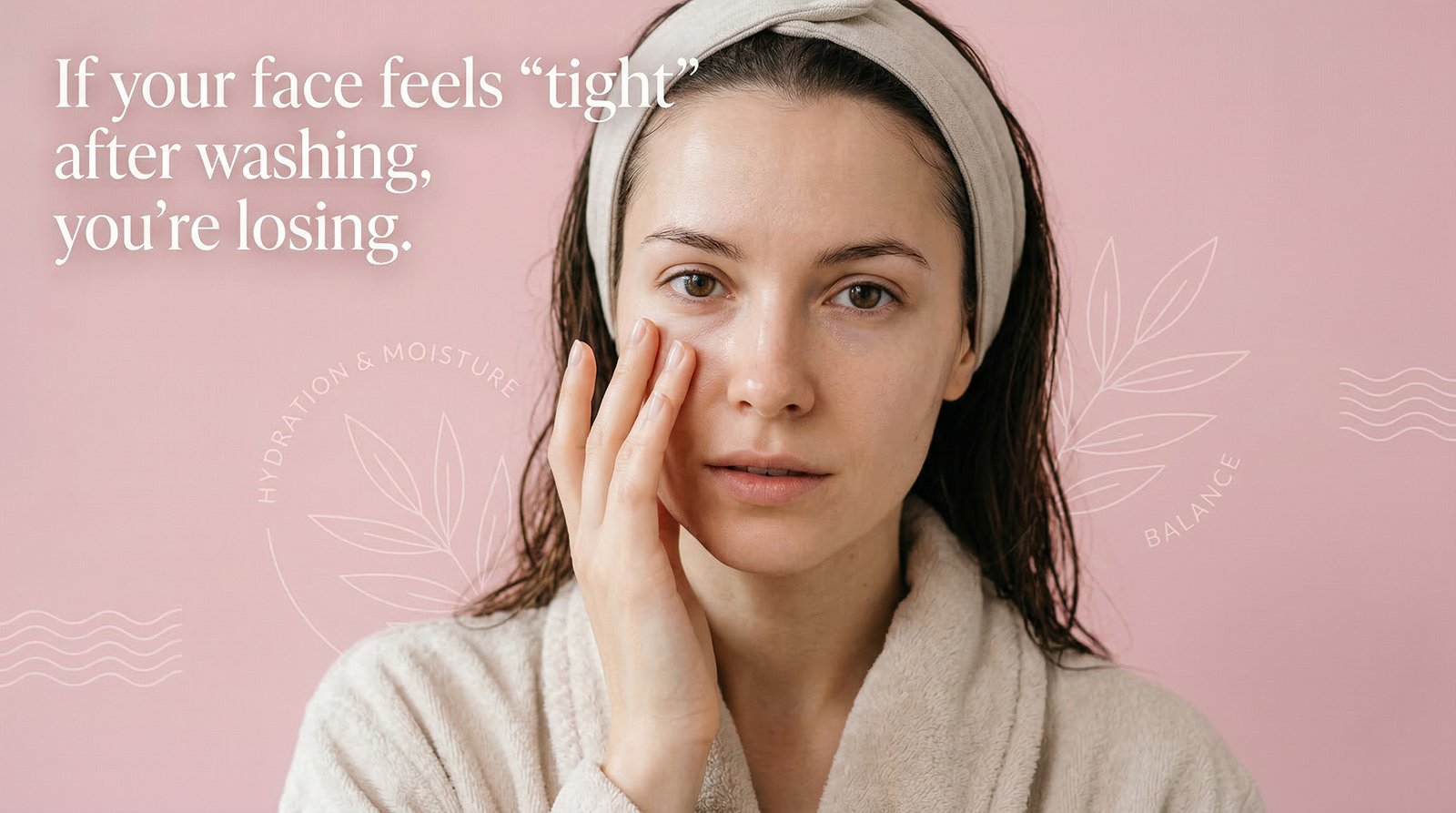
If Your Routine Feels Complicated, That’s Exactly Why Sunscreen Fails You
The Ugly Truth About Why Your Sunscreen Feels Like Literal Grease
You squeeze out the recommended amount. You rub it in like the dermatologist said. And within minutes your face feels like it’s been basted in olive oil. Not dewy. Not “natural glow.” Straight-up greasy. You blot. You powder. You swear you’ll find a better one tomorrow. But tomorrow it’s the same story. Here’s the part no one says out loud: It’s not just “your skin type.” It’s not that you’re “oily.” And it’s definitely not that sunscreen is supposed to feel this way.
Something deeper is happening. And once you see it, you can’t unsee it.
The real reason your sunscreen feels disgusting
UV filters chemical or mineral don’t dissolve in water. They dissolve in oils. Or they are oils. That’s not marketing spin. That’s basic formulation chemistry. To keep your skin from burning, brands load formulas with emollients, esters, and silicones so the filters stay stable and spread evenly.
Result? A thick, occlusive film that sits on top instead of sinking in. But here’s where your skin enters the chat. If your barrier is already compromised, that film doesn’t just sit there politely. It slides, pills, and turns into a shiny mess by 11 a.m.
Your Damaged Skin Barrier Is Why Sunscreen Feels Greasy and Heavy
Your skin barrier is the missing piece. Picture it as a brick wall. The bricks are your skin cells. The mortar? Ceramides, cholesterol, and fatty acids.
When the mortar is solid, sunscreen spreads thin, sinks in nicely, and vanishes into your routine.
When it’s cracked from harsh cleansers, acids, hot water, stress, or pollution water escapes fast. That’s TEWL (Transepidermal Water Loss). Your skin panics and pumps out extra oil to seal the leaks. Then you layer on regular oily sunscreen. Boom instant grease. Your skin is fighting itself.
A 2023 study in the Journal of Cosmetic Dermatology showed that ceramide-containing sunscreens don’t just protect from UV. They actually boost hydration and repair the barrier with daily use. Regular ones without ceramides leave the wall broken and the greasy feeling untouched.
The over-cleansing trap most routines fall into
You wake up, foam cleanser, maybe an exfoliant. Nighttime: double cleanse, micellar water, another wash. Each time you strip the lipids and shift the pH. Your microbiome the good bacteria that keep inflammation in check gets collateral damage.
Disrupted microbiome = more inflammation = more oil production = sunscreen feels even greasier. It’s a quiet loop. You blame the SPF. The real villain was the 8 p.m. “deep clean.”
“Hydration” is not the same as moisture
This one trip everyone up.
Hydration = water pulled into the skin (humectants like glycerin or hyaluronic acid). Moisture = lipids that seal it in (ceramides, squalane, fatty acids).
You slather humectants thinking you’re fixing dryness. Without the seal, that water evaporates especially under an occlusive sunscreen. Your skin ends up tighter, then oilier, then you add more product. The counterintuitive truth: sometimes the greasiest-feeling sunscreen is your skin begging for more lipids, not less product. It’s trying to patch the wall with whatever you give it.
A proper barrier-first approach stops the panic before it starts.
“Hydration” is not the same as moisture
This one trip everyone up.
Hydration = water pulled into the skin (humectants like glycerin or hyaluronic acid). Moisture = lipids that seal it in (ceramides, squalane, fatty acids).
You slather humectants thinking you’re fixing dryness. Without the seal, that water evaporates especially under an occlusive sunscreen. Your skin ends up tighter, then oilier, then you add more product. The counterintuitive truth: sometimes the greasiest-feeling sunscreen is your skin begging for more lipids, not less product. It’s trying to patch the wall with whatever you give it.
A proper barrier-first approach stops the panic before it starts.
Why layering actives quietly wrecks everything
Retinol at night. Vitamin C in the morning. Exfoliating acids three times a week. Then sunscreen on top of an already irritated, thinned barrier. Each active pushes the skin to turnover faster. But turnover without repair is just controlled damage.
The inflammation loop kicks in. TEWL rises. Oil production spikes. Sunscreen becomes the final straw that makes your face look like a deep-fried snack.
Science backs this: UV exposure itself alters ceramide composition and weakens the barrier. A broad-spectrum sunscreen with ceramides can stop that shift cold, according to ex-vivo research published in the Journal of Drugs in Dermatology.
Most drugstore SPFs? They don’t bother with the repair part.
The microbiome you’re accidentally nuking
Your skin’s bacteria aren’t just passengers they help regulate oil, calm inflammation, and even influence how products feel.
Harsh routines plus heavy, preservative-loaded sunscreens can tilt the balance. Some studies show short-term use doesn’t wreck things. Others flag potential shifts from certain mineral filters and emulsifiers.
Either way, when the ecosystem is off, your skin overreacts to everything including the one product you’re forced to wear daily.
The fix isn’t a probiotic spray. It’s stopping the daily assaults.
Skinimalism isn’t a trend. It’s damage control.
Fewer steps. Stronger barrier. Products that do more than one job.
When your skin isn’t fighting for survival, sunscreen stops feeling like punishment. It just… works. Sits right. Disappears.
No more blotting every hour. No more “I’ll just stay inside” excuses
If your routine feels complicated, that’s the problem
Be honest. How many products are you layering before you even reach for SPF?
If the answer is more than two, you’re probably making the greasiness worse.
Your skin doesn’t need a 10-step ritual. It needs consistency, repair, and breathing room. The complicated routines you see online? They’re selling you insecurity, not solutions.
The minimal routine that actually fixes this
Morning
gently, without stripping.
one serum that delivers ceramides and lipids.
a lightweight moisturizer that reinforces the barrier.
now your sunscreen can do its job without sliding around like it’s on ice.
Evening Same three steps. No double cleanse. No extra acids unless your skin is begging.
That’s it. Four steps max.
Your skin calms down. Oil production normalizes. Sunscreen stops feeling like a crime scene.
This is exactly why “Minimals” built their formulas the way they did. Their gentle cleanser removes the day without nuking your lipids or microbiome. Their repair serum floods the skin with the exact ceramides and fatty acids your barrier is missing. Their soothing lotion seals everything in a feather-light veil no heavy silicones, no pore-clogging film.
At this point, your skin doesn’t need another step. It needs a formula that already does both: repairs while it protects.
You’ll find the full lineup at minimals.com.co no filler, no 12-product kits, just the essentials that actually work.
You don’t need a new sunscreen. You need skin that can wear one.
Stop chasing the mythical “weightless matte SPF that never pills.” Start giving your barrier what it’s been missing for years.
The greasiness? It was never about the sunscreen alone. It was about everything happening underneath it.
Fix the foundation and the top layer stops fighting you.
Your skin has been trying to tell you this every single morning when you look in the mirror and feel that familiar slick.
Listen to it. Go minimal. Repair first.
The sunscreen will finally feel like protection instead of punishment.
And for the first time in years, you might actually keep it on.
Frequently Asked Questions
It’s not just you or your skin type. Damaged barriers cause high TEWL, making skin pump extra oil. Regular sunscreens add more oil on top and create that greasy mess.
TEWL means water escaping through a broken skin barrier. Your skin panics and overproduces oil. Layering sunscreen on top turns everything into grease.
Yes. Harsh cleansers strip your lipids and mess up your microbiome. This triggers more oil and inflammation, so even good sunscreen feels heavy and sludgy.
.
No. Hydration pulls water in, but without lipids to seal it, water evaporates fast especially under sunscreen. Your skin then feels tight then oily.
Closing thought
You don’t need a fancy new sunscreen. You need skin that can actually wear one without turning into an oil slick.
The greasiness was never really about the SPF. It was your barrier quietly screaming for help while you kept attacking it with harsh routines and too many layers.
Stop chasing complicated 10-step rituals. Start repairing first. Cleanse gently. Feed your skin the ceramides and lipids it’s missing. Keep it simple.
When your barrier feels safe, sunscreen finally stops feeling like punishment. It just works spreads thin, sinks in, and disappears.
Your skin has been trying to tell you this every single morning. Listen to it.
Go minimal. Repair first. You’ll be surprised how much better everything feels including that sunscreen you used to hate.