
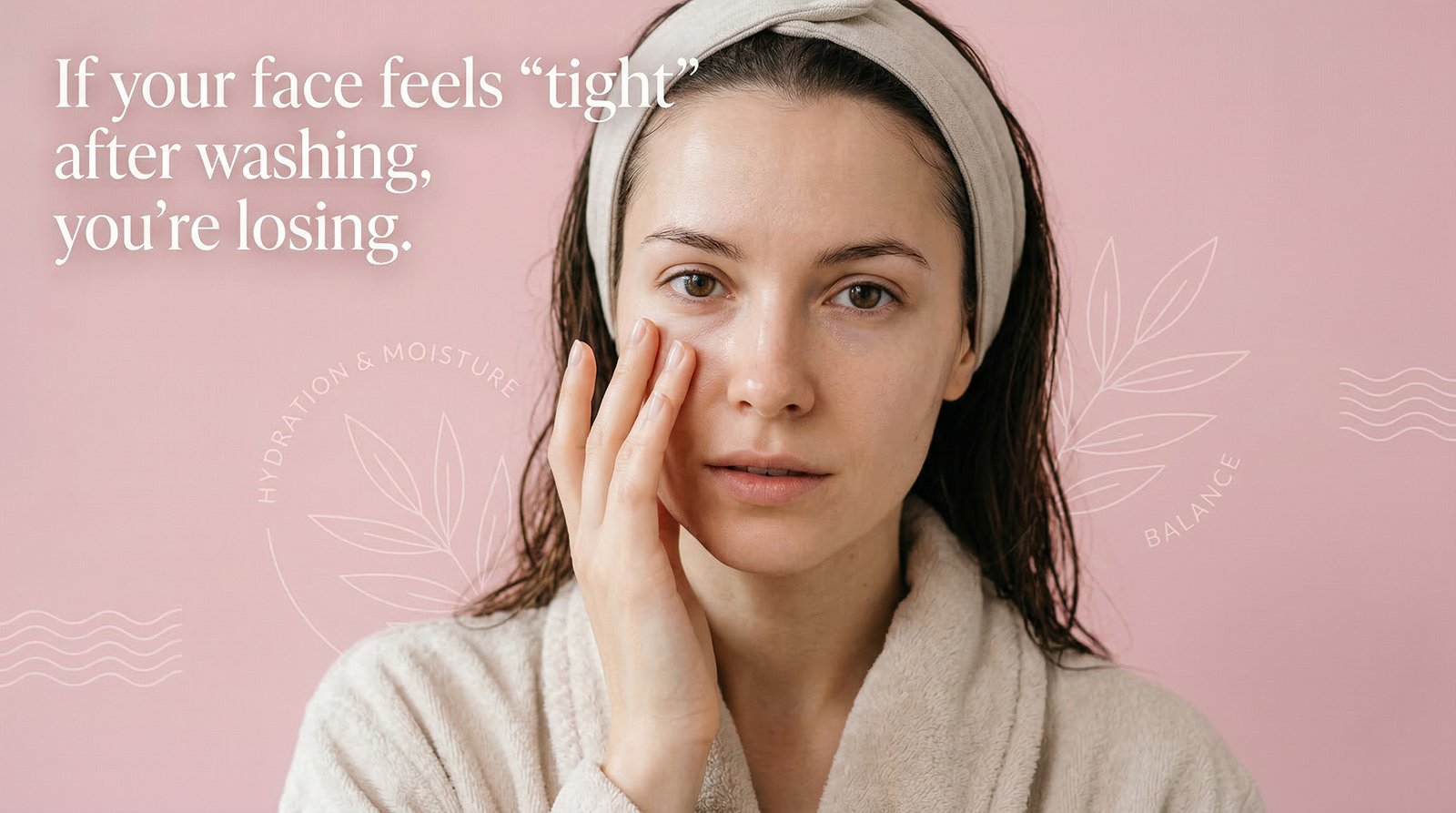
Understanding preservatives vs. mold risks helps them pick safer skincare that prevents contamination without unnecessary irritation.
The Preservative Panic Is Ruining Your Skin (And Mold Is Winning)
You avoided parabens. You switched to “natural.” You paid more for the “clean” formula. And somewhere in your bathroom right now, there’s a jar of something growing things you can’t see. This isn’t a scare tactic. It’s microbiology. And the beauty industry spent the last decade teaching you to fear the wrong thing so thoroughly that most people are now one “preservative-free” moisturizer away from a full-blown skin infection they’ll blame on stress.
Here’s the real problem: when you don’t understand what preservatives actually do, you make choices that feel safe but aren’t. You end up with contaminated products, a disrupted microbiome, a broken barrier, and a routine that’s quietly causing the inflammation you’ve been trying to fix for months.
This post is for everyone who’s been misled. Which, if you’ve spent any time in “clean beauty” spaces, is probably you.
"Preservative-Free" Doesn't Mean Safe. It Means Unprotected.
Let’s start with the thing no one wants to say directly. A product without effective preservation is a product waiting to be colonized. Water + organic ingredients + your fingers = a perfect culture medium for bacteria, yeast, and mold. That’s not fear-mongering. That’s basic microbiology. The moment you open a jar, you’ve introduced air. You’ve introduced microbes from your skin. If the formula isn’t adequately preserved, those microbes don’t just sit there they multiply. In some cases, within days. In others, within weeks. Either way, you’re applying the result to your face.
Contaminated cosmetics aren’t rare. A 2019 study published in the Journal of Applied Microbiology found that 79% of used cosmetics including lip glosses and mascaras were contaminated with potentially pathogenic bacteria, including Staphylococcus aureus and E. coli. Products marketed as “natural” or without conventional preservatives showed the highest contamination rates.
Read that again. The products positioned as cleaner were dirtier.
What Mold in Your Skincare Actually Does to Your Skin Barrier
Your skin barrier is a lipid matrix ceramides, cholesterol, fatty acids arranged in what researchers describe as a “brick and mortar” structure. Its job is to keep water in and pathogens out. When it’s intact, your skin looks calm, feels comfortable, and doesn’t overreact. When microbial contamination enters the picture, that barrier gets challenged from the outside at the same time your immune system is reacting from within. The result is inflammation. Not the dramatic, obvious kind the low-grade, persistent kind that shows up as redness, sensitivity, small bumps, or that feeling of your skin being “off” without a clear reason.
Research published in the Journal of Investigative Dermatology has consistently shown that transepidermal water loss (TEWL) the rate at which your skin loses moisture increases significantly when the barrier is compromised. Contaminated or irritating products accelerate that damage. And once TEWL climbs, your skin becomes more permeable to everything: more irritants, more allergens, more microbial penetration.
This is the inflammation loop no one talks about. Bad product → barrier disruption → increased sensitivity → more reactions → you blame your skin type instead of your shelf.
Your Skin's Microbiome Is Not Your Enemy. Your Routine Might Be.
Your skin hosts approximately one trillion microorganisms. That’s not a problem. That’s a feature.
The skin microbiome dominated by Cutibacterium acnes (formerly Propionibacterium acnes), Staphylococcus epidermidis, and various Malassezia species works in equilibrium. When that balance holds, your skin manages itself. When it’s disrupted, you get acne, eczema flares, rosacea triggers, and a face that seems to react to everything.
Here’s the counterintuitive part: some of the “gentle” products marketed for sensitive skin are the most microbiome-disruptive things on the market. Antibacterial cleansers, high-alcohol toners, and broad-spectrum antimicrobial actives don’t distinguish between harmful microbes and beneficial ones. They carpet-bomb your skin’s ecosystem. And when the beneficial bacteria are gone the ones that produce antimicrobial peptides, regulate pH, and keep pathogenic species in check the opportunistic bacteria move in. The same bacteria that contaminate poorly preserved products now find a depleted, low-resistance environment to colonize.
You over-sanitized your skin into vulnerability. And now a contaminated “natural” product is exploiting exactly the gap you created.
Why Layering Too Many Actives Makes the Contamination Problem Worse
You’re probably using more actives than you realize. Vitamin C in the morning. Niacinamide after. Retinol at night. An AHA exfoliant a few times a week. Maybe a BHA in between.
Here’s what that does: each active you layer changes your skin’s pH, disrupts the surface microenvironment, and creates micro-inflammation that signals your immune system to stay on high alert. Your barrier is perpetually in repair mode. Now introduce a contaminated moisturizer into that routine. The barrier that would normally intercept foreign microbes is compromised. The microbiome that would normally compete with pathogens is depleted. The skin that should mount a calm, efficient defense is already exhausted from managing five actives.
NIH-published research on cosmetic ingredient interactions has highlighted that combining multiple actives particularly those that alter pH can destabilize preservation efficacy within the formula itself. An acidic vitamin C serum applied before a pH-sensitive preservative system can reduce that preservative’s effectiveness by the time it’s absorbed.
You’re not just overloading your skin. You’re potentially degrading the preservation of whatever comes next.
This is where skinimalism stops being a trend and starts being biology.
The "Natural Preservative" Is Often Neither
Essential oils. Rosemary extract. Vitamin E. Grapefruit seed extract. These are what you’ll find in products marketed as “preserved naturally.”
Let’s be precise about what they actually do.
Vitamin E (tocopherol) is an antioxidant. It prevents oxidative rancidity in oils. It is not an antimicrobial preservative. It does not inhibit bacterial or fungal growth in any meaningful way.
Rosemary extract has some antioxidant and mild antimicrobial properties in concentrations far higher than cosmetic formulas typically use. At the levels where it’s effective as a preservative, it becomes a significant sensitizer. Most brands use it at levels where it smells nice and does very little.
Grapefruit seed extract has been repeatedly tested, and multiple peer-reviewed studies have found that its antimicrobial activity comes almost entirely from synthetic benzethonium chloride contamination in commercial extracts not the grapefruit. When you remove that contamination, the preservative effect essentially disappears.
You paid for “natural preservation.” You got marketing.
The products doing this often in apothecary jars with soft-focus branding and “made fresh in small batches” copy are the products most likely to arrive at your door already compromised, or degrade in your bathroom within weeks of opening.
What Good Preservation Actually Looks Like (And Why It's Not the Enemy)
Effective preservation doesn’t require a chemistry degree to understand. You need a few things: broad-spectrum activity against bacteria and fungi, stability across pH ranges, and low sensitization potential at use concentrations.
Phenoxyethanol does this reasonably well, though it can be irritating at higher concentrations (above 0.5 to 1%). Ethylhexylglycerin is often used alongside it to improve efficacy at lower concentrations. Sodium benzoate and potassium sorbate work well in acidic formulas. Caprylyl glycol has good antimicrobial properties and also functions as a humectant.
None of these are scary. All of them are doing necessary work.
The formula that keeps your ceramide moisturizer stable for 24 months, prevents the bacteria from your fingertips colonizing your serum, and ensures the active you paid for is still active when you use it that formula requires preservation. Good preservation. The kind that doesn’t make headlines because it quietly does its job.
At “Minimals”, formulas are built around minimal ingredient counts for exactly this reason: fewer ingredients means less interaction complexity, more stability, and a lower risk of sensitization including from preservation. A ceramide-rich barrier moisturizer with effective, minimal preservation is doing more for your skin than a 40-ingredient “natural” jar doing nothing but growing things.
If Your Routine Feels Complicated, That's the Problem
Real talk for a second.
If you’re spending more than five minutes on skincare every morning, you’re probably not optimizing. You’re compensating. You’re adding more steps to manage the side effects of the steps you already added.
Breakouts from barrier damage → add a treatment serum. Dryness from over-exfoliation → add a hydrating layer. Sensitivity from fragrance → add a calming step. Contaminated moisturizer making things worse → add more products to fix it.
This is how a routine becomes eight steps. Not because your skin needs eight steps, but because step two broke something that steps three through eight are trying to repair. The truth about preservatives and mold isn’t separate from the broader skinimalism principle it’s the foundation of it. You can’t build a minimal, effective routine on products that are either under-preserved and contaminated or formulated with ingredients that compromise your barrier to avoid using the conventional preservatives that actually work.
Less is only better when less is right. And right means stable, effective, and genuinely good for your skin biology.
The Routine That Actually Works
This isn’t complicated. That’s the point.
A low-pH, non-stripping cleanser. No fragrance. No antimicrobials. Just clean. If it leaves your skin feeling tight, it broke your barrier. Minimals’ gentle amino acid cleanser runs close to skin’s natural pH, preserves the acid mantle, and doesn’t touch your microbiome.
One active. Not five. If your skin is compromised reactive, dry, inflamed this step might not belong in your routine right now at all. A stabilized niacinamide or low-percentage retinoid applied to an intact barrier is therapy. Applied to a damaged one, it’s more damage.
A ceramide-forward moisturizer with effective preservation, minimal fragrance, and ingredients your barrier actually recognizes. This is where barrier repair happens. This is where TEWL drops. This is the step most people underinvest in because they’ve blown their budget on actives. Don’t.
SPF. Broad spectrum. Every morning. The UV damage that accelerates barrier degradation, depletes ceramides, and compromises your microbiome doesn’t wait for you to feel ready.
That’s it. Four steps. Two in the morning, three at night. A routine that doesn’t fight itself.
The Honest Version of the Conversation No One's Having
The “clean beauty” movement started with a real concern unnecessary ingredients, potential sensitizers, lack of transparency in formulation. That concern was valid. But it got hijacked. By brands with no formulation expertise. By influencers who learned the word “paraben” and stopped there. By marketing that made “free-from” a selling point without asking what happens in the absence of those ingredients.
What happens is mold. What happens is bacteria. What happens is contaminated products applied to skin that’s already been damaged by the over-complicated routine the influencer sold you three steps before this one. Understanding preservatives doesn’t require a biochemistry degree. It requires the willingness to ask: what is this actually doing, and what would happen without it?
The people who benefit most from this truth are the ones who’ve been burned literally and figuratively by the “natural” promise. The ones whose skin got worse on a clean routine. The ones whose “safe” products caused the sensitivity they were trying to avoid. The ones who switched brands six times in a year and still can’t figure out why their skin won’t calm down.
You benefit. Because now you know the panic was manufactured and the mold is real.
Common mistakes we all make
A simple "Preservative-free checklist" checklist
Frequently Asked Questions
Only for completely water-free products like oils, balms, and butters.
Usually no. Vitamin E, rosemary, and grapefruit seed extract are weak or misleading for stopping bacteria and mold.
1 to 3 months max after opening. Finish small sizes quickly.
Skip it. High risk of contamination and skin infections.
Change in smell, color, texture, or appearance throw it out immediately.
Closing thought
Your skin doesn’t want more products. It wants the right ones, used consistently, that work together instead of against each other. It wants preservation that actually works. Formulas that respect its pH. Actives introduced one at a time, on a barrier that’s ready to receive them. Cleansers that clean without stripping. Moisturizers that seal without suffocating.
That’s the Minimals premise. Not minimalism as an aesthetic. Minimalism as a response to an industry that keeps adding complexity to problems it caused.
Explore the full range at minimals.com.co. No ten-step kits. No kits at all, honestly. Just formulas that do what they say, preserved correctly, and honest about every ingredient in them.
Your skin has been asking for this. You just didn’t know what it was asking for until now.
Don’t wait twenty minutes. Apply your moisturizer while your skin is still slightly damp to “lock in” that hydration.