
Clean skincare uses safe, non-toxic ingredients without harsh chemicals, while staying affordable through smart formulation, transparent branding, and accessible pricing.
What Makes Skincare 'Clean' and Affordable? (Hint: It's Not What the Industry Wants You to Think)
Your 10-step routine isn’t protecting your skin.
It’s quietly destroying it.
Not dramatically. Not overnight. But product by product, layer by layer, your barrier is taking a hit every single morning and night—and the worst part? You probably paid a lot of money for the privilege. The “clean beauty” conversation has been hijacked. By brands. By influencers. By a wellness industry that figured out people will pay $68 for a moisturizer if you put the word botanical on it. And “affordable” skincare? That’s become code for cheap-feeling, cheap-performing, and full of fillers your skin doesn’t recognize.
You deserve better than both. This is what clean and affordable actually means biologically, chemically, and practically. No fluff. No filler. Just what works.
The Word 'Clean' Has Been Quietly Weaponized Against You
Let’s start here, because this is where most people get lost.
“Clean beauty” has no legal definition. Not in the US. Not in Pakistan. Not in most of the world. It’s a marketing term full stop.
Brands can slap “clean” on a product that still contains fragrance, alcohol, or high concentrations of essential oils that are documented irritants. They do this because consumers equate “clean” with “safe,” and that equation isn’t always true. The real question isn’t whether an ingredient sounds natural. It’s whether it does something useful for your skin and whether it does it without triggering inflammation, barrier disruption, or microbiome imbalance.
Lavender oil is natural. It’s also a known skin sensitizer associated with allergic contact dermatitis in repeated exposure. Meanwhile, niacinamide a form of Vitamin B3 synthesized in a lab is one of the most comprehensively studied, barrier-supporting, inflammation-reducing ingredients in modern dermatology.
Which one is “cleaner”?
Clean doesn’t mean natural. Clean means purposeful, non-disruptive, and functional. Every ingredient should earn its place in the formula or it shouldn’t be there.
Your Skin Barrier Is Doing a Job Most Skincare Products Interrupt
Before we talk about what to put on your skin, you need to understand what your skin is already doing.
Your stratum corneum the outermost layer of skin functions like a brick wall. Skin cells (corneocytes) are the bricks. Lipids, including ceramides, cholesterol, and free fatty acids, are the mortar. This lipid matrix controls transepidermal water loss (TEWL) essentially, how much moisture escapes from your skin into the air around you. When this barrier is intact, your skin holds moisture, resists irritants, and manages low-grade inflammation quietly in the background. You don’t notice it working because it just… works.
When it’s compromised, everything changes.
Redness. Tightness. Breakouts that come from nowhere. That stinging sensation when you apply anything. These aren’t signs your skin is “purging” or “adjusting.” They’re distress signals and the products you’re using to fix it might be the exact reason it’s struggling.
Research published in the Journal of Investigative Dermatology confirms that disrupted barrier function correlates directly with increased skin sensitivity, impaired healing response, and a heightened inflammatory state. The solution isn’t more actives piled on top. It’s fewer, smarter ingredients that support what your skin is already trying to do.
This is the core of barrier-first skincare. Not a trend. A physiological truth.
The 'Hydration' Step That's Quietly Drying Your Skin Out
Here’s a counterintuitive one.
Humectants hyaluronic acid, glycerin, aloe vera attract water. That’s their mechanism. They pull moisture from the environment into the upper layers of your skin, temporarily plumping and softening it. But here’s the problem: in low-humidity environments, or when there’s no occlusive layer sealing things in, humectants pull moisture from inside your skin instead. They become a pump moving water from your deeper layers toward the surface where it evaporates. You’re applying something marketed as “deeply hydrating” and increasing TEWL in the process.
This is why “I drink so much water and my skin is still dry” is one of the most common complaints that no moisturiser seems to fix.
Hydration (water content in skin cells) and moisture (lipid content in your barrier) are entirely different things. Drinking water addresses neither. A hyaluronic acid serum with no occlusive on top addresses only one temporarily, and in the wrong direction if the air is dry.
What actually works is a moisture sandwich: a humectant layer to draw water into skin, sealed immediately with an emollient or occlusive that stops it from evaporating back out. Ceramides, squalane, shea these are the ingredients that lock the lipid matrix in place and let your barrier do its job.
You don’t need 12 products to achieve this. You need two, in the right order, with the right ingredients.
Over-Cleansing Is Wrecking Your Microbiome and Nobody Wants to Admit It
Your skin isn’t sterile. It supports approximately 1.8 trillion microorganisms bacteria, fungi, mites, viruses that collectively form your skin microbiome. This isn’t a hygiene problem. It’s an ecosystem, and it’s essential to skin health. A balanced microbiome protects against pathogenic bacteria (the kind actually linked to acne). It regulates your skin’s natural pH. It communicates with your immune system and helps calibrate inflammation. When it’s balanced, your skin is more resilient. When it’s disrupted dysbiosis you get breakouts, rosacea flares, eczema, and chronic sensitivity that no serum can fix.
What disrupts it? Your cleanser. Specifically: sodium lauryl sulfate, high-alcohol formulas, and cleaning your face too aggressively, too often.
Studies from the NIH’s National Library of Medicine confirm that surfactants stripping sebum also displace commensal bacterial populations the microorganisms that actively protect your skin. Strip them away, and you create an environment where the opportunistic, acne-causing bacteria thrive. If your cleanser makes your skin feel squeaky, tight, or visibly matte within minutes of washing that’s not clean. That’s stripped. And a stripped barrier will overproduce sebum to compensate, setting off an inflammation loop that leads directly to the breakouts you were trying to prevent.
Your cleanser is supposed to remove SPF, pollution, and excess oil. Not your skin’s entire defense system.
“Minimals” gentle, pH-balanced cleanser was formulated around this exact principle low-irritation surfactants, no fragrance, no unnecessary emulsifiers. It cleans without changing your skin’s chemistry. That sounds boring. It’s also the most important thing a cleanser can do.
The Actives Overload Nobody Warns You About (Until Your Face Is on Fire)
You’ve probably built what the internet calls a “routine.” A vitamin C serum in the morning. A niacinamide toner. A retinol at night. A BHA exfoliant twice a week. Maybe an AHA mask thrown in on Sundays.
Here’s what’s actually happening inside your skin.
Every active triggers a cellular response. Vitamin C is acidic and pro-oxidant at high concentrations it needs to be formulated at a pH of 3.5 or lower to be effective. Retinol accelerates cell turnover. BHAs dissolve the bonds between dead skin cells. When you layer all of these especially without proper barrier support between them you’re not enhancing their effects. You’re creating a compounding inflammatory state. Your skin can only process so much change at once. When you overload it, it doesn’t “adjust.” It mounts a defensive response: redness, flaking, increased sensitivity, and compromised barrier function. The cycle then continues because you interpret those symptoms as “skin needing more treatment.”
Research in Dermatology Times has flagged this pattern as an emerging clinical concern patients presenting with iatrogenic (self-induced) barrier damage from over-relying on prescription-strength actives and over-the-counter acids simultaneously.
The smarter move? Pick one active that addresses your primary concern. Use it consistently. Let your barrier recover between uses. The skin doesn’t respond to volume it responds to precision and patience.
Why Affordable Doesn't Mean Ineffective (It Actually Means Something Better)
Somewhere along the way, price became a proxy for quality in skincare. You probably believe at least a little that the more expensive the serum, the better it works. This is not how formulation science works. The most evidence-backed ingredients in skincare niacinamide, ceramides, hyaluronic acid, retinol, zinc, azelaic acid, vitamin C are not expensive to source or synthesize. The markup you see in luxury skincare covers: the jar, the packaging, the store placement, the influencer campaign, and the brand’s margin. None of that improves your skin. What actually drives efficacy in a formula is concentration and stability. A niacinamide serum with 10% active in a stable, appropriate base works. It doesn’t matter if it came in a frosted glass bottle with a magnetic lid or a plain pump from a brand you found online.
A review in the Journal of Clinical and Aesthetic Dermatology found that niacinamide at 5% concentration significantly improved barrier function, reduced sebum production, and decreased hyperpigmentation all without the irritation profile of stronger actives. And niacinamide costs pennies per gram to produce.
Affordable skincare done right means: high active concentration, minimal filler, no fragrance, appropriate preservative system, and stable pH. That’s the formula. Not the price tag.
If Your Routine Feels Complicated, That's Not a Sign It's Working
Let’s be direct for a moment.
If you need a colour-coded spreadsheet to manage your AM versus PM actives, your skin isn’t benefiting from that complexity. Your barrier is absorbing it.
Complicated routines are, in most cases, the result of product marketing rather than dermatological need. Each brand that enters your shelf wants you to believe its product fills a gap the last one left. After a while, you have 9 products doing variations of the same thing while your skin barrier slowly deteriorates under the weight of it. You’ve been told that more steps means more care. It means more chemical load, more fragrance exposure, more emulsifiers interacting, more pH imbalances between layers and more money spent. The real question is: what does your skin actually need? For most people, it’s this: something that cleans without stripping, something that treats the one thing that bothers you most, and something that seals and protects. Three products. That’s the baseline. Everything beyond that is optional and most of it is marketing.
The Minimal Routine Blueprint (Actually Simple, Actually Effective)
This isn’t about doing the bare minimum for the sake of it. It’s about being precise.
A gentle, low-pH cleanser that removes what needs to go—without taking your barrier lipids with it. Morning and night, the same product, no foam, no sulfates. If your skin feels different after cleansing in the AM versus PM, your cleanser is too aggressive. Find Minimals’ barrier-safe cleanser here.
One active. Just one. If you have acne-prone skin, niacinamide or azelaic acid. If you’re focused on texture and aging, a low-percentage retinol three nights a week, buffered in your moisturizer. If you have hyperpigmentation, a stable vitamin C in the morning. Pick your primary concern. Address it consistently. Don’t add the second active until the first has had 8 weeks to show results.
This is non-negotiable. Every routine ends with a moisturizer. Not because your skin is dry because every active, every cleanser, every environmental stressor increases TEWL slightly. An emollient-rich moisturizer with ceramides and squalane resets that. It tells your barrier it’s safe. It keeps your inflammatory response low so your actives can do their job without interference.
Minimals’ barrier-repair moisturizer does exactly thiss ceramides, fatty acids, and cholesterol in proportions that mimic your skin’s natural lipid profile. At this point, your skin doesn’t need another step. It needs a formula that speaks the same language as your barrier.
SPF is not optional. It’s the most evidence-backed anti-aging, anti-pigmentation, anti-inflammation intervention in skincare. An SPF 30–50 broad-spectrum formula applied every single morning will do more for your skin long-term than any serum you will ever buy. This isn’t debatable. The evidence from the Dermatology branch of the NIH has been consistent for decades.
Four steps. Clean. Treat. Seal. Protect. That’s the routine. That’s all of it.
The Real Definition of Clean and Affordable Skincare
Clean isn’t a vibe or an aesthetic or a price point.
Clean means: no fragrance (the number one cause of cosmetic contact dermatitis). No alcohol as a top-three ingredient. No essential oils marketed as “active botanicals” in concentrations that cause sensitization. No unnecessary silicones or PEGs if your skin is acne-prone. And clean means formulated for function where every ingredient has a specific job in the formula and does it without competing with the others. Affordable means: you’re paying for what goes on your skin, not for the glass jar it comes in. The skincare industry has a financial interest in complexity. More products, more steps, more problems to solve, more revenue. Brands don’t benefit from you having a three-step routine that works. They benefit from you believing your skin is one product away from being fixed.
It isn’t.
Your skin is remarkably capable of functioning well healing, regulating, protecting if you stop overwhelming it and give it the right foundation.
Less isn’t a compromise. In most cases, it’s the actual answer.
Common mistakes we all make
Here’s a tighter, more focused list of the biggest mistakes that damage your skin barrier and waste your money:
Most people think “clean” means natural or botanical. In reality, many natural ingredients (essential oils, fragrances) irritate skin, while effective lab-made ones like niacinamide and ceramides are far better. Mistake: Buying based on marketing words instead of actual function and science.
10-step routines, layering multiple acids, retinol, vitamin C, and niacinamide daily. This creates inflammation, weakens your barrier, and causes sensitivity, redness, and breakouts. Truth: Your skin responds better to fewer, well-chosen products.
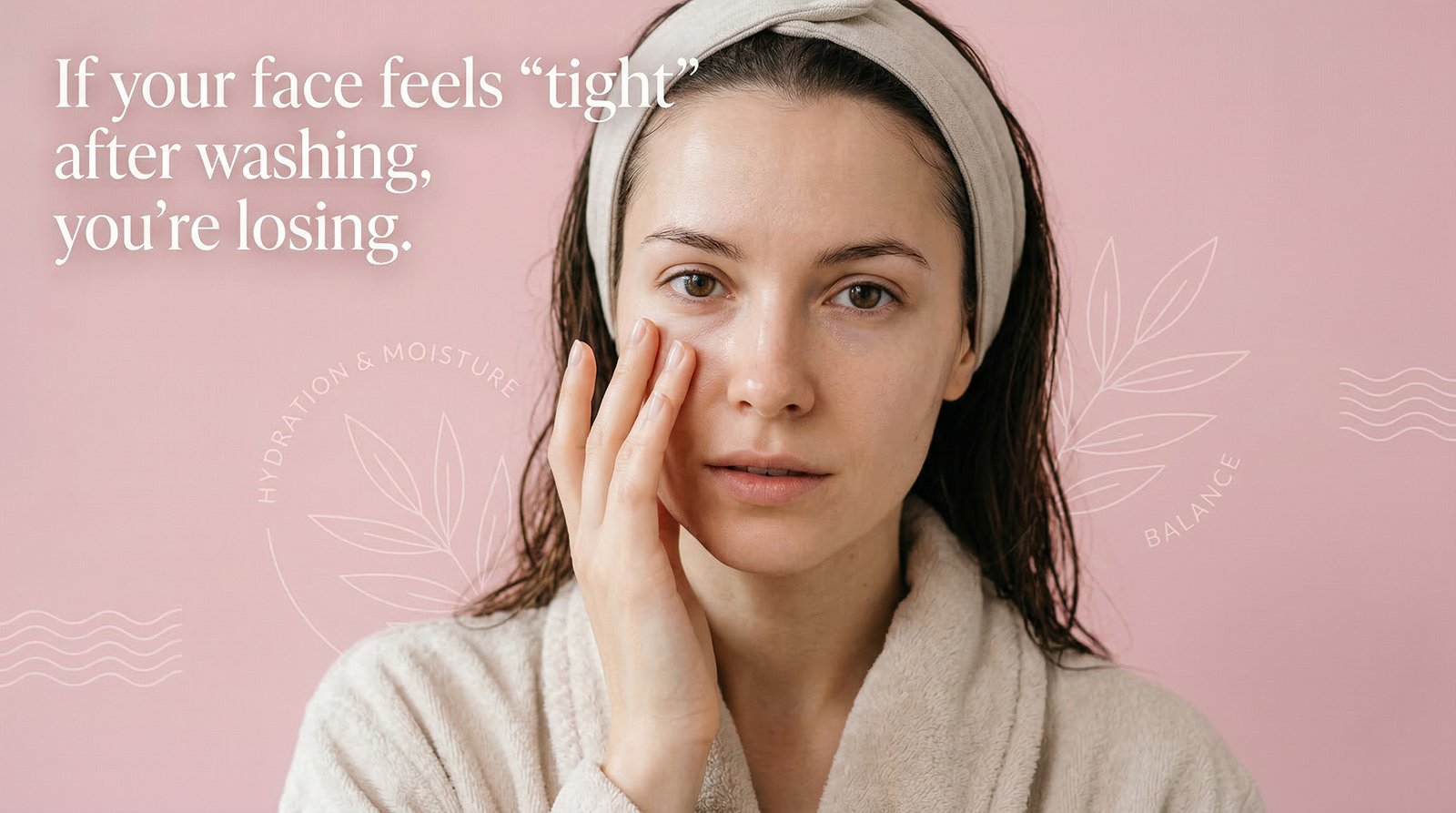
Foamy, sulfate-based cleansers that leave skin tight and squeaky clean. This strips your natural oils and disrupts the skin microbiome, causing rebound oiliness and irritation. Fix: Switch to a gentle, low-pH cleanser.
Using hyaluronic acid or glycerin serums alone (especially in Karachi’s dry AC or low-humidity conditions) without a moisturizer on top. Humectants can actually pull moisture out of your skin if not sealed. Fix: Always follow with a ceramide-rich moisturizer.
Paying premium prices for fancy packaging while ignoring concentration and formulation. Also constantly switching products because results aren’t instant. Skincare is about consistency and barrier repair, not price or speed. Truth: Simple, high-concentration, barrier-focused products usually outperform expensive complicated ones.
These five mistakes cover 80 to 90% of why most people’s skin isn’t improving.
Fix them by simplifying your routine: Gentle cleanse → One targeted active → Barrier moisturizer → SPF (AM).
Less really is more.
A simple "Clean & Affordable" checklist
Frequently Asked Questions
Clean means purposeful, non-disruptive, and functional ingredients that support your skin barrier without causing irritation. It does not mean natural or botanical. Many natural ingredients like essential oils can be irritating, while lab-made ones like niacinamide are often much cleaner and more effective.
Price doesn’t equal effectiveness. You’re often paying for packaging, marketing, and brand image not better ingredients. High-concentration, stable formulas with proven actives (niacinamide, ceramides) work better than luxury products full of fillers and fragrance.
Only 3 to 4 steps maximum:
More steps usually damage your skin barrier rather than improve it.
You’re likely using humectants (hyaluronic acid, glycerin) without sealing them in. In low-humidity or AC environments (common in Karachi), they can pull moisture out of your skin. Always follow with a ceramide-rich moisturizer.
If your skin feels tight, squeaky, or dry after cleansing, yes. Harsh cleansers strip your barrier and microbiome. Switch to a gentle, low-pH, non-foaming cleanser.
Closing thought
Explore Minimals’ full range of barrier-first, no-filler formulas at minimals.com.co. Every product in the range was built around one question: does this actually earn a place in your routine?
Most products don’t pass that test.
Ours do.