
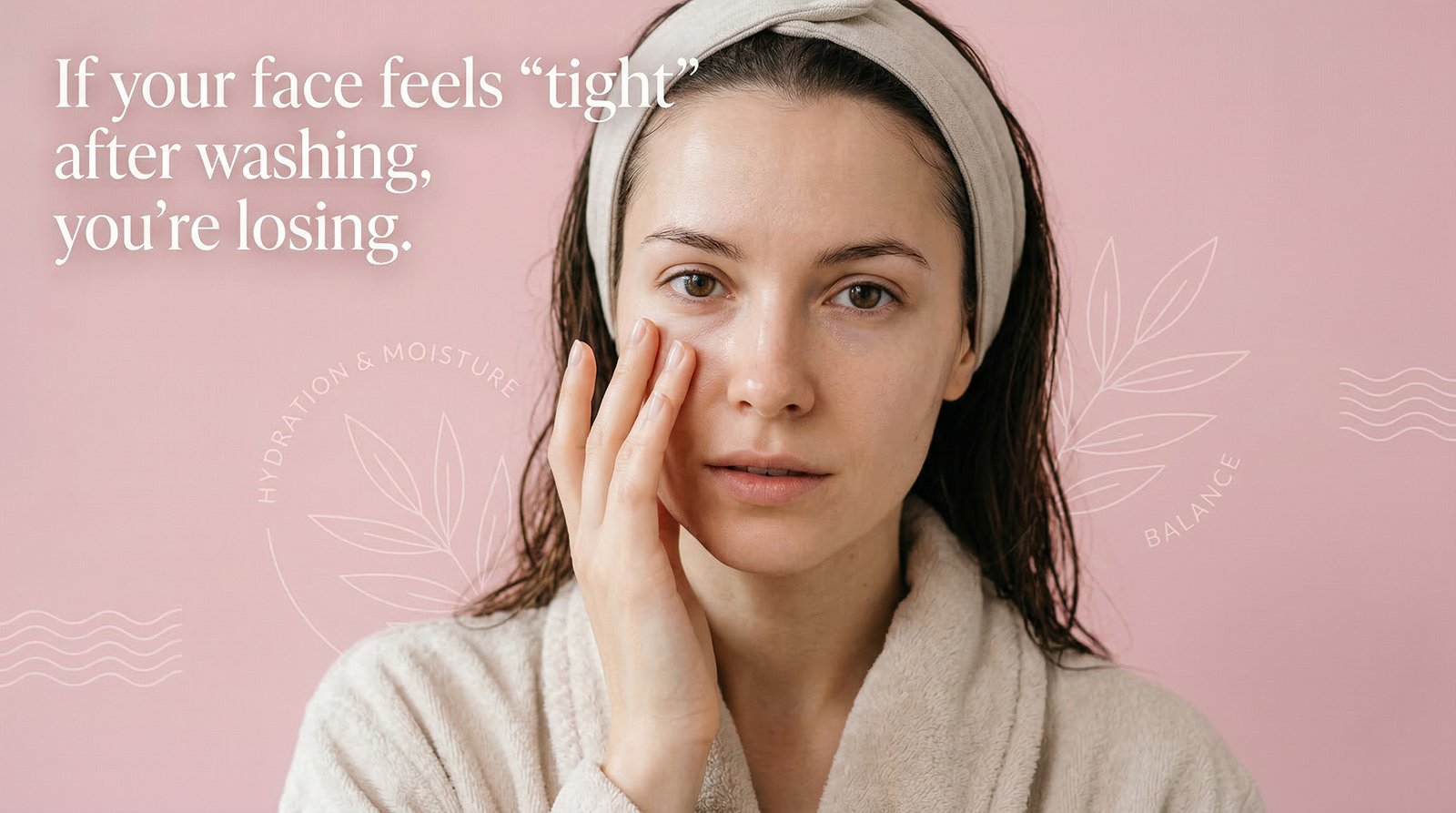
Busting the myth that high foam equals high performance and why your soap might be working harder than its bubbles suggest.
The Foam Fallacy: Why Your Barrier Is Paying for the Bubbles
Your cleanser foams up. It feels satisfying. You think: this must be working.
That’s the lie.
The skincare industry has trained you to equate bubbles with cleanliness. But those suds aren’t proof of clean skin. They’re proof of surfactants chemicals that strip oils, disrupt your barrier, and leave you chasing hydration you’ll never catch.
Your Skin Isn’t Dirty, It’s Delicate
Here’s the truth: your skin isn’t a greasy countertop that needs degreaser. It’s a living barrier.
The outer layer the stratum corneum is built like bricks and mortar. Bricks are dead skin cells. Mortar is lipids: ceramides, cholesterol, fatty acids. When you attack that mortar with harsh foaming cleansers, you don’t just remove dirt. You dissolve the very glue holding your barrier together.
Result? More water loss. More inflammation. More “sensitivity” you blame on hormones or weather.
The Suds Addiction You Didn’t Know You Had
Foam feels good because it tricks your brain. It’s sensory theater.
Surfactants like sodium lauryl sulfate explode into bubbles when mixed with water. They don’t measure cleanliness. They measure how aggressively your cleanser is stripping oils.
That tight, squeaky feeling after washing? That’s not “fresh.” That’s barrier damage.
Why Your Microbiome Hates Your Cleanser
Your skin isn’t just lipids and cells. It’s a microbiome millions of bacteria that regulate inflammation and help repair damage. Harsh foaming cleansers wipe them out. Bad bacteria thrive. Good bacteria retreat. You end up with redness, breakouts, or irritation you think needs more actives. In reality, your cleanser started the fire.
Hydration ≠ Moisture (The Counterintuitive Truth)
You can drown your skin in hyaluronic acid. You can layer seven serums. None of it matters if your barrier is cracked. Hydration is water content. Moisture is the ability to hold onto it.
Foaming cleansers increase transepidermal water loss (TEWL). That means even if you drink liters of water, your skin leaks it out faster than you can replace it.
The Myth of “Deep Clean”
You don’t need to strip your skin every night. You need to respect it.
Dermatology research shows that over-cleansing increases barrier permeability and inflammation (Journal of Investigative Dermatology). The more you chase “deep clean,” the more fragile your skin becomes.
If Your Routine Feels Complicated, That’s the Problem
Count your steps. More than four? You’re probably repairing damage you’re causing yourself.
The industry loves this cycle. Harsh cleanser → dry skin → more serums → more moisturizers → more dependency.
Minimal routines break the loop.
What Supple Skin Actually Needs
Supple skin isn’t about bubbles. It’s about low TEWL, intact lipids, and balanced water binding. Ceramides rebuild the mortar. Niacinamide supports ceramide production. Gentle cleansers respect the microbiome.
That’s the biology. Not the marketing.
Why Most “Gentle” Cleansers Still Fail You
Even products labeled “hydrating” often rely on foaming agents. They give you the illusion of clean while quietly eroding your barrier.
At this point, your skin doesn’t need another step. It needs a formula that already understands both sides of the equation.
That’s why Minimals cleansers skip the suds theater. They clean without stripping, respect your microbiome, and leave your barrier intact. See them here.
The Minimal Routine Blueprint
Evening Repair Mode
Gentle cleanse (no suds circus).
One targeted serum if needed (niacinamide, ceramides).
Moisturizer that seals water in.
Morning Protect Mode
Optional gentle cleanse.
Moisturizer.
Mineral sunscreen.
That’s it. Three or four products. Consistency beats complexity every time.
What Happens When You Stop Chasing Suds
Week 1-2: Skin feels different. Maybe tight as it recalibrates.
Week 3-4: TEWL drops. Skin looks calmer, less reactive.
Month 2+: Supple resilience. The kind where people ask what you’re doing differently even though you’re using fewer products.
The Ingredients Worth Your Attention
Ceramides + cholesterol: rebuild mortar.
Fatty acids: integrate lipids.
Niacinamide: calm inflammation, boost ceramides.
Squalane: mimic natural oils.
Glycerin: humectant that works when paired with sealers.
Skip the high-concentration actives screaming for attention. They’re distractions.
Common mistakes we all make
Here’s a Common Mistakes Checklist the things most of us do without realizing they’re sabotaging our skin:
Using foaming cleansers for that “squeaky clean” feel
Washing with hot water that melts away natural lipids
Cleansing too often (morning, night, and sometimes mid‑day)
Rubbing skin dry with a towel instead of patting
Layering too many actives on a compromised barrier
Ignoring sunscreen because “I’m indoors”
Chasing hydration with humectants but skipping occlusives
Believing tight skin = clean skin
Switching products constantly instead of giving skin time to adjust
These are the quiet habits that keep your barrier in repair mode instead of resilience mode.
A simple "Suds-Free" checklist
Frequently Asked Questions
No. Bubbles are just surfactants foaming. They don’t measure cleanliness, they measure how much your barrier is being stripped.
That “squeaky clean” feeling is actually lipid loss. Your mortar (ceramides, cholesterol, fatty acids) is dissolving, which increases water loss.
Yes. Harsh surfactants disrupt the balance of good bacteria, making your skin more reactive and prone to breakouts.
Not at all. Gentle, low-foam cleansers can remove impurities without wrecking your barrier. Dirt doesn’t require suds theater.
Hydration = water content. Moisture = ability to hold it. Foaming cleansers increase TEWL (transepidermal water loss), so even hydrated skin leaks water.
Closing thought
More bubbles don’t mean more clean. They mean more damage. Your skin doesn’t need foam. It needs respect. Stop chasing suds. Start protecting your barrier. You don’t need more products. You need fewer that actually work with your skin instead of against it.
Explore Minimals cleansers that don’t destroy, serums that support, moisturizers that seal. Quiet confidence, not constant intervention.