
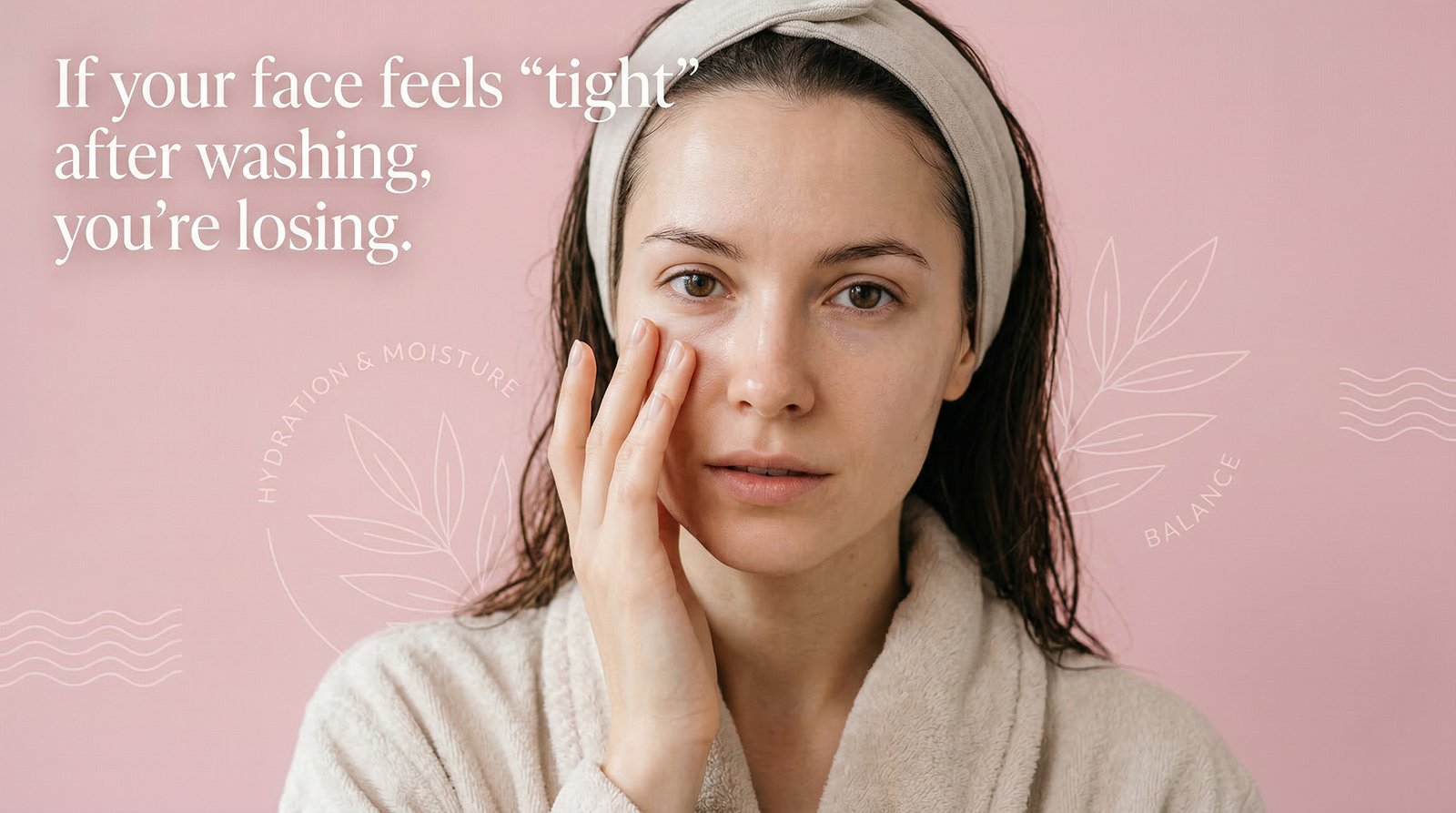
True radiance starts from within, where a calm mind creates the foundation for a resilient, glowing skin barrier.
Your stress isn’t just in your head. It’s sitting on your face.
You scroll through another “glow-up” routine at 1 a.m. while your mind races about tomorrow’s deadlines. Next morning, your skin looks flat, reactive, maybe a new breakout or that tight, flaky feeling that no serum seems to fix.
Coincidence? Not even close.
Your skin doesn’t separate work stress from skincare stress. It feels both. And right now, most of what you’re doing to “fix” it is probably making the damage worse.
I’m not here to sell you calm-in-a-bottle promises. I’m here to tell you what actually happens when chronic stress meets your skin barrier and why doing less, but smarter, is the only way out.
The hidden damage no one shows you
Stress flips a switch in your body. Your brain tells your adrenals to pump out cortisol. That hormone doesn’t just make you feel wired it travels to your skin and starts dismantling the very thing keeping it calm and intact. The skin barrier your stratum corneum is a lipid matrix of ceramides, cholesterol, and fatty acids arranged like bricks and mortar. Cortisol thins out those lipids. It slows down the production of the proteins that hold everything together.
The result? Higher transepidermal water loss (TEWL). Your skin loses moisture faster than it can hold it, even if you’re slathering on humectants.
You feel dehydrated but look oily in patches. You get random sensitivity. Products you used to tolerate suddenly sting. That’s not “purging.” That’s a compromised barrier screaming for help. And it gets worse. Stress delays barrier recovery after any insult whether that’s a harsh cleanser, too much exfoliation, or even sleep loss that often comes with the stress itself. One study on healthy women showed that even short-term psychosocial stress measurably slowed how quickly their skin could repair itself.
Your 10-step routine isn’t rescuing you. It’s adding to the noise.
Why your current “anti-stress” skincare is backfiring
You see the redness, the dullness, the breakouts, and you reach for actives. Acid. Retinol. Vitamin C. More layers. More steps.
Here’s the uncomfortable truth: when your barrier is already weakened by cortisol, piling on irritants creates inflammation loops. Your skin stays in repair mode instead of maintenance mode. Microbiome balance tips. Beneficial bacteria lose ground. Pathogens that trigger acne or sensitivity get a stronger foothold.
Over-cleansing strips whatever lipids you have left. Harsh surfactants destroy the environment your skin microbiome needs. The result looks like “hormonal skin” or “adult acne,” but a big chunk traces straight back to how you’re handling (or not handling) stress.
Hydration ≠ moisture. You can flood your skin with hyaluronic acid and glycerin, but without a solid lipid matrix to trap it, that water evaporates and pulls more out with it. That’s why some people feel drier the more they hydrate.
The shift most dermatologists quietly agree with
Less, but better.
Skinimalism isn’t a trend. It’s damage control for modern life. Your skin doesn’t need another hero ingredient when cortisol is the villain running the show. It needs fewer disruptions so it can actually use the resources it has.
Focus on barrier repair first. Everything else becomes more effective and less necessary when the foundation is solid.
The cortisol-skin connection you can’t ignore
Cortisol doesn’t just dry you out. It ramps up oil production in some areas while slowing turnover everywhere. Pores clog easier. Inflammation stays elevated. Existing conditions like eczema or rosacea flare because the immune response in skin gets dialed up.
Chronic stress also fragments sleep, and poor sleep further spikes cortisol while reducing the overnight repair your skin relies on. It’s a vicious cycle.
Wait what if the breakout you blame on “hormones” is actually your nervous system talking?
The mistake of treating symptoms instead of the loop
Most people chase the visible problem redness with calming masks, oil with mattifiers, dryness with heavy creams without addressing why the skin keeps tipping into imbalance.
The smarter move is breaking the inflammation loop at the barrier level. Support ceramide production. Protect what’s left of your microbiome. Give your skin the quiet it needs to recover between stressors.
This is where minimal, thoughtful formulas win. A cleanser that doesn’t strip. A treatment that repairs without irritating. A moisturizer that mimics the lipids your skin is struggling to make. At this point, your skin doesn’t need another step. It needs formulas that already do both.
“Minimals” keeps it to the essentials that actually address barrier function without the extras that create more work.
Sleep, gut, movement your skin’s real stress managers
Skincare can’t outrun lifestyle.
Poor sleep keeps cortisol elevated and slows barrier recovery. Aim for consistent dark, cool sleep. Even one bad night shows up on your face the next day.
Chronic gut inflammation can amplify skin reactivity via the gut-skin axis. Stress often wrecks digestion first. Simple, consistent meals with fiber and fermented foods can quietly help.
Movement lowers cortisol over time and improves circulation without the inflammation of over-exercise. A daily walk beats another intense HIIT session when your skin is already stressed.
None of this is sexy marketing. It just works better than any serum alone.
The over-exfoliation trap stress makes worse
When stressed, you often feel your skin is “dull” or “congested,” so you exfoliate more. Big mistake.
Barrier damage from acids or scrubs on top of cortisol-induced weakness creates micro-tears, more TEWL, and rebound sensitivity. Your skin thickens defensively or stays thin and reactive neither looks good.
Chemical exfoliation has its place, but only when your barrier can handle it. Most stressed skin can’t. Prioritize repair for a few weeks and watch how much less you need those actives.
Why “calming” ingredients often fail
Many so-called calming products are loaded with fragrances, essential oils, or high concentrations of actives that irritate a compromised barrier. They feel nice for five minutes then leave you redder later.
Look for ceramide-focused, fragrance-free options that support the lipid matrix instead of masking symptoms. Simple. Unscented. Effective.
“Minimals” approach cuts through the noise: formulas designed around what the skin actually needs when stressed repair, not trends.
Reality check: If your routine feels complicated, that’s the problem
Be honest. How many products are you using because you’re scared to drop them? How many steps feel like maintenance rather than improvement?
Complicated routines create decision fatigue on top of everything else. They increase the chance of mixing incompatible ingredients. They cost more time when you already have none.
The people with the calmest, healthiest skin I see aren’t the ones with 12 products. They’re the ones who nailed the basics and protected their barrier like it’s their full-time job because in a stressful world, it basically is.
Your minimal stress-skin routine
Keep it to three or four steps max. Morning and night where it makes sense.
Gentle. Non-stripping. pH-balanced. Something that removes the day without destroying the lipids stress is already depleting. Over-cleansing is one of the fastest ways to make stress damage visible.
Targeted support for barrier and microbiome. A serum or treatment with ceramides or precursors that helps your skin rebuild what cortisol breaks down. No long ingredient lists. No daily acids unless your skin is thriving.
A moisturizer that replenishes the lipid matrix. Think formulas that feel like they belong there light enough for day, substantial enough at night. This is where you lock in moisture and give your barrier a fighting chance.
Mineral sunscreen. Every day. UV is an extra stressor your barrier doesn’t need right now. Choose one that doesn’t sting or pill.
That’s it.
Consistency beats perfection. When stress spikes, simplify even more skip the treatment, focus on cleanse and seal.
Small habits that quietly lower the load
These aren’t dramatic. They compound.
Common mistakes we all make
Stress hits and most of us sabotage our skin without realizing it.
You add more products instead of fewer. Extra serums and treatments overwhelm an already weakened barrier.
You over-cleanse to “control” oil. That tight feeling after washing? It strips lipids and triggers more oil.
You keep using strong actives. Retinol and acids irritate a compromised barrier and slow recovery.
You chase hydration but ignore moisture retention. Hyaluronic acid without ceramides just evaporates and pulls water out.
You rely on “soothing” fragranced products. They often create low-level irritation that stressed skin can’t handle.
You touch and pick at your skin constantly. It spreads bacteria and turns small issues into bigger ones.
The fix is simple: stop fighting your skin and start protecting it.
A simple "Fix Your Stress Skin" checklist
Frequently Asked Questions
Most people notice less reactivity and better hydration within 7 to 14 days of simplifying their routine and focusing on barrier repair. Deeper improvements (fewer breakouts, calmer tone) usually show in 3 to 4 weeks. Skin can’t repair overnight, especially when cortisol is involved.
Yes. Cortisol increases oil production in certain areas, slows skin turnover, and weakens your barrier. This combination makes clogged pores and inflammation more likely. Many “hormonal” breakouts have a heavy stress component.
You probably can’t. That’s why barrier resilience matters more than stress elimination. A strong skin barrier acts like a buffer it handles the cortisol spikes without falling apart. Focus on what you can control: gentle cleansing, lipid repair, sleep, and fewer harsh actives.
Temporarily yes, or at least reduce frequency. When your barrier is compromised, actives often create more inflammation than results. Repair first for a few weeks, then reintroduce actives slowly only if your skin feels strong.
Tight, flaky, or shiny patches. Random redness or sensitivity to products that never bothered you before. Stinging after cleansing. Makeup pilling. All classic signs of high TEWL and a disrupted lipid matrix.
Closing thought
Stress will keep happening. The difference is whether your skin has the resilience to handle it without falling apart. Barrier-first skincare gives you that buffer. Skinimalism removes the friction that makes everything harder. Your skin isn’t broken. It’s responding exactly as biology designed it to under too much input. Dial down the input. Support the structure. Watch it recover.
Start tonight with the simplest version of the routine above. Drop one unnecessary product this week. Notice how your skin responds when you stop fighting it.
The calmest skin I’ve seen comes from people who finally got out of their own way.
You don’t need another complicated protocol. You need to give your skin the space and the right support to do what it already knows how to do.