
Spending less doesn’t mean getting less. But it does mean knowing exactly what you’re buying and why most of what’s in your cabinet isn’t doing what the label says.
Your 10-Step Routine Fails
Your 10-step routine isn’t helping your skin. It’s exhausting it. Not because you spent too little. Because you bought too much, layered it in the wrong order, and trusted packaging over ingredients. Your skin barrier the thing that keeps moisture in and irritants out has been quietly suffering while you chased the next serum.
Here’s the uncomfortable truth: most affordable skincare fails not because it’s cheap, but because nobody told you how to use it right. This is that guide.
What Your Skin Is Actually Doing While You're Building a "Routine"
Your skin barrier is a lipid matrix ceramides, fatty acids, and cholesterol working as mortar between your skin cells. It regulates transepidermal water loss (TEWL), meaning it decides how much moisture stays inside and how much evaporates out into the air. When it’s intact, your skin looks calm, plump, and resilient. When it’s compromised, you get tightness, redness, random breakouts, and a sensitivity to products that used to feel fine. Sound familiar?
Most people assume that’s because they haven’t found the right product yet. The real reason is that they’ve stripped or overwhelmed the barrier with too many actives, the wrong pH, or an over-zealous cleansing habit.
Research published in the Journal of Investigative Dermatology confirms that compromised skin barrier function is directly linked to increased TEWL and elevated inflammatory cytokine activity meaning a damaged barrier doesn’t just cause dryness, it keeps your skin in a low-grade inflammatory state.
This is the baseline you’re working with. Every product decision you make either supports or sabotages this.
Your Cleanser Might Be Causing the Breakouts You're Blaming on Hormones
Over-cleansing is one of the most overlooked causes of persistent skin problems. And it’s everywhere in affordable skincare because “deep clean” sounds like it’s doing something. When you strip your skin with high-pH cleansers, sulfate-heavy foams, or twice-daily scrubbing, you don’t just remove makeup and sunscreen. You remove the skin’s natural microbiome the community of bacteria, fungi, and lipids that protect you from pathogens and regulate inflammation.
A disrupted microbiome creates an imbalance between protective and opportunistic organisms. C. acnes the bacteria associated with breakouts thrives when the skin’s natural defenses are down. So you cleanse more aggressively. And the cycle tightens.
Studies via PubMed show that the skin microbiome plays a critical role in immune barrier regulation. Repeated disruption especially from surfactants that raise skin pH above 5.5 reduces microbial diversity and increases susceptibility to inflammatory conditions including acne and eczema. A good cleanser should do one thing: remove what doesn’t belong, without touching what does. Anything beyond that is marketing.
At this point, the ask is simple: a low-pH, microbiome-respecting cleanser that cleans without compromising. One that works morning and night without you having to think about it.
Hydration Isn't Moisture. And Confusing the Two Is Why Your Skin Is Always "Thirsty"
“You can drink eight glasses of water a day and still have chronically dehydrated skin. Topical hydration and internal hydration are not the same thing.”
Hydration refers to water content in the skin cells. Moisture refers to the lipid barrier that keeps that water from evaporating. They require completely different ingredients to address.
Humectants like hyaluronic acid, glycerin, and panthenol draw water into the skin. But if you apply them without an occlusive or emollient layer on top, they pull moisture from within your skin instead of from the air. In low-humidity environments, this actually leaves your skin drier than before. This is the “hydration step that’s quietly drying you out.” Not because hyaluronic acid is bad it’s excellent but because nobody told you it needs to be sealed in.
The fix is called moisture sandwiching: apply your humectant on damp skin, then immediately follow with a ceramide-rich moisturizer or an emollient to lock the water in place. It costs nothing extra. It just requires knowing why it works.
The Ingredient List Is the Product. Everything Else Is the Box It Came In.
Affordable skincare often wins on formulation and loses on marketing. Expensive skincare often wins on marketing and loses on formulation. The only way to know the difference is to read the ingredient list and know what you’re looking at.
Here’s what to scan for:
First five ingredients = 80% of the formula. If the active ingredient you’re buying for (say, niacinamide) is buried in position 18, after a list of preservatives and thickeners, the concentration is likely cosmetically irrelevant. Look for actives in the first half of the list.
pH-dependent actives need the right pH. Vitamin C (L-ascorbic acid) is only effective below pH 3.5. Retinoids work best in a narrow pH window. If a formula doesn’t disclose pH and the product is watery or unstable, those actives may not be doing what you paid for them to do.
Fragrance is never a functional ingredient. It’s there because someone decided your skin should smell like something. It’s also one of the top triggers for contact dermatitis, especially in compromised barriers. Fragrance-free is not a premium feature. It’s just skin-logic.
According to research cited by the NIH’s National Library of Medicine, fragrance ingredients account for a disproportionate percentage of allergic contact dermatitis cases in cosmetic users even when present at low concentrations in rinse-off and leave-on products alike.
Why Layering Five Actives Is Slower Than Using One
The logic feels sound: if one active does something, five actives should do five times the work. But skin biology doesn’t work like a spreadsheet. Actives compete for absorption, interaction, and enzyme pathways. Some cancel each other out niacinamide and pure vitamin C can form a complex that reduces both their efficacies at the wrong concentrations. Some create pH conflicts: AHAs require an acidic environment; applying them after a alkaline moisturizer neutralizes them before they reach the skin. Some combinations cause cumulative irritation even when neither ingredient is individually irritating. Retinoids and exfoliating acids together, for example, don’t create “double exfoliation.” They create inflammation. And inflamed skin doesn’t absorb actives well it just sits in a state of low-grade irritation that you eventually attribute to “sensitive skin.”
A review in Dermatology Times highlights that retinoid-associated irritation is significantly amplified when combined with other exfoliants or active acids, often leading patients to abandon effective treatments unnecessarily when the issue was always the combination, not the molecule.
One well-formulated product that addresses multiple concerns beats three competing actives every time. Not because it’s easier, but because it actually works.
The Price-Per-Active Calculation Nobody Is Doing But Should Be
Here’s how to think about affordable skincare without being fooled by a low sticker price.
A PKR 500 toner that has niacinamide in position 12 of the ingredient list after water, glycerin, and four thickeners likely contains under 0.5% niacinamide. It is not a niacinamide product. It is a watery solution with a trace of niacinamide and a label.
A PKR 1,200 serum with niacinamide in the first five ingredients, at a proven 5 to 10% concentration, is four times cheaper per effective dose. You’d need to use less of it. It would actually work. The math runs in your favor but only if you’re doing the math.
This is the core discipline of skinimalism: fewer products, higher efficacy, less waste. Not “spending less” in a way that means “settling.” Spending intentionally in a way that means your skin actually changes.
If Your Routine Feels Complicated, That Is the Problem
Not a problem you solve by optimizing the order of your seven products. The complication itself is the problem. Skin that’s been chronically overwhelmed doesn’t need more intervention. It needs a reset. That means stripping back to two or three products with clear, non-competing functions and giving your barrier three to four weeks to recalibrate. Most people never experience this reset because they’re afraid that fewer products means less progress. In reality, the opposite is almost always true. Barrier-first skincare means your skin gets to do its job regulate, repair, and renew without constantly dealing with the fallout from what you applied to it.
“The most powerful thing you can do for your skin this week is remove something from your routine not add it.”
Three weeks of a simple, barrier-supportive routine will do more for your skin than three months of a complicated, active-heavy one. This isn’t philosophy. It’s repair biology.
The last step in a minimal routine is always a seal. Ceramides, emollients, and enough occlusion to keep the work inside. No fifteen-ingredient mystery. Just what the barrier actually needs.
The Minimal Routine Blueprint
Low-pH, surfactant-gentle cleanser. Morning and night. Nothing that squeaks, foams aggressively, or leaves tightness. If your skin feels “clean” in a way that feels stripped, that’s not clean that’s damaged.
One targeted serum niacinamide for barrier and tone, vitamin C for oxidative protection, or a low-strength retinoid for cell turnover. Not all three at once. Pick the one your skin actually needs right now.
A moisturizer with ceramides, fatty acids, and a degree of occlusion. Applied on slightly damp skin. This is not optional. This is what keeps everything else working.
Broad-spectrum SPF 30 minimum, every morning, regardless of whether you’re going outside. UV damage is the number one cause of premature aging and barrier compromise. No serum undoes what sunscreen prevents.
Common mistakes we all make
Here are the most frequent errors sabotaging even the best intentions:
1. Over-Cleansing Twice a Day Many strip their skin morning and night with harsh foams, destroying the barrier and microbiome. Once a day is often enough.
2. Layering Too Many Actives Mixing retinoids, acids, and vitamin C without order or rest days causes irritation and cancels out benefits.
3. Skipping the Seal Applying humectants like hyaluronic acid without a moisturizer on top pulls water out instead of locking it in.
4. Trusting Marketing Over Ingredients Buying based on pretty packaging and trendy claims instead of reading where the actives actually sit in the list.
A simple "Minimal Skincare" checklist
Frequently Asked Questions
Yes. Most 10-step routines overwhelm and exhaust the skin barrier. Fewer, well-chosen products almost always give better results than layering too many actives.
Cleanse → Treat (one serum) → Seal (moisturizer). Add SPF in the morning. That’s it.
You’re likely missing the “seal.” Humectants like hyaluronic acid need to be followed immediately by a ceramide-rich moisturizer to lock in hydration.
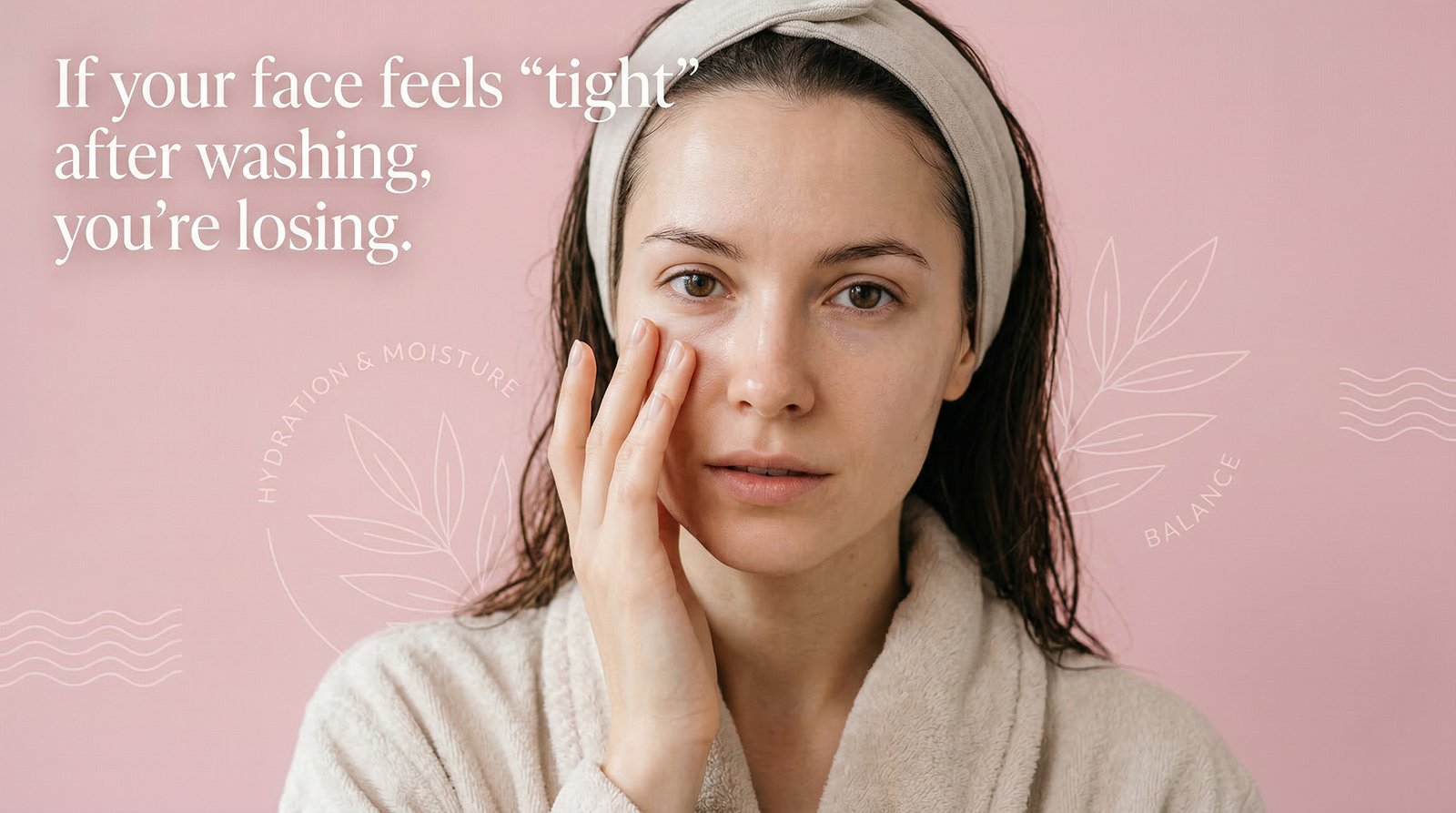
If your skin feels tight, squeaky clean, or more reactive after washing, it’s too harsh. Switch to a low-pH, gentle cleanser.
Absolutely if you focus on ingredients, not packaging. Look for actives in the first half of the ingredient list and proper concentrations.
Closing thought
Your skin doesn’t need more products. It needs less interference. The most radical thing you can do right now is simplify. Remove the extras. Stop chasing the next trendy serum. Give your skin barrier the breathing room it’s been begging for. Real results don’t come from complexity they come from consistency, smart choices, and respect for how your skin actually works. When you focus on repairing and protecting your barrier first, everything else gets easier: fewer breakouts, less redness, better hydration, and skin that finally looks calm and healthy. Start small. Strip it back. Be patient for 3 to 4 weeks.
You’ll be surprised how much better your skin can look when you stop doing too much and start doing the right things.
Less really is more. Your skin will thank you for it.