
Minimals • Skin Science | 10 min read
What Are Ceramides and Why Are They Important for Your Skin?
Discover how ceramides strengthen the skin barrier, support skin barrier repair, reduce transepidermal water loss (TEWL), and keep dry, sensitive, and damaged skin deeply hydrated with the right ceramide moisturizer.
Why Ceramides Are Essential for a Healthy Skin Barrier
Ceramides have become one of the most talked-about ingredients in skincare, but their real value goes far beyond helping dry skin. These essential lipids are the foundation of your skin barrier, helping prevent transepidermal water loss (TEWL), maintain skin hydration, and protect against everyday damage. When ceramide levels drop, you may notice irritation, dehydration, or a damaged skin barrier even if you’re following a consistent skincare routine. In this article, you’ll learn what ceramides are, how they support skin barrier repair, the key ceramide benefits for sensitive skin and anti-aging skincare, and how to choose the right ceramide moisturizer. By the end, you’ll understand why ceramides are one of the most important ingredients for healthy, resilient skin and the growing trend of skinimalism.
So What Actually Is a Ceramide? Not the Marketing Definition the Real One
Forget the marketing terms for a moment. Ceramides are naturally occurring lipids made from a fatty acid and a sphingoid base. Your skin produces them continuously to build and maintain a strong skin barrier and moisture barrier.
Studies show that reducing ceramide levels by as little as 30% can weaken the skin’s protective structure, increasing transepidermal water loss (TEWL) and allowing irritants to pass through more easily. This is why skin barrier repair depends on maintaining healthy ceramide levels. When choosing a ceramide moisturizer, the real question is not whether it contains ceramides, but whether it includes the right types and amounts to support your skin effectively.
Your Skin Isn't "Sensitive." It's Missing Mortar
Think of your skin barrier as a brick wall. The bricks are your skin cells, while the mortar is a blend of lipids, mainly ceramides, along with cholesterol and fatty acids, that holds everything together and forms a strong moisture barrier.
Because ceramides make up the largest part of this lipid layer, low ceramide levels create gaps in the barrier. As a result, transepidermal water loss (TEWL) increases, moisture escapes more quickly, and irritants can penetrate the skin more easily. Research consistently shows that restoring ceramide levels improves skin barrier repair, reduces TEWL, and strengthens the skin’s structure.
That is why dry skin and many cases of sensitive skin are often signs of a weakened damaged skin barrier, not simply skin sensitivity. The problem is structural, not just superficial.
"I Don't Have Dry Skin, So I Don't Need to Think About This" Is the Mistake Costing You Years
One of the most overlooked ceramide benefits is that they support your skin barrier long before visible problems appear. Ceramide levels naturally decline with age, even if your skin does not yet look dry or damaged. Research shows that this age-related loss weakens the barrier, increases transepidermal water loss (TEWL), and leaves skin more vulnerable to dryness, irritation, and environmental stress.
In other words, your moisture barrier can gradually lose strength for years before you notice obvious signs of aging. This is why anti-aging skincare should focus on maintaining the skin’s foundation, not just treating wrinkles after they appear.
Many people rely on retinol and antioxidants, which are valuable ingredients for improving cell turnover and protecting against oxidative stress. However, if your skin barrier lacks enough ceramides, it cannot retain moisture or defend itself as effectively. Age-related ceramide loss affects more than appearance. It reduces the skin’s ability to hold water, slows skin barrier repair, and makes skin less resilient over time. Supporting ceramide levels helps preserve stronger, healthier skin as you age.
The "Squeaky Clean" Feeling You've Been Chasing Is Your Skin Losing the Mortar It Needs
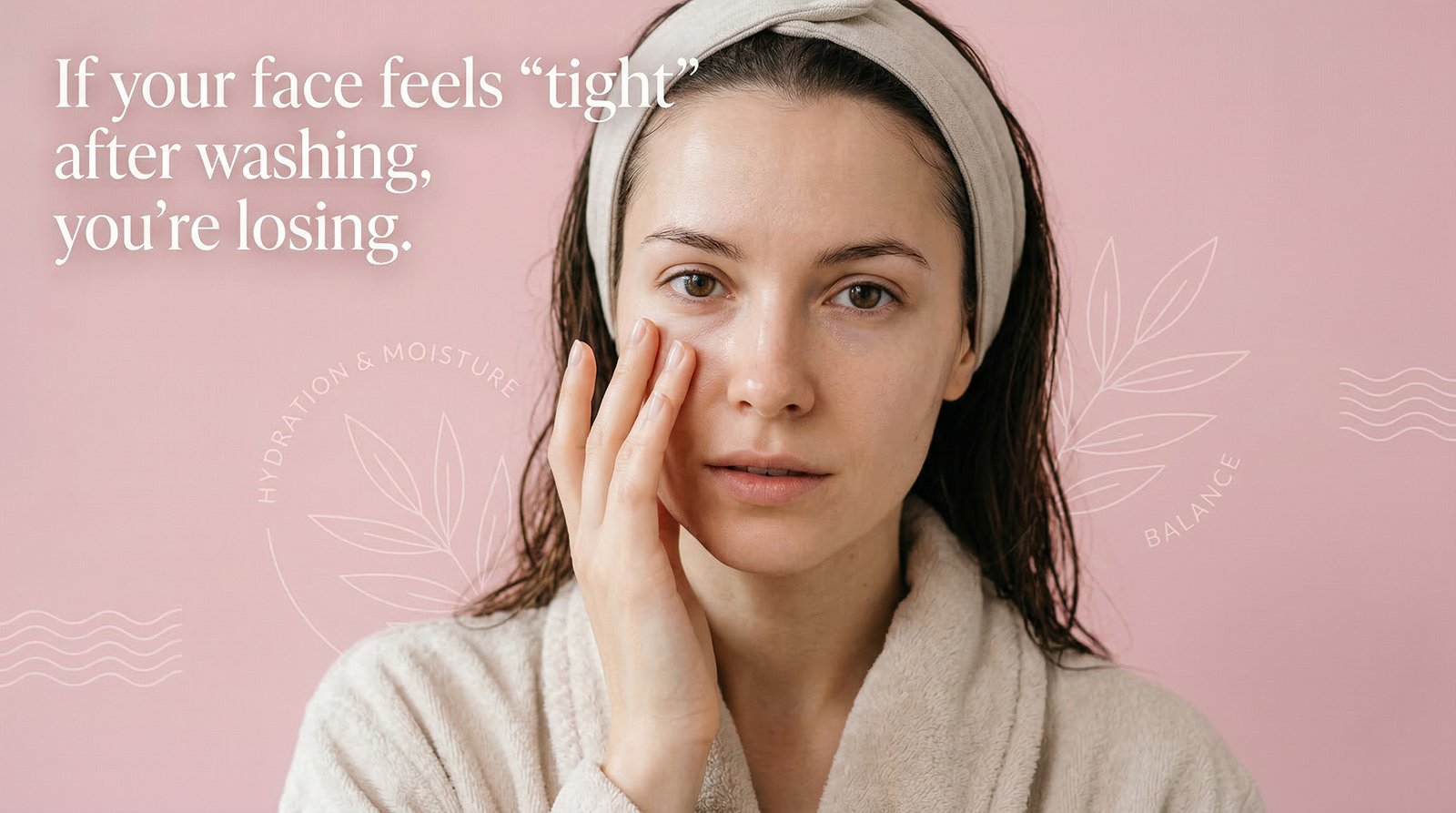
If your skin feels tight after washing, that is not always a sign of a good cleanse. It often means your cleanser has removed some of the lipids, including ceramides, that help maintain a healthy skin barrier and moisture barrier.
Research shows that harsh cleansing can strip away natural oils, increase transepidermal water loss (TEWL), weaken the barrier, and even disrupt the skin’s microbiome. When this happens, your skin may become drier, more reactive, and more prone to irritation, especially if you already have sensitive skin or a damaged skin barrier.
A well-formulated cleanser should remove dirt, sunscreen, and excess oil without compromising your skin’s protective barrier. Pairing a gentle cleanser with a ceramide moisturizer is a simple way to support skin barrier repair, improve skin hydration, and keep your skincare routine effective instead of working against your skin.
You Can Be Hydrated and Still Dehydrating in Real Time
Many people confuse skin hydration with moisture retention, but they are not the same. Hydration refers to the amount of water in your skin, while your skin barrier determines how well that water stays there. An effective skincare routine needs to address both.
For example, hyaluronic acid attracts water and gives skin an immediate plumping effect, but it does not strengthen the moisture barrier or prevent transepidermal water loss (TEWL). Without enough ceramides to support skin barrier repair, that added moisture can escape within hours. This is why a ceramide moisturizer is so important. Ceramides help lock in hydration, turning a temporary boost into lasting moisture and healthier, more resilient skin.
Stacking Five Actives a Night Isn't Discipline. It's Asking Your Mortar to Rebuild Faster Than It Can
Using more active ingredients does not always lead to better results. Combining retinol, exfoliating acids, vitamin C, and other potent ingredients in the same skincare routine can put excessive stress on your skin barrier, especially when used too often.
Retinol speeds up skin cell turnover, while exfoliating acids remove the outer layer of skin. When these actives are overused together, they can weaken the barrier faster than it can repair itself. Research suggests that a compromised skin barrier may take two to four weeks to recover, leaving skin more prone to irritation, dryness, and increased transepidermal water loss (TEWL).
The solution is not to avoid active ingredients, but to support your skin with ceramides. A ceramide moisturizer or ceramide-rich serum helps promote skin barrier repair, reduces moisture loss, and improves skin resilience. By strengthening the moisture barrier, ceramides help your active ingredients work more effectively while lowering the risk of irritation.
"Contains Ceramides" on a Label Tells You Almost Nothing
Not all ceramides are created equal. They are a family of lipids, and different ceramide types contribute to the skin barrier in different ways. Research shows that some ceramide subtypes are more effective at strengthening the barrier and reducing transepidermal water loss (TEWL) than others.
Just as importantly, ceramides work best when combined with cholesterol and free fatty acids in ratios similar to those found naturally in the skin. This balance helps support effective skin barrier repair and allows the lipids to integrate into the moisture barrier instead of simply sitting on the skin’s surface.
That is why two ceramide moisturizers can deliver very different results. A well-formulated product contains the right ceramide types, supporting lipids, and effective concentrations to improve skin hydration and reinforce the barrier. Simply listing ceramides on the label does not guarantee meaningful ceramide benefits.
If You Need a Twelve-Step Routine to Feel Like You're "Doing Skincare," That's the Problem Not Proof You're Serious About It
A longer skincare routine is not necessarily a better one. In fact, adding more products can place extra stress on your skin barrier, especially when multiple active ingredients, fragrances, or exfoliants are layered together. Each additional step increases the chance of irritation or a damaged skin barrier.
A simpler approach often delivers better results. Instead of chasing more products, focus on a routine that supports your moisture barrier with gentle cleansing, consistent hydration, and ingredients like ceramides that promote skin barrier repair. This philosophy aligns with skinimalism, where fewer, well-formulated products work together to strengthen your skin rather than overwhelm it.
The Shift: Skinimalism Isn't About Doing Less. It's About Treating Your Barrier Like It's Finite Because It Is
Skinimalism is often mistaken for doing less, but its real focus is protecting and strengthening the skin barrier. By using fewer, well-chosen products, you reduce unnecessary exposure to conflicting actives, pH changes, and potential irritants. This gives your skin the time it needs for effective skin barrier repair.
A minimalist skincare routine also encourages you to choose products with proven benefits instead of filling your routine with unnecessary steps. Prioritizing essentials like gentle cleansers, ceramide-based moisturizers, and targeted treatments helps maintain your moisture barrier, improve skin hydration, and support healthier, more resilient skin over time.
Moisture Sandwiching Isn't a Trend. It's Just Respecting the Order Your Skin Actually Works In
The idea behind “moisture sandwiching” is not a skincare hack, it is simply proper product layering. Apply water-based hydrating products to slightly damp skin first, then follow with a ceramide moisturizer to reinforce the skin barrier and help lock that moisture in.
Without a barrier-supporting layer, much of the added hydration can be lost through transepidermal water loss (TEWL), leaving your skin feeling dry again within hours. A moisturizer rich in ceramides helps strengthen the moisture barrier, improve skin hydration, and support skin barrier repair. Instead of relying on multiple products, a well-formulated moisturizer that hydrates and seals in moisture can simplify your skincare routine while delivering longer-lasting results.
What Your Skin Actually Needs, Stripped Down to the Essentials
Here’s the version that respects the structure you just learned about, without overcomplicating it.
Cleanse
A gentle, low-pH formula that removes the day without stripping the lipids underneath it. If your face feels “squeaky,” this step is working against you, not for you.
Treat
One active at a time. Give it weeks, not days, before judging whether it’s working most actives need four to six weeks before you can tell the difference between irritation and progress.
Seal
A ceramide-forward moisturizer that locks hydration in instead of letting it evaporate by morning. This is the step most routines skip or underdose, and it’s the one doing the most structural work.
Protect (AM only)
SPF. Not optional, not negotiable the one step no amount of minimalism gets to skip.
That’s the whole list. Most days, even fewer steps than that.
If a product can’t tell you specifically what it’s doing for your barrier, it doesn’t belong on it.
Ceramides Aren't an Add-On. They're the Reason Everything Else Works or Doesn't
Healthy skin does not depend on adding more products. It depends on maintaining the skin barrier that allows every step in your skincare routine to work effectively. Cleanse gently, use targeted treatments without overloading your skin, and finish with a ceramide moisturizer that supports skin barrier repair and helps reduce transepidermal water loss (TEWL).
When your moisture barrier is strong, your skin can retain hydration, better tolerate active ingredients, and become more resilient over time. If you’re looking to build a routine around these principles, choosing products formulated with ceramides and other barrier-supporting lipids is a smart place to start.
Common mistakes we all make
Even with good intentions, it’s easy to harm your skin barrier without realizing it. Here are the most common mistakes:
- Over-cleansing strips natural lipids, including ceramides, increasing transepidermal water loss (TEWL) and dryness.
- Using too many actives like retinol, acids, and vitamin C can weaken the barrier and trigger irritation.
- Skipping moisturizer when skin feels oily can still damage the moisture barrier and worsen oil production.
- Relying only on hydration (like hyaluronic acid) without a ceramide moisturizer lets moisture evaporate quickly.
- Over-exfoliating removes protective layers and increases skin sensitivity.
- Ignoring signs like tightness, redness, or stinging often means a damaged skin barrier.
- Following trends instead of skin needs leads to an unbalanced skincare routine.
- Choosing products just for “ceramides” on the label ignores formulation quality and real ceramide benefits.
A simple "Ceramide Skincare Checklist" checklist
- Keep skincare routine simple and consistent
- Use ceramides to strengthen barrier
- Avoid over-exfoliating or harsh cleansing
- Support skin hydration with sealing moisturizers
- Focus on skin barrier repair daily
Frequently Asked Questions
Ceramides are naturally occurring lipids that make up a large part of your skin barrier. They help hold skin cells together and maintain a strong moisture barrier, preventing dryness and irritation.
When ceramide levels drop, the skin loses water more easily, increasing transepidermal water loss (TEWL). This can lead to dry skin, irritation, and a damaged skin barrier. Replenishing ceramides supports skin barrier repair and improves comfort.
Yes, but effectiveness depends on formulation. A well-made ceramide moisturizer includes the right ceramide types and supporting lipids to help restore the barrier, not just sit on the skin surface.
Yes. In fact, ceramides help counterbalance irritation caused by strong actives by strengthening the skin barrier and improving recovery.
It varies, but mild barrier damage can improve in a few days to weeks with consistent care. Supporting your routine with barrier-friendly products helps speed up skin barrier repair.
Closing thought
Healthy skin is not built through complexity, but through consistency and respect for your skin barrier. When you understand how ceramides support the structure of your moisture barrier, it becomes clear that most skincare issues are not about needing more products, but about restoring balance and reducing unnecessary stress on the skin.
A simple, well-planned skincare routine focused on skin barrier repair, proper hydration, and barrier-reinforcing ingredients like ceramides can improve long-term skin hydration, reduce transepidermal water loss (TEWL), and strengthen resilience over time. In the end, effective skincare is not about doing everything, but about doing the right things consistently.