
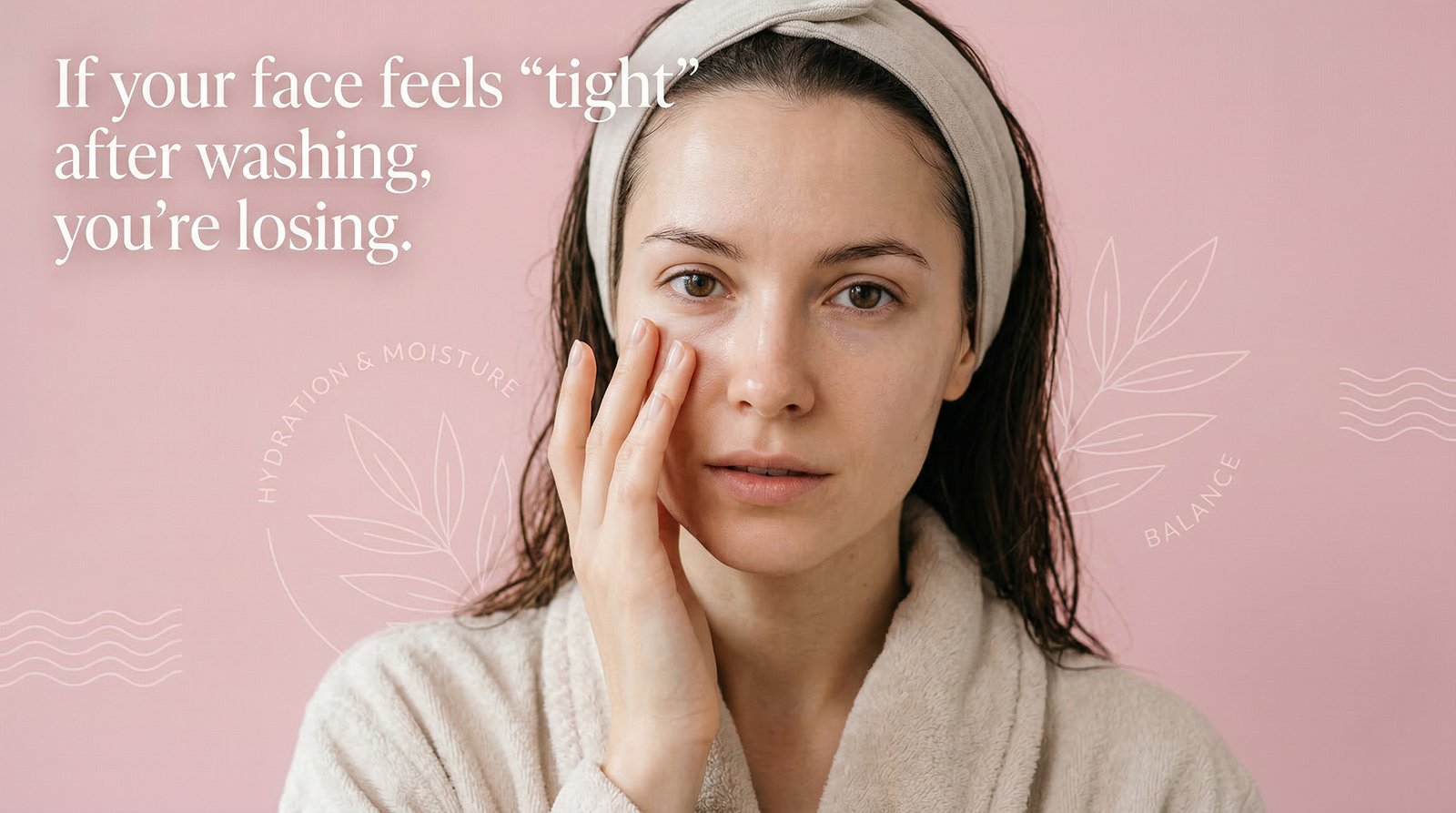
Ditch the 10-step chaos and discover how cutting the noise allows your skin’s natural biology to heal, balance, and thrive.
Skinimalism Isn't a Trend. It's What Happens When You Stop Sabotaging Your Skin.
You’ve tried the 10-step routine. You’ve tried the 12-step one too. And somehow, your skin still breaks out, still feels tight, still looks “off” by 2pm. Here’s the truth nobody in the industry wants to say out loud: more steps didn’t fail you because you did them wrong.
They failed because your skin was never built to handle that much interference.
What's Actually Happening Underneath All Those Layers
Your skin has a wall. Literally.
It’s called the lipid matrix a mix of ceramides, fatty acids, and cholesterol that holds your skin cells together. This wall does one job: keep water in, keep irritants out. When it’s intact, your skin looks calm and feels comfortable without effort. When it’s damaged, water escapes faster than your skin can replace it.
Dermatologists call this transepidermal water loss, or TEWL And here’s the part that stings: most TEWL isn’t caused by weather or “aging.”
It’s caused by you routine specifically, by stripping lipids faster than your skin can rebuild them. Every harsh cleanse, every extra acid, every “just one more serum” chips away at that wall.
The Microbiome You Didn't Know You Were Destroying
Your skin isn’t sterile. It’s not supposed to be. It hosts an entire ecosystem of bacteria and microbes that help regulate inflammation and protect against pathogens. This is your skin microbiome and it’s far more fragile than most routines account for. Antibacterial cleansers, “deep clean” foams, and constant exfoliation don’t just remove dirt. They wipe out the microbial balance that was keeping your skin calm in the first place.
Research has linked imbalances in skin microbiota to conditions like acne, eczema, and heightened sensitivity.
So if your skin became more reactive after you “upgraded” your routine that’s not coincidence. That’s your microbiome trying to recover from an attack you didn’t know you launched.
Wait, What? Hydration and Moisture Are Not the Same Thing
This is the one that breaks people’s brains a little.
Hydration is about water content inside your skin cells. Moisture is about the oils and lipids that seal that water in so it doesn’t evaporate. You can apply a hyaluronic acid serum pure hydration and still end up drier than before. Because without something to seal it, that water evaporates straight off your skin. And as it evaporates, it can pull additional moisture from deeper layers with it. This is why some “hydrating” products leave skin feeling tight an hour later, especially in dry or air-conditioned environments. The problem was never a lack of hydration. It was a missing seal. At this point, your skin doesn’t need another hydrating step.
It needs a moisturizer built to lock that hydration in not let it evaporate the moment you walk outside.
Why Stacking Five Actives Is Quietly Working Against You
Retinol at night. Vitamin C in the morning. An acid exfoliant twice a week. Niacinamide daily. Maybe a peptide serum thrown in. It feels thorough. It feels like you’re “doing the work.” But each active ingredient creates a small, controlled stress response in your skin that’s part of how they function. One active at a time, your skin adapts and benefits.
Four or five stacked together, daily? Your skin’s repair capacity gets overwhelmed. This creates what’s known as an inflammation loop barrier damage triggers inflammation, and inflammation further weakens the barrier, creating a cycle that’s hard to break.
Studies on barrier-compromised skin show this cycle is closely tied to increased sensitivity, redness, and reactivity over time.
This is why people often develop “sudden sensitivity” months into a routine that seemed to be working. It wasn’t sudden. It was cumulative.
The Exfoliation Habit That's Sanding Down More Than Dead Skin
Exfoliating feels like progress. Smoother skin, instant glow, that “fresh” feeling. But your outermost skin layer the stratum corneum isn’t just dead cells waiting to be scrubbed off. It’s a functional barrier, held together by the same lipid matrix doing all the heavy lifting.
Exfoliation removes that top layer. In moderation, this supports healthy renewal. In excess, it removes cells before the lipid barrier underneath has finished forming. Frequent or aggressive exfoliation has been associated with worsened transepidermal water loss and increased barrier disruption.
So that post-exfoliation glow? Part of it is genuine brightness. The other part is your barrier sitting thinner and more exposed than it was yesterday.
The Cleanser Habit Quietly Causing the Breakouts You Blame on Hormones
Foaming cleanser. That tight, squeaky-clean feeling. You’ve been taught that’s a sign of cleanliness. It’s actually a sign your lipid barrier just got stripped. Most foaming cleansers use surfactants that remove dirt, oil, and the lipids your skin needs indiscriminately. A weakened barrier means more water loss, more inflammation, more reactivity. And inflamed skin tends to overproduce oil to compensate for that dryness underneath. So, you cleanse aggressively because your skin feels oily.
That strips your barrier further.
Which triggers more oil production. Which sends you reaching for an even stronger cleanser. This loop is a huge reason “oily skin” routines often make oily skin worse, not better.
The fix isn’t a stronger cleanser. It’s a cleanser that clears what needs to go without taking your barrier down with it.
Skinimalism: Less Isn't a Compromise. It's the Correction.
For years, skincare marketing sold one idea: more steps equal more results. More serums. More layers. More “innovative” textures stacked on top of each other. But your skin doesn’t reward complexity. It rewards consistency and compatibility This is the foundation of barrier-first skincare instead of asking “what else can I add?”, you ask “what is my skin already struggling to maintain, and how do I support that?”
A 3-step routine using formulas that genuinely work with your skin barrier will outperform a 10-step routine fighting against it.
Every time. Skinimalism isn’t about doing less for the sake of simplicity. It’s about recognizing that most of what you were doing wasn’t helping it was actively working against your skin’s own repair process.
The Reality Check
If your routine feels complicated, that’s the problem. Not your skin type. Not “needing more consistency.” The routine itself. If you’re tracking which actives can’t be combined, waiting between layers, avoiding certain pairings because they “cancel each other out” you’re not doing skincare.
You’re managing the side effects of a routine that was never designed to work as a whole. Healthy skin doesn’t need a spreadsheet. It needs fewer, smarter formulas that each do more.
How to handle it
Here’s what your skin actually needs. Every day. Nothing more.
A gentle, non-stripping cleanser that removes buildup without disrupting your microbiome or lipid matrix. Morning and night, that’s it.
One targeted serum with active ingredients chosen for your concern not five concerns at once.
A moisturizer that locks hydration in and reinforces your barrier with ceramides and lipids this is “moisture sandwiching” in action: hydrate, then seal before it evaporates.
SPF. Non-negotiable. The single most effective anti-aging step that exists and the most skipped.
That’s the whole routine. Four steps, max.
Common mistakes we all make
Thinking a tight, squeaky face means “clean.” It actually means you’ve stripped your lipid barrier, forcing your skin to overproduce oil and triggering a vicious cycle of breakouts and grease.
Applying water-based serums (like hyaluronic acid) without sealing them. Without a lipid-rich moisturizer to lock it in, that hydration evaporates straight off your skin, leaving it tighter and drier than before.
Layering retinol, vitamin C, acids, and niacinamide all at once. Each active causes controlled stress; stacking them overwhelms your skin’s repair capacity and creates a chronic inflammation loop.
Scrubbing or peeling multiple times a week. You aren’t just removing dead weight; you are sanding down fresh cells before the protective lipid barrier underneath has even finished forming.
Tracking complex ingredient rules and waiting between layers to stop products from canceling each other out. If your routine requires damage control and a spreadsheet, the routine itself is the problem.
A simple "Skincare Ingredient Compatibility" checklist
Frequently Asked Questions
No. A stripped barrier lets bacteria in and triggers excess oil production. Rebuilding your lipid matrix with fewer products actually calms and clears the skin.
If your skin feels tight an hour after using water-based serums, it’s a moisture problem. You have water (hydration), but you lack the oils (moisture) needed to seal it in.
Yes, just split them up. Use Vitamin C in the morning to boost your SPF, and save your Retinol for nighttime repair. Never layer them together.
Look for terms like “milky,” “creamy,” or “non-foaming.” If your face feels tight, dry, or “squeaky clean” after washing, your cleanser is too harsh.
Look for the bio-identical lipid trio: Ceramides, Cholesterol, and Fatty Acids. They act like molecular mortar to physically glue your skin cells back together.
Closing thought
Your skin isn’t failing you.
It’s been asked to absorb, process, and recover from far more than it was designed to handle daily. Every extra step is one more demand on a barrier that’s already working overtime.
Skinimalism isn’t about giving up on results. It’s about realizing that fewer, well-formulated steps are the results. Strip it back. Let your barrier do its job. Choose formulas that pull double duty instead of adding more noise. Give it a couple of weeks. Your skin will let you know if that was the right call.