
Your skin barrier works hard to protect and hydrate your skin but when it’s damaged, the warning signs are often hiding in plain sight.
The Hidden Cost of Doing Too Much
Your 10-step routine isn’t protecting your skin.
It’s slowly dismantling the one thing that actually does.
Here’s the uncomfortable truth: most skin problems the sensitivity that appeared out of nowhere, the breakouts that won’t clear, the redness that flares every time you try something new aren’t random. They’re the result of a barrier that’s been stripped, stressed, and ignored for so long it stopped functioning the way it’s supposed to.
You didn’t break your skin because you didn’t care enough. You broke it because you cared too much in all the wrong ways.
The Structure Most Skincare Brands Hope You Never Learn About
Your skin barrier isn’t a metaphor. It’s a physical structure technically called the stratum corneum made up of dead skin cells (corneocytes) embedded in a lipid matrix of ceramides, cholesterol, and fatty acids. Think of it like a brick wall.
The cells are the bricks. The lipids are the mortar. When the mortar deteriorates, the wall crumbles and everything gets in that shouldn’t, and everything leaks out that should stay in.
That “everything leaking out” has a name: transepidermal water loss, or TEWL. When your barrier is intact, TEWL is minimal. When it’s damaged, water evaporates from your skin faster than it can be replaced and no amount of hydrating serum can fix that if the structure holding it in is compromised.
Research published in the Journal of Investigative Dermatology confirms that elevated TEWL is one of the most reliable markers of barrier dysfunction and that it precedes visible symptoms like redness and flaking, often by weeks.
That means your barrier can be damaged before your skin even looks damaged. You might be walking around with a compromised barrier right now and calling it “normal skin.”
The Signs You've Been Misreading As Something Else
Barrier damage doesn’t announce itself dramatically. It disguises itself as problems you’ve probably already tried to treat and failed.
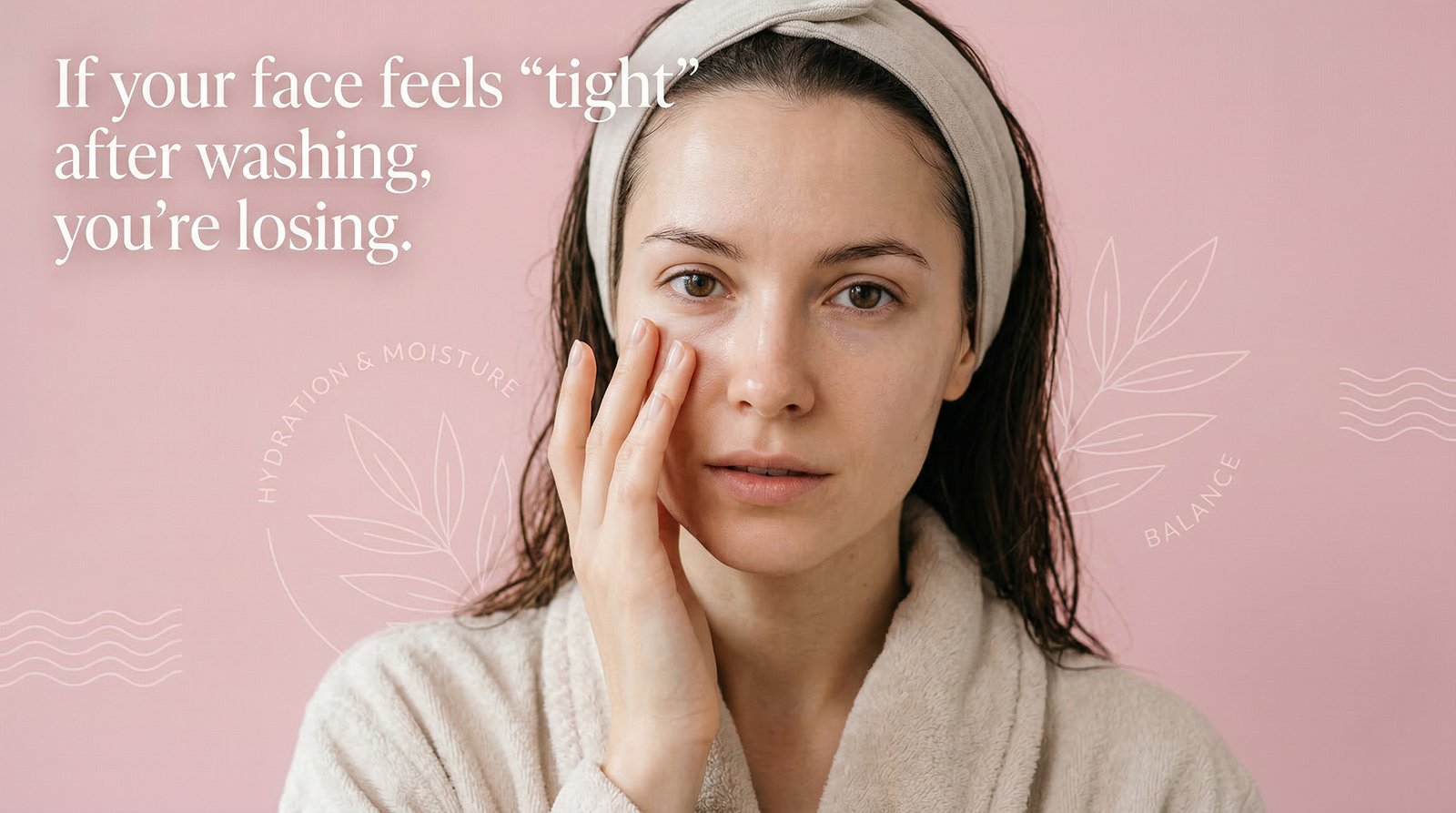
Tightness after cleansing. Not mildly tight. The kind of tight that makes you want to moisturize immediately. This isn’t your skin “feeling clean.” It’s your barrier telling you the cleanser removed more than it should have.
Breakouts that shift and move. If you’re getting pimples in places you never used to, or they’re appearing right after you introduce a new product, that’s often barrier disruption not hormonal activity. A damaged barrier lets in Cutibacterium acnes more easily because the acidic pH environment that normally keeps bacteria in check has been neutralized.
Stinging from products that should be gentle. Niacinamide shouldn’t sting. A light moisturizer shouldn’t sting. If it does, your barrier is compromised enough that even benign ingredients are triggering a pain response.
Redness that has no obvious cause. Reactive redness especially around the cheeks and nose is frequently a sign of chronic low-grade inflammation, not rosacea, not sensitivity you were born with.
Moisturizer that evaporates within an hour. If you moisturize and your skin feels dry again almost immediately, your barrier isn’t retaining what you’re putting on it. You’re pouring water into a cracked bowl.
Sound familiar? Keep reading.
Your Cleanser Might Be Causing the Breakouts You Blame on Hormones
Let’s talk about pH.
Healthy skin sits at a pH of around 4.5 to 5.5. This mild acidity is intentional it maintains the integrity of your lipid matrix, supports your skin’s microbiome, and creates an environment hostile to pathogenic bacteria.
Most foaming cleansers sit at a pH of 8 to 10.
Every time you use one, you’re alkalizing your skin. The lipid matrix weakens. The microbiome the invisible ecosystem of bacteria, fungi, and viruses that actively protects you gets disrupted. And when the microbiome is disrupted, research from the NIH’s National Human Genome Research Institute shows inflammatory pathways activate even in the absence of an obvious irritant.
Over-cleansing is one of the most common and least discussed causes of chronic skin issues.
And the cruel irony? People with oily or acne-prone skin tend to over-cleanse the most because they’re trying to remove oil. But stripping sebum triggers the skin to produce more sebum as a compensatory response. You clean more, your skin produces more oil, you clean more.
This is what an inflammation loop looks like.
If your skin feels “squeaky clean” after washing, that’s not clean. That’s stripped.
A low-pH, non-stripping cleanser one that removes what needs removing without alkalizing your barrier is the single most impactful swap most people can make. Minimals’ Gentle Gel Cleanser is formulated to cleanse without disrupting the acid mantle, which means your barrier starts the day intact, not already playing defense.
The "Hydration" Step That's Quietly Drying Your Skin Out
Here’s the counterintuitive one.
Hydration and moisture are not the same thing. Hydration refers to water content in the skin. Moisture refers to the lipid barrier’s ability to retain that water. You can have beautifully hydrated skin that loses that hydration within the hour because without lipids, water doesn’t stay. This is why hyaluronic acid alone isn’t enough for damaged skin. Hyaluronic acid is a humectant it draws water to the skin and holds it there temporarily. But if you’re applying it in a dry environment, or without a lipid-rich occlusive to seal it in, it can actually pull moisture from the deeper layers of your skin. You moisturize and your skin gets drier.
Wait what?
Yes. If you’re layering hydrating serums with no sealant on top, or if your moisturizer doesn’t contain ceramides or fatty acids to rebuild the lipid matrix, you’re hydrating the surface while the structure underneath keeps deteriorating.
The fix isn’t more hydrating layers. It’s barrier-first skincare: lead with ingredients that repair ceramide levels, support the lipid matrix, and create a physical seal. Everything else works better when the foundation is functional.
A 2018 study in Dermatology and Therapy found that ceramide-containing moisturizers significantly improved TEWL and skin hydration compared to humectant-only formulas especially in patients with eczema and barrier-compromised skin.
Why Layering Actives Is Backfiring On Your Skin
The skincare internet has made actives feel like a personality trait.
Retinol. AHAs. BHAs. Vitamin C. Niacinamide. Peptides. It’s not unusual to see people using four or five of these in a single routine stacked, layered, alternated because more active = more results, right?
Not on compromised skin. When your barrier is damaged, actives penetrate deeper and faster than they should. Ingredients calibrated for intact skin become irritants on broken skin. Retinol that should be gently increasing cell turnover starts causing peeling. AHAs that should be smoothing texture start causing burning. And then people blame their skin for being “sensitive” when actually, their skin is behaving exactly as it should: trying to protect itself from chemical stress it can’t handle right now.
Research from the International Journal of Dermatology has documented that even low-concentration retinoids can significantly increase TEWL in barrier-compromised individuals, making the underlying damage worse before any benefit appears.
The smarter approach is sequencing.
Repair first. Treat second. You cannot resurface or target specific concerns effectively on skin that’s inflamed and leaking. It’s like renovating a house with a structural crack decorating won’t hold.
The Products That Promise to Fix Your Barrier (But Actually Don't)
Let’s call this one out directly.
Fragrance in skincare especially “natural” fragrance from essential oils is one of the most common contact allergens and barrier disruptors. Lavender, bergamot, eucalyptus: they smell like wellness and they behave like irritants, particularly on damaged skin.
The American Contact Dermatitis Society has flagged fragrance as a top-five allergen in skincare for years. And yet fragrance is still in moisturizers, toners, and products explicitly marketed for “sensitive skin.”
If a product for sensitive skin contains fragrance, it is not actually formulated for sensitive skin. Alcohol denat. Witch hazel in high concentrations. Menthol. Peppermint. These are all common in “clean,” “natural,” or “refreshing” products and all of them compromise the lipid matrix when used regularly. Reading ingredient lists isn’t paranoia. It’s the minimum you owe your skin.
If Your Routine Feels Complicated, That's the Problem
Pause for a second.
How many steps are you doing?
How many of them do you actually understand?
If your routine feels like a second job or if your skin was better before you got serious about skincare that’s not a coincidence. That’s data. Barrier repair doesn’t happen in spite of simplicity. It happens because of it. Every additional step is another variable, another potential irritant, another thing your skin has to respond to. Every unnecessary product is a cost your barrier pays. Skinimalism isn’t a trend or an aesthetic. It’s what dermatologists have quietly recommended for decades: fewer products, more targeted, formulated specifically for how skin actually works.
The brands that benefit from you buying more products will never tell you this.
The Minimal Routine Blueprint for Barrier Repair
You don’t need to overhaul everything overnight. You need to stop adding and start subtracting.
Here’s what barrier repair actually looks like in practice:
Cleanse but don’t strip. Use a low-pH gel or cream cleanser once daily (twice if you wear SPF or makeup). The goal is removing what needs to go without disrupting the acid mantle. If your skin feels tight afterward, the cleanser is wrong. Minimals’ Gentle Gel Cleanser is built around this: effective, pH-balanced, and fragrance-free.
Treat but only what’s stable. If your barrier is damaged, pause the actives. Temporarily replace them with a barrier-supportive serum: ceramides, panthenol, madecassoside, or niacinamide at a skin-friendly concentration. These calm the inflammation loop without adding chemical stress. Minimals’ barrier serum is formulated specifically for this phase.
This is non-negotiable. A moisturizer containing ceramides and fatty acids creates the occlusive seal that lets your skin actually retain what you’ve applied. Apply while skin is still slightly damp for the moisture-sandwiching effect: humectants trapped beneath a lipid layer. Minimals’ barrier moisturizer does both in one step, which is the point.
SPF is the one non-negotiable you should add, not subtract. UV radiation directly degrades ceramides and accelerates TEWL. A mineral SPF 30 to 50 on top of your sealed skin and you’re done. Full stop.
Four steps. Under five minutes. This is what your skin actually needs.
You Don't Need More Products. You Need Fewer That Actually Work.
If you’ve read this far, you already know something most people spend years learning. Your skin isn’t broken because it’s inherently problematic. It’s responding to a routine that’s asking too much of it and giving too little of what it actually needs to repair. The barrier is the beginning of everything. Get that right and the other concerns the dullness, the texture, the breakouts often quietly resolve themselves. Not because you added the right product, but because you finally stopped adding the wrong ones.
“Minimals” exists for exactly this moment.
Not to sell you a 7 step routine in a different order. To give you the minimum number of formulas that do the maximum structural work= so your skin can stop reacting and start recovering.
Your skin is already trying to heal. Give it the conditions to actually do it.
Common mistakes we all make
Over-cleansing the skin Washing too often or using harsh cleansers that strip the skin barrier.
Layering too many actives Combining acids, retinoids, and vitamin C without giving the skin time to recover.
Confusing hydration with moisture Using water-based serums without a moisturizer to seal that hydration in.
Ignoring irritation Pushing through stinging, redness, or burning instead of pausing the routine.
Chasing trends instead of consistency Switching products constantly rather than sticking to a simple, barrier-friendly routine.
A simple "Barrier Health" checklist
Frequently Asked Questions
The skin barrier is your skin’s outermost protective layer. It helps retain moisture, defend against irritants, and keep harmful bacteria out.
Common signs include tightness after cleansing, persistent dryness, unexplained redness, stinging from skincare products, increased sensitivity, and recurring breakouts.
Yes. When the barrier is compromised, inflammation increases and bacteria can penetrate more easily, which may contribute to breakouts.
Mild damage can improve within a few weeks, while more severe barrier disruption may take several months of consistent, gentle care.
In many cases, yes. Temporarily reducing or pausing strong actives like retinoids and exfoliating acids can help your skin focus on repair.
Closing thought
Your skin barrier isn’t just another skincare concern it’s the foundation that every other skincare goal depends on. When it’s healthy, your skin can hold onto moisture, tolerate active ingredients, and protect itself the way it’s designed to. Before adding another serum or chasing the latest trend, ask yourself a simpler question: Is my skin getting the support it needs to repair? Sometimes the fastest path to better skin isn’t doing more it’s finally doing less, but doing it consistently.