
“Medical grade” is primarily a marketing term with no official FDA definition for skincare/cosmetics, used to suggest higher potency, purity, and clinical results than regular products.
The Ultimate Guide to 'Medical Grade' Products in the Market
Your 10-step routine isn’t fixing your skin. It’s wearing it down.
You chase “medical grade” labels hoping for real results. Stronger actives. Deeper fixes. But your skin feels tighter, redder, or somehow both oily and flaky at the same time. That’s not failure on your part. It’s the predictable outcome of treating your skin like a chemistry experiment instead of a living barrier. I’ve seen this cycle too many times. You load up on high-potency serums because the label promises clinical strength. Your barrier pays the price. Then comes the panic buy of even more products to “repair” the damage.
Let’s cut through it.
What “Medical Grade” Actually Means (and What It Doesn’t)
“Medical grade” sounds official. It isn’t.
No FDA definition exists for it. Brands slap it on packaging to imply hospital-level quality and higher concentrations of actives. Sometimes they deliver. Often they just charge more for the same basic ingredients with better marketing. Real differences can exist: purer raw materials, higher percentages of certain actives, or better delivery methods. But higher concentration doesn’t automatically mean better for your skin. It often means more irritation risk if your barrier isn’t solid first.
Your skin doesn’t need pharmaceutical drama. It needs consistency and respect for how it actually works.
The Hidden Damage Most Routines Create
Your skin barrier is a lipid matrix of ceramides, cholesterol, and fatty acids. Think of it as bricks (corneocytes) held together by mortar (those lipids). When that mortar weakens, transepidermal water loss (TEWL) increases. Your skin loses moisture faster. It gets inflamed. It overproduces oil to compensate. Breakouts follow. Redness follows. You blame hormones or diet. Often the real culprit sits in your bathroom cabinet.
Harsh cleansers strip natural oils and disrupt your microbiome the community of bacteria that helps regulate inflammation and protect against pathogens.
Layering multiple actives creates inflammation loops. One exfoliant compromises the barrier. The next active penetrates deeper than intended. Your skin freaks out. You add more soothing products. The cycle continues.
This isn’t theory. Studies show compromised barriers in people using multiple actives without proper repair support.
Why “More Potent” Often Backfires
You’ve been sold the idea that stronger is smarter. Not always. High-concentration actives in compromised skin create micro-tears in the barrier. Your skin mounts an immune response. That response shows up as sensitivity, redness, or stubborn texture issues that never quite resolve.
Counterintuitive truth: hydration ≠ moisture.
You can apply hydrating ingredients that pull water in, but without lipids to seal it, that water evaporates and takes your natural moisture with it. This explains why some people feel dehydrated no matter how much hyaluronic acid they layer.
Your skin needs the full package water + lipids + repair signals to stay balanced.
The Over-Exfoliation Trap
Exfoliating acids and retinoids get results. Used wrong, they destroy progress.
Daily use of strong acids on already sensitive skin thins the stratum corneum over time. TEWL rises. The microbiome shifts toward imbalance. Many “medical grade” lines push aggressive routines. They assume your skin can handle it. Most people’s skin cannot especially in polluted cities, dry climates, or after years of overdoing it.
You don’t need to feel tingling or tightness to know something is working. That sensation is usually damage, not progress.
The Microbiome You’re Accidentally Wiping Out
Your skin hosts trillions of microorganisms that work with your barrier. Harsh surfactants in cleansers and antibacterial ingredients can wipe out beneficial species while leaving harmful ones.
The result? More inflammation, slower healing, and skin that reacts to everything. Gentle cleansing preserves this ecosystem. Your skin stays calmer and more resilient.
Why Layering Too Many Actives Destroys Progress
Each new serum adds potential for interaction and overload. pH conflicts. Ingredient clashes. Cumulative irritation.
Your skin barrier has limited repair capacity per day. Bombarding it with niacinamide + vitamin C + retinol + acids + peptides overwhelms that capacity. The smartest routines do more with less by choosing multi-tasking formulas that support barrier function instead of fighting against it.
Barrier-First Skincare: The Approach That Actually Lasts
Stop treating symptoms. Start repairing the foundation. A healthy barrier means better tolerance to actives later, less inflammation, and skin that looks calm and smooth because it is calm and smooth underneath. This is skinimalism: fewer products, chosen for how they work together, not how impressive their individual labels sound.
The “Medical Grade” Myth That Costs You Money
Many high-end “medical grade” products prioritize single dramatic ingredients over complete formulas. They deliver one strong active but neglect the supporting lipids and soothing agents your skin needs to handle it. You end up buying separate repair products. Your routine gets more complicated. Your wallet gets lighter. Better approach: formulas that already balance active benefits with barrier support. No extra steps required. At this point, your skin doesn’t need another hero ingredient. It needs a thoughtful combination that respects its biology.
Minimals’ Ceramides 0.3% + Madecassoside Moisturizer does exactly that delivering five essential ceramides alongside soothing madecassoside to repair while protecting.
If Your Routine Feels Complicated, That’s the Problem
Be honest with yourself.
Does applying your products feel like a chore? Do you skip steps when tired? Do you have more than five products touching your face daily?
Complexity is the enemy of consistency. And consistency beats perfection every time. Complicated routines create decision fatigue. You abandon them. Your skin suffers from the on-again, off-again approach. Simple routines stick. They let your skin settle into a stable state instead of constant adjustment.
The Minimal Routine Blueprint That Works
Forget 10 steps. You need three to four thoughtful ones.
Gentle, non-stripping. Morning and night if needed, but water-only in the morning often suffices for non-makeup days. Look for formulas that respect pH and microbiome.
“Minimals” offers cleansers designed for this exact balance effective without the squeaky clean that signals damage.
One targeted serum based on your main concern. Niacinamide for barrier and oil control. Or a gentle retinoid alternative if renewal is the goal. Not both at once when starting.
A proper moisturizer with ceramides and supporting lipids. This step is non-negotiable. It locks in everything else and prevents TEWL.
Minimals’ barrier-focused moisturizers excel here, combining ceramides with calming ingredients like Vitamin B12 for redness-prone skin.
Broad-spectrum SPF. No exceptions. This prevents more damage than any treatment can fix.
That’s it. Morning and night.
Don’t wait twenty minutes. Apply your moisturizer while your skin is still slightly damp to “lock in” that hydration.
Moisture Sandwiching Done Right
Apply your water-based treatment to damp skin, then immediately follow with your ceramide-rich moisturizer. This traps hydration where it belongs and supports the lipid matrix.
Simple technique. Noticeable difference in how plump and comfortable your skin feels.
When to Consider Stronger Actives
Once your barrier is stable for at least 4 to 6 weeks, you can experiment with higher-strength options if needed. Introduce slowly. Monitor closely.
The goal isn’t to live on maximum strength forever. It’s to use what your skin needs at each stage and pull back when it doesn’t.
Common Mistakes Even Smart People Make
Your skin tells you what it needs through how it looks and feels. Listen before adding anything new.
Building Tolerance Without Trauma
Start slow with any new active. Use every third night. Build up gradually. Always pair with strong barrier support. This approach takes longer upfront but creates lasting results instead of cycles of damage and repair.
The Long Game Most Brands Won’t Tell You
Real improvement shows up after 8 to 12 weeks of consistency, not 7 days. Marketing timelines lie. Biology doesn’t.
The brands worth trusting show their work through stable formulas and realistic expectations, not dramatic before-and-afters shot in perfect lighting.
A simple "Minimal Skincare" checklist
Frequently Asked Questions
It doesn’t mean much. There’s no official regulatory definition. Brands use the term to suggest higher purity, stronger concentrations, or clinical-level results. Sometimes that’s true. Often it just means higher price with the same (or worse) irritation potential.
The real question isn’t whether something is labeled medical grade. It’s whether the formula respects your skin barrier or quietly damages it.
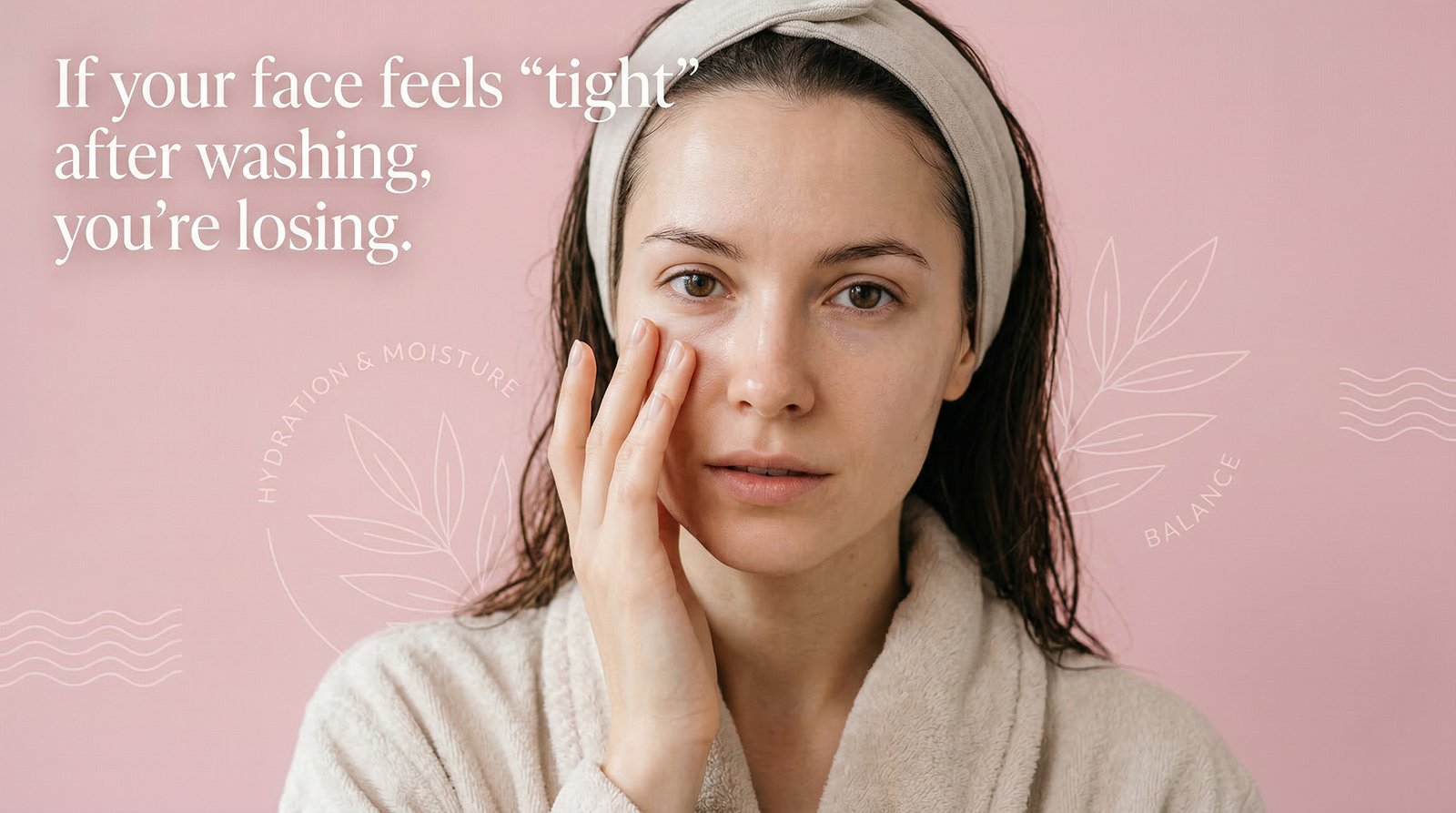
Tight, shiny skin after cleansing. Random redness. Flakiness even when you moisturize. Breakouts in new places. Stinging when you apply products that never bothered you before. These are classic signs.
Increased sensitivity and that “can’t win” feeling where skin is both dry and oily usually point to a compromised lipid matrix and higher TEWL.
Yes, but only after your barrier is healthy. Start with barrier repair for 4–6 weeks first. Then introduce one active slowly, at lower frequency. Never stack multiple strong actives daily.
The goal is controlled renewal, not constant aggression.
No. This is one of the most misunderstood concepts in skincare.
Hydration pulls water into the skin. Moisture refers to the oils and lipids that lock it in. You can be well-hydrated but still feel tight and dry if your lipid barrier is weak. That’s why layering hyaluronic acid without sealing it often backfires.
Three to four max. Cleanse, treat (if needed), seal, and protect in the morning. Anything beyond that usually creates more problems than it solves.
Closing thought
You need fewer that actually work with your skin’s biology instead of against it.
Focus on barrier repair first. Choose thoughtfully formulated products over impressive marketing claims. Keep it simple enough that you’ll actually do it every day. Your skin will thank you with the calm, resilient texture you’ve been chasing all along. Start with the basics. Repair what’s broken. Then maintain.
That’s the real medical-grade approach treating your skin like the sophisticated system it is, not a problem to aggressively fix.
Ready to simplify? Look at what Minimals offers at minimals.com.co. No hype. Just honest formulas built for real skin.
Your barrier has been through enough. Time to give it what it actually needs.