
Learn to separate evidence-based medical advice from clever marketing tactics.
That “dermatologist-recommended” product might not be medical advice at all.
It’s probably just really good marketing.
You see the white coat, the smooth skin, the before-and-afters. You assume it’s science. But much of what floods your feed is carefully crafted to sound clinical while pushing another layer, another active, another purchase. Your skin ends up paying for the confusion. I’ve watched too many people chase “expert” routines that leave their barrier wrecked, their microbiome off-balance, and their wallet lighter. Real medical advice focuses on function first. Marketing sells feelings and trends. Learning to tell them apart might be the most important skincare skill you develop.
The Hidden Problem: When Marketing Masquerades as Medicine
Most skincare confusion starts here. Brands borrow medical language “clinically proven,” “dermatologist tested”without the actual constraints of medical practice. Real dermatology looks at your skin barrier: the stratum corneum with its precise mix of ceramides, cholesterol, and fatty acids forming a lipid matrix. This structure controls TEWL (transepidermal water loss) and keeps irritants out. When disrupted, inflammation kicks in fast.
Marketing? It sells disruption as “detox” or “renewal.” Over-cleansing, constant exfoliation, endless layering. Each step sounds logical in isolation. Together they create inflammation loops your skin can’t escape.
The Shift: Real Advice Values Repair Over Revolution
Skinimalism cuts through the noise. It prioritizes supporting what your skin already does well instead of constant intervention. Less noise means clearer signals about what actually works. This isn’t laziness. It’s respecting biology over trends.
Your “Doctor-Approved” Routine Might Be Marketing in Disguise
Influencers in white coats push 10-step regimens. Real medical advice rarely does. Complex routines increase risk of irritation because each new ingredient is another variable hitting your already stressed barrier. You don’t need a new product for every concern. You need stability so your skin can repair.
The Over-Cleansing Trap Sold as “Deep Clean”
Marketing loves the idea of squeaky clean. Foaming, stripping, twice-daily “detox.” It feels productive.
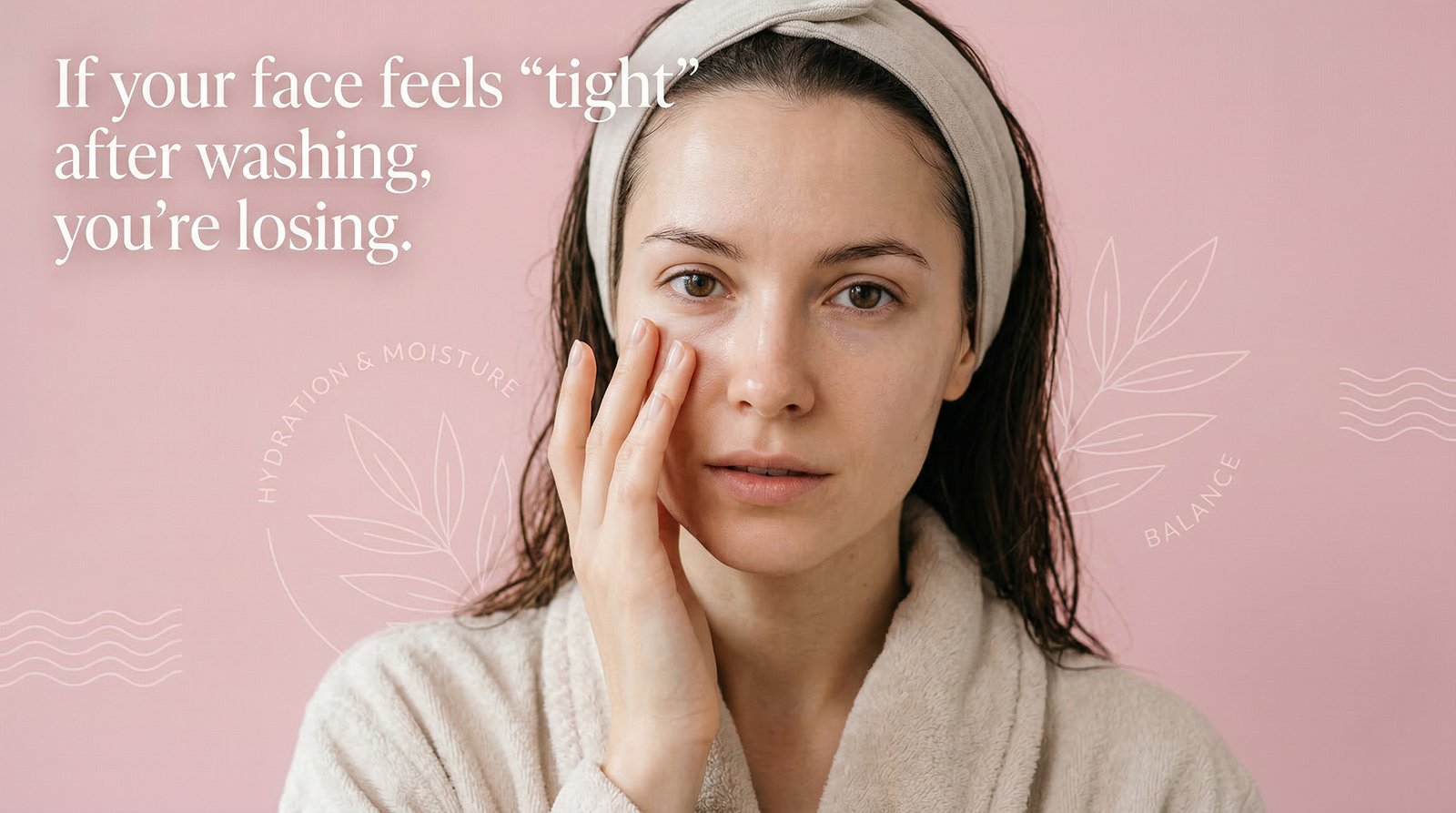
Science says otherwise. Harsh surfactants disrupt your microbiome the community of bacteria that regulates pH, fights pathogens, and supports barrier integrity. Over-cleansing spikes TEWL and creates the dryness that sells more moisturizers. A smarter approach uses gentle cleansing that removes dirt without collateral damage to lipids and microbes. At this point, your skin doesn’t need another aggressive reset. It needs a cleanser that works with your natural balance. “Minimals” cleansers are formulated exactly for that no stripping, just effective care. (minimals.com.co)
The “More Actives = Better Results” Myth
Layering retinol, acids, vitamin C, niacinamide marketing calls it customization. Your barrier calls it assault. Each active pushes cell turnover or pH change. On compromised skin this creates micro-inflammation that weakens the lipid matrix further. Sensitivity rises. You add “soothing” products that often contain more potential irritants. The loop continues.
Real advice introduces one active slowly, after barrier repair, and monitors response. Most people need far fewer actives than they’re told.
Why “Hydration” Marketing Often Makes Dryness Worse
You see “intensely hydrating” serums everywhere. They deliver humectants that pull water in. Without lipids to seal, that water can evaporate faster, increasing TEWL.
Wait, what? Hydration and moisture are not the same. Hydration brings water. Moisture (via ceramides and emollients) locks it. Using humectants on a damaged barrier without sealing is like filling a leaky bucket.
This counterintuitive truth explains why some “hydrated” routines still feel tight and flaky.
The Skin Breathing Scam That Won’t Die
Marketing loves telling you to skip heavy creams at night so your skin can “breathe.” It sounds logical. It’s nonsense. Skin gets oxygen from blood supply, not surface air. What you’re actually doing is leaving the lipid matrix unprotected, allowing higher water loss and irritation. An intact barrier doesn’t need to breathe. It needs consistent support.
The Reality Check: If Your Routine Feels Like a Science Experiment, That’s the Problem
Be honest with yourself. How many products are you using because an influencer with a medical-sounding title said so? If applying everything feels stressful and your skin still reacts, the complexity itself is likely the trigger. Real medical guidance simplifies. It focuses on barrier-first skincare rather than chasing every trend. Marketing profits from your doubt and endless searching.
The Minimal Routine Blueprint That Cuts Through the Noise
Keep it to 3 to 4 steps. Morning and night.
That’s it.
On drier days, try moisture sandwiching: apply humectant, wait 60 seconds, then lock with your moisturizer. Simple. No conflicting claims. Just function. Start by removing two products from your current routine. Watch what happens when you give your skin space.
Common mistakes we all make
Seeing “dermatologist recommended” makes you assume it’s solid medical advice. Often it’s just paid partnership or brand ambassador work. Real doctors focus on barrier repair and minimal disruption. Marketing uses the title to sell you another active or 10-step routine that creates the problems it claims to fix.
“Clinically proven” sounds scientific. It rarely tells you the study size, duration, or who funded it. Many claims test one ingredient in isolation while ignoring how it affects your full lipid matrix and microbiome. You end up layering products that increase TEWL instead of supporting your skin.
Marketing pushes complex routines as “advanced skincare.” Real medical guidance usually simplifies. Over-cleansing and constant layering destroy your ceramide balance and microbiome faster than any single bad ingredient. The more steps, the higher the chance of inflammation loops.
Influencers tell you to skip rich moisturizers at night for “oxygen.” This isn’t medical advice it’s marketing fluff. Your skin gets oxygen from blood, not air. Leaving the barrier unprotected increases water loss and irritation. An intact lipid matrix needs sealing, not exposure.
Skin getting red or breaking out? Marketing trained you to buy a new serum. Real advice says pause and simplify first. Most reactions come from barrier damage caused by too many actives and harsh cleansers. Subtracting noise often fixes more than adding another “solution.”
These five mistakes fit naturally after “The Hidden Problem” or right before “The Shift” in your new blog post. Each one highlights the gap between real dermatological thinking and clever marketing while reinforcing barrier-first principles.
A simple "Spot Medical Advice vs Marketing" checklist
Frequently Asked Questions
No. Many times it’s a paid partnership or brand ambassador deal. Real dermatological advice focuses on barrier repair, minimizing irritation, and keeping routines simple. If it pushes 8+ steps or constant new actives, it’s likely marketing.
Look beyond the phrase. Real studies mention sample size, duration, and controls. Marketing often tests one ingredient in perfect lab conditions and ignores real-life barrier damage or microbiome effects. When in doubt, assume it’s selling you something.
Some are legitimate. Most are not practicing doctors. If their recommendation creates more steps, more layering, or “detox” language, treat it as marketing. Real advice usually tells you to simplify and repair first.
Because many expert-looking routines damage your lipid matrix and microbiome. Over-cleansing strips ceramides. Too many actives create inflammation loops. Marketing sells the drama. Your barrier just wants stability.
Hydration pulls water in (humectants like HA or glycerin). Moisture seals it in (ceramides, cholesterol, fatty acids). Marketing pushes hydration hard because it feels immediate. Without the seal, you often end up with higher TEWL and drier skin.
Closing thought
The industry wants you questioning your skin constantly. Real dermatological thinking asks: what does the barrier need right now? What minimizes disruption?
You don’t need more products. You need fewer that actually respect skin biology—formulas centered on repair instead of hype. Minimals builds exactly that: skinimalism with performance that matches real needs, not manufactured ones. Check minimals.com.co when you’re tired of sorting truth from spin. Your skin isn’t complicated. The advice you’ve been getting probably is.
Less noise usually reveals what was working all along.