
Separating fact from fiction: What your skin really absorbs and why it matters.
Your 10-step routine isn’t helping your skin. It’s suffocating it.
Not literally. Skin doesn’t “breathe” like your lungs do. But the myth persists because when you strip away the heavy layers, overload, and constant poking, your skin suddenly looks calmer. Less reactive. More like itself.
That relief? It’s not oxygen rushing in. It’s your barrier finally getting a break from the assault. I’m tired of the nonsense. The industry sells you complexity disguised as self-care. More steps. More actives. More promises. Your skin pays the price with tightness, redness, random breakouts, and that perpetual “something’s off” feeling.
Here’s the truth: your skin already knows how to function. You’re probably just getting in its way.
Why “Skin Breathing” Is Mostly Marketing BS
Skin is not lungs. The outermost layer the stratum corneum is dead cells. It doesn’t inhale or exhale. Oxygen reaches skin cells primarily through blood supply from deeper layers. Yet the idea sticks because heavy occlusives or thick makeup can limit minor gas exchange and trap heat, sweat, and debris. Some studies even measure cutaneous CO2 elimination, but that’s not the same as your skin needing to “breathe” at night. The real issue isn’t blocked pores gasping for air. It’s a damaged barrier struggling to hold onto water, keep out irritants, and maintain balance.
When that barrier falters, everything feels inflamed. That’s what people mislabel as “skin not breathing.”
What Your Skin Barrier Actually Does (And Why Yours Might Be Screaming)
Think of your skin barrier as a brick wall. Corneocytes are the bricks. The mortar? A precise lipid matrix of ceramides (about 50%), cholesterol (25%), and free fatty acids (15%). This organized lamellar structure controls transepidermal water loss (TEWL) and keeps invaders out. When ceramides drop or the ratios go wrong common in dry, irritated, or over-treated skin TEWL spikes. Skin loses water faster. It feels tight, flaky, or paradoxically oily as it overcompensates. Inflammation follows. Your microbiome gets thrown off. And suddenly that “glow” everyone chases turns into dull, reactive skin.
Counterintuitive fact: Hydration ≠ moisture. Hydration pulls water in (humectants like glycerin or HA). Moisture seals it (lipids and emollients). Dump humectants on a broken barrier without sealing and you risk pulling water out or causing irritation. That “hydration step” might be quietly drying you out.
The Over-Cleansing Trap That’s Wrecking Your Microbiome
You wash twice a day. Maybe more if you’re sweaty or wearing makeup. Harsh surfactants strip lipids and disrupt the community of bacteria living on your skin. That microbiome helps regulate pH, fight pathogens, and support barrier repair. Over-cleansing creates inflammation, dryness, and even more breakouts.
Your skin doesn’t need to be squeaky clean. It needs balance. Stripping it daily is like power-washing your garden every morning and wondering why nothing grows.
Why Layering Actives Backfires Hard
One night retinol. Next morning acids. Then vitamin C. Then niacinamide because TikTok said so. Each active pushes cell turnover or exfoliation. On a healthy barrier? Helpful in moderation. On most people’s stressed skin? It creates an inflammation loop. The barrier thins. TEWL rises. Sensitivity increases. You add more “soothing” products that often contain more irritants. The cycle continues.
Your skin isn’t a chemistry set for endless experimentation. It’s a living organ that needs stability to repair.
The Shift to Skinimalism: Less, But Actually Better
Skinimalism isn’t about doing nothing. It’s about doing the minimum that supports barrier function first. Focus on repair over renovation. Strengthen what’s there instead of constantly tearing it down for “results.”
This approach quiets inflammation, lets your microbiome stabilize, and gives the lipid matrix a chance to rebuild.
Your Cleanser Is Probably the Silent Saboteur
Most cleansers prioritize foam and that tight feeling. They deliver it by stripping oils your barrier desperately needs.
You blame hormones or diet for breakouts. Often it’s the cleanser disrupting pH and lipids, allowing bad actors to thrive. A smarter cleanse respects the barrier. Gentle, non-foaming or low-foam options that remove dirt without collateral damage. At this point, your skin doesn’t need another harsh reset. It needs a cleanser that works with your lipids instead of against them.
“Minimals” cleansers are formulated exactly for that no stripping, just effective reset. (Check minimals.com.co)
The Myth of Needing 7 Serums
Serums sell the fantasy of targeted fixes. In reality, most overloaded routines create antagonism actives that destabilize each other or overwhelm the barrier. You don’t need a serum for every concern. You need one or two that deliver repair without drama. Look for formulas centered on ceramides, cholesterol, and fatty acids that mimic your skin’s own lipids. These integrate into the matrix and help restore function.
Minimals serums keep it minimal: targeted support that strengthens rather than shocks.
Why Most Moisturizers Fail (And What Actually Works)
Many “moisturizers” are glorified water + humectants with fragrance or fillers. They feel nice for an hour then leave skin begging again. Effective ones replenish the lipid matrix and create an environment for repair. They lock in hydration instead of just adding it. This is where the moisture sandwich makes sense: humectants first if skin needs water, then lipids to seal. But only on a stable base.
“Minimals” moisturizers do both in one step efficient, no guesswork. Your skin doesn’t need another layer. It needs a formula that already understands barrier-first repair.
If Your Routine Feels Complicated, That’s the Problem
Be honest. How many products do you apply before feeling “done”? If it’s more than a few, you’re probably chasing symptoms instead of root causes. Complicated routines create dependency. Simple ones build resilience. Your skin should feel calm, not managed. If it’s constantly reacting, the routine not your skin is likely the issue.
The Minimal Routine Blueprint That Actually Works
Keep it to 3 to 4 steps max. Morning and night variations.
That’s it.
Moisture sandwich technique: On drier days, pat a humectant-rich layer, wait a minute, then lock with your moisturizer. Simple. Effective.
Start slow. Drop the extras for two weeks and watch how skin stabilizes.
Real Talk: Results Take Consistency, Not Complexity
You won’t see dramatic overnight changes because real repair isn’t dramatic. It’s steady. Expect less redness. Better tolerance. That natural bounce returning. Fewer surprise breakouts. Barrier repair shows up as skin that handles life weather, stress, occasional indulgences without falling apart.
Common mistakes we all make
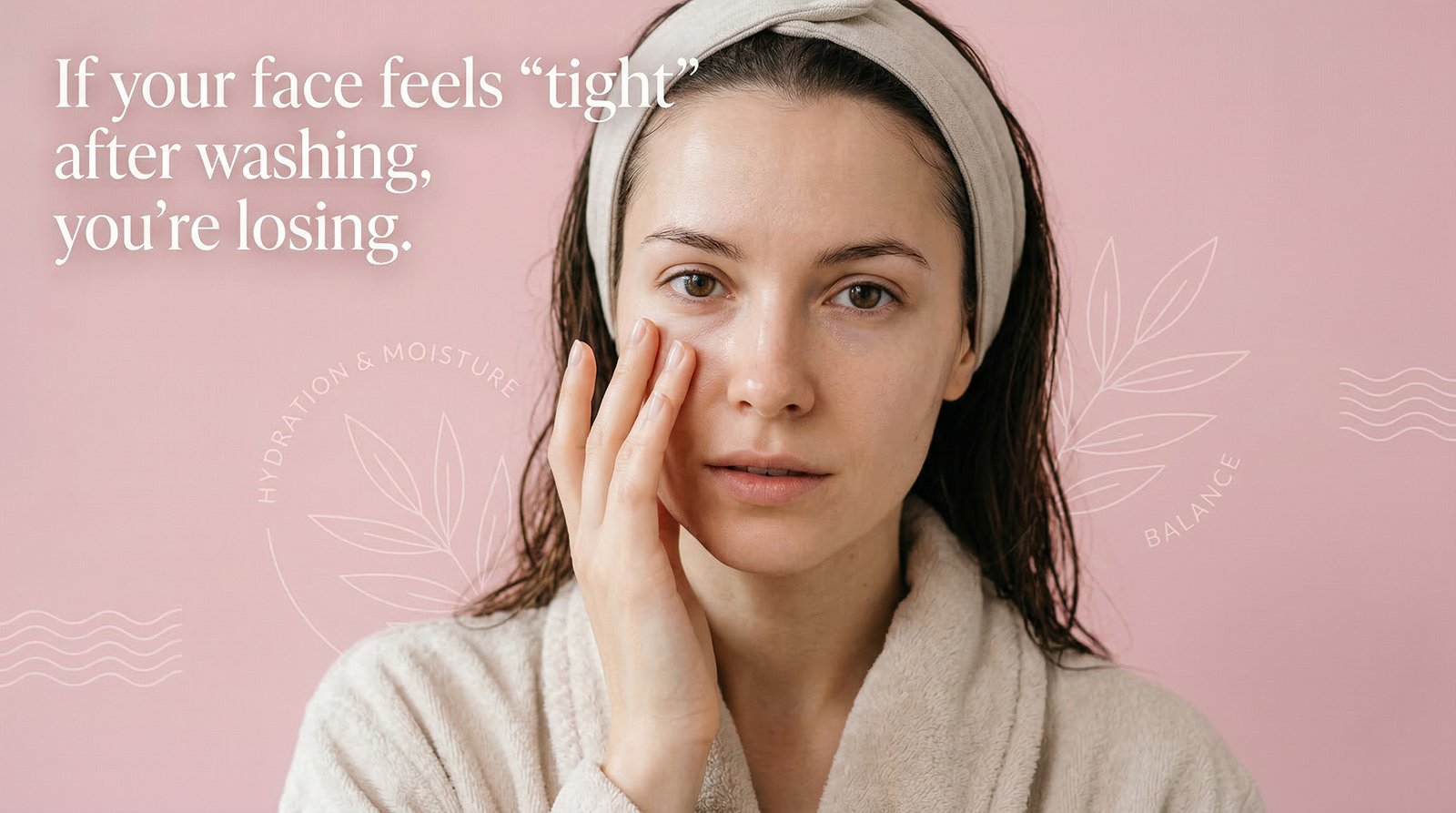
That tight, squeaky-clean feeling feels productive. It’s not. You’re stripping the lipid matrix and wrecking your microbiome in the process. One gentle cleanse at night is usually enough. Anything more is just creating the dryness you then try to fix with more products.
Slapping on hyaluronic acid and calling it a day. Without lipids to seal it in, you’re often making water loss worse. Hydration pulls water in. Moisture locks it down. Skip the seal and your barrier stays broken.
Retinol tonight, acids tomorrow, vitamin C the next day. Your skin isn’t a lab experiment. Each extra active increases inflammation and TEWL. Most of us need far less “treatment” and way more repair.
You sleep without moisturizer or use ultra-light gels thinking it helps your skin breathe. In reality, you’re leaving your barrier unprotected. An intact barrier doesn’t need air — it needs stability and lipids.
Skin acting up? Buy another serum. Still not better? Add a toner, essence, mask. The real fix is almost always subtraction, not addition. Complicated routines create the problems they claim to solve.
A simple "Skinimalism" checklist
Frequently Asked Questions
No. This is mostly marketing fluff. Skin gets oxygen from blood vessels deep in the dermis, not from the air on the surface. What people call “breathing” is usually just relief from removing heavy layers, occlusive makeup, or stripping products. When your barrier is intact, skin functions better no gasping required.
Tight feeling after cleansing, redness that won’t quit, random breakouts, stinging from products that used to be fine, or skin that looks dull and dehydrated even when you moisturize. These are classic signs. High TEWL (water loss) is happening underneath.
Yes, but sparingly and only after your barrier is stable. One active at a time, low frequency (2 to 3 times a week max at first). If your skin gets irritated, pause. Strong barrier first, aggressive treatment second. Most people rush this order and stay stuck in inflammation loops.
Hydration brings water in (think hyaluronic acid or glycerin). Moisture locks it in (ceramides, cholesterol, fatty acids). Using humectants on a broken barrier without sealing lipids is like pouring water into a leaking bucket. That’s why some “hydrating” routines leave skin drier.
For mild damage: 2 to 4 weeks of consistent barrier-focused care. Moderate to severe? 6 to 8 weeks or longer. It depends on how long you’ve been over-cleansing or over-exfoliating. Patience beats panic-buying new products.
Closing thought
The industry wants you addicted to new launches. Your skin wants consistency and respect.
Barrier-first skincare isn’t trendy. It’s biology. You don’t need more products. You need fewer that actually work formulas built for repair, not hype. “Minimals” exists for exactly this: skinimalism with high-performance minimalism. Head to minimals.com.co when you’re ready to simplify without sacrificing results.
Your skin has been trying to tell you something. Less noise might be the clearest signal yet.