
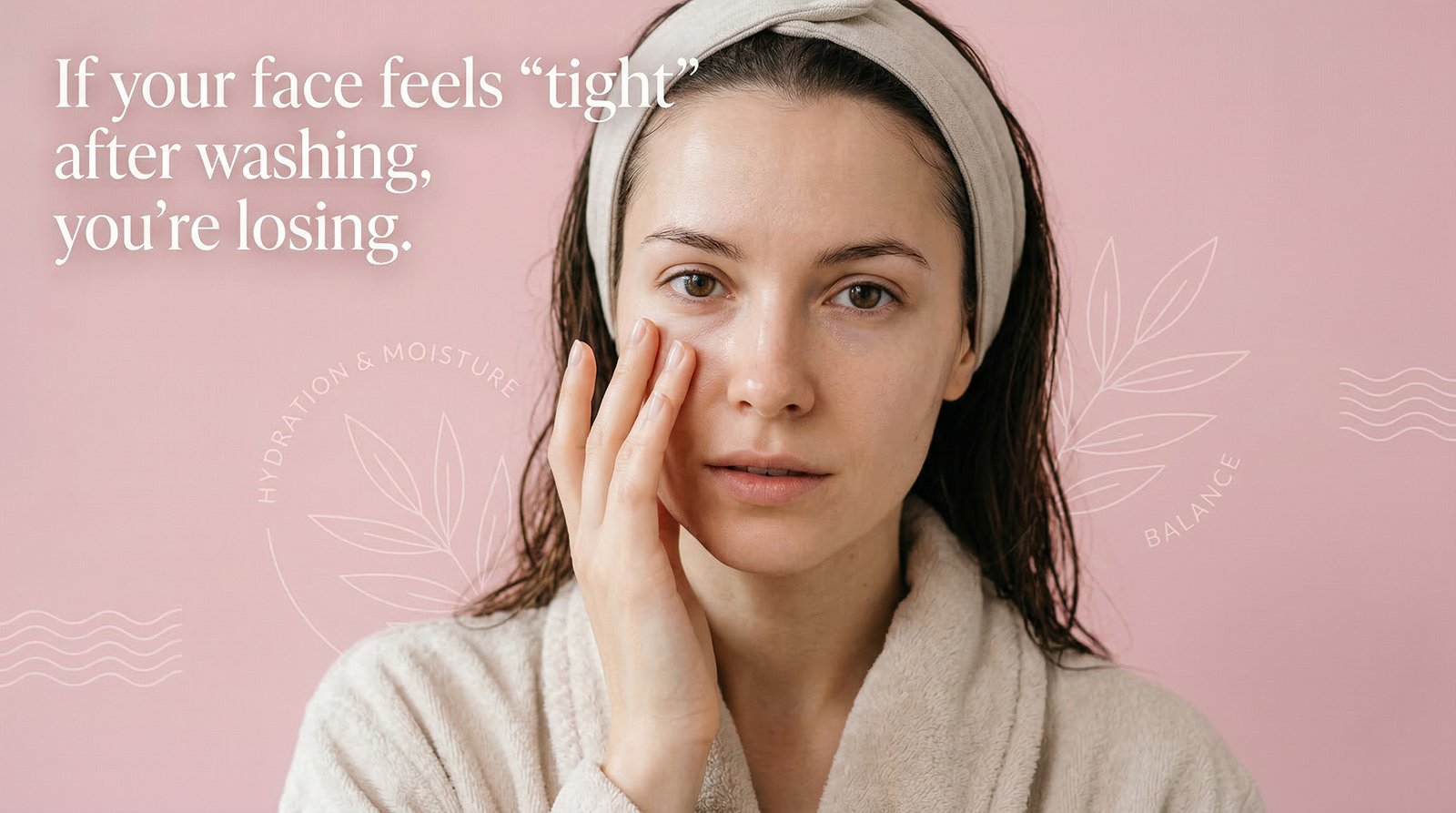
Discover why fragrance-free products are essential for sensitive skin, allergies, and overall health, and learn how to choose truly unscented options in a market full of hidden synthetic fragrances.
The Delicious Smell That's Destroying Your Skin
The product smells incredible. You know that. You bought it partly because of that. And your skin has been quietly paying for it ever since.
Fragrance is the single most common cause of cosmetic contact dermatitis and it’s hiding in products you’d never suspect. Your “sensitive skin” toner. Your “calming” facial oil. Your “natural” SPF. That luxurious moisturizer a dermatologist swears by on Instagram. The irritation you’ve been blaming on stress, hormones, or hard water? There’s a reasonable chance you’ve been washing your face with the actual cause.
This isn’t about being precious or reactive. It’s about understanding what fragrance actually does inside your skin and why the industry keeps putting it in everything anyway.
"It's Natural Fragrance" Is Not the Reassurance You Think It Is
Let’s start here, because this is the belief that causes the most damage.
“Natural” fragrance derived from essential oils, botanical extracts, citrus, lavender, rose, eucalyptus is not safer than synthetic fragrance. In many cases, it’s more irritating.
Natural fragrance is a chemically complex mixture. A single essential oil can contain dozens to hundreds of distinct chemical compounds, many of which are well-documented sensitizers. Limonene, linalool, geraniol, citronellol these are naturally occurring aromatic compounds found in some of the most expensive, “clean” skincare products on the market. They are also some of the most frequently identified allergens in dermatological patch testing.
Research published in Contact Dermatitis identified fragrance mix as the second most common contact allergen in patch test patients, behind only nickel. And “fragrance mix” in that research context included both synthetic and naturally-derived compounds because your immune system doesn’t distinguish between the two.
Natural fragrance is still fragrance. The only thing it changes is the marketing.
What Fragrance Is Actually Doing Inside Your Skin
This is where most fragrance conversations stay surface-level. Let’s go deeper.
Fragrance compounds both synthetic and natural are lipophilic, meaning they’re attracted to lipids. Your skin’s barrier is built on lipids: a precise matrix of ceramides, cholesterol, and fatty acids packed between corneocytes in the stratum corneum. This lipid matrix is what controls transepidermal water loss (TEWL) the rate at which water evaporates from your skin into the environment.
When fragrance compounds penetrate this layer, they don’t just sit there. They interact with the lipid matrix in ways that can degrade its structural integrity, disrupting the tight lamellar organization that keeps your barrier functional. The result is elevated TEWL, meaning your skin is losing moisture faster than it can replenish it even if you’re using a “hydrating” serum on top.
But it doesn’t stop at the lipid matrix.
Studies from the Journal of Investigative Dermatology show that certain fragrance compounds activate TRPV1 receptors the same receptors involved in heat and pain sensation triggering neurogenic inflammation in skin tissue. This is why some people experience flushing, stinging, or a persistent background sensitivity to products without ever developing a visible rash. The inflammation is happening below the surface, at a cellular level, without leaving a mark you can point to.
This is what an inflammation loop looks like in practice: fragrance disrupts the barrier, the disrupted barrier allows more fragrance to penetrate on the next application, the cycle deepens, and your skin becomes progressively more reactive over time often blamed on everything except the fragrance causing it.
The Label Says "Fragrance-Free." That Doesn't Always Mean What You Think.
Here’s the regulation gap nobody warns you about.
In most markets, “fragrance” on an ingredient list refers specifically to compounds added for their scent. But fragrance compounds are also added to products for non-scent purposes as masking agents to neutralize the smell of raw ingredients, as preservative boosters, or as texture modifiers and these do not always have to be disclosed under the “fragrance” label.
Some ingredients that function as fragrance compounds can appear under their individual INCI names, making a product technically “fragrance-free” while still containing multiple fragrance chemicals. Benzyl alcohol, for instance, is both a preservative and a fragrance compound. Limonene and linalool, when they oxidize, become potent sensitizers and they appear in products as components of essential oils, not as “fragrance.” Citric acid derived from orange oil carries trace aromatic compounds that don’t get flagged.
True fragrance-free formulation requires the deliberate exclusion of fragrance compounds in any function not just the removal of a “parfum” line from the ingredient list. It requires a formulator who understands the difference and makes it a priority. This matters because when your “fragrance-free” product is still making your skin reactive, you start doubting your skin instead of doubting the label.
Your Skin Microbiome Is More Fragile Than the Industry Admits
Fragrance’s impact doesn’t stop at the lipid barrier. Your skin surface hosts a complex ecosystem roughly 1.5 trillion microorganisms including bacteria, fungi, and viruses that help regulate pH, compete against pathogens, produce antimicrobial peptides, and modulate immune responses.
This microbiome is not decorative. It’s functional infrastructure.
NIH-funded research on the skin microbiome shows that disruptions to microbial diversity correlate strongly with chronic skin conditions including atopic dermatitis, rosacea, and acne. The microbiome is pH-sensitive and chemically sensitive it responds to what you put on your skin, including antimicrobial fragrance compounds like tea tree oil, eucalyptus, and certain synthetic musks.
Some fragrance compounds have documented antimicrobial properties, which sounds beneficial until you realize that a broad-spectrum antimicrobial effect on your skin surface doesn’t selectively eliminate “bad” bacteria. It depletes the diversity of the entire ecosystem, including the protective strains your skin depends on. The result: a skin surface that’s less resilient, more prone to colonization by problematic organisms, and chronically inflamed presenting as persistent breakouts, texture issues, or redness that no amount of targeted treatment resolves, because the cause is ecological rather than topical.
You can’t spot-treat a microbiome disruption with a blemish serum. You have to stop causing the disruption.
Why "I've Used It for Years Without a Problem" Is the Wrong Metric
This one is important, and it flies in the face of how most people reason about their skincare.
Contact sensitization doesn’t work like an immediate allergy. You don’t react on first exposure. Sensitization is a cumulative process: repeated exposure to an allergen triggers a gradual immune response that builds silently over months or years, until one day a product you’ve used without issue suddenly makes your skin flare, sting, or swell.
Research from the European Journal of Dermatology documents this clearly in the context of fragrance allergens the most common trigger for delayed-type hypersensitivity in cosmetic products. By the time a reaction becomes visible or undeniable, the sensitization has been developing for a long time.
This explains the confusing pattern many people experience: you’ve used a product for two years without issues, you stop and switch to something new, and suddenly your old product causes a reaction when you go back to it. Your immune system has been building a case. The product just finally triggered it.
“I’ve used it for years” is not evidence that fragrance isn’t affecting your skin. It’s evidence that sensitization hasn’t reached its visible threshold yet.
The "Clean Beauty" Paradox That's Making Reactive Skin Worse
Here’s the counterintuitive part: the clean beauty movement, for all its good intentions, has made things harder for people with fragrance sensitivity.
The push toward natural, botanical, plant-based formulations has moved brands toward essential oil-heavy products marketed as pure, safe, and non-toxic. And consumers with reactive skin who have been told that their sensitivity is caused by “chemicals” have migrated toward these products in good faith. But as established earlier: natural fragrance compounds are among the most potent contact sensitizers identified in dermatological research. A product loaded with rose hip oil, frankincense, bergamot, and ylang ylang is not a gentler option for reactive skin. It’s a high-fragrance product in botanical clothing. The clean beauty movement correctly identified that some synthetic compounds deserve scrutiny. It then overcorrected toward “natural = safe,” which isn’t dermatologically defensible.
Real barrier-first skincare doesn’t ask whether an ingredient is natural or synthetic. It asks whether the ingredient is doing useful work and whether it’s doing damage while doing it.
Fragrance, natural or otherwise, has no useful function in a skincare formula. It is an aesthetic choice that benefits the brand experience, not the skin wearing it.
If Your Routine Smells Like a Spa, Your Skin Is Probably Telling You Something
Let’s be honest about what scented skincare is.
It’s a sensory experience designed to make you feel like the product is working. The smell signals luxury. It signals freshness. It signals that something is happening. And it works on your brain studies on multisensory product perception show consistently that scented products are rated as more effective, more premium, and more pleasant to use, regardless of their actual formulation. You’re not irrational for being drawn to scented products. You’ve been sold an experience specifically engineered to feel like efficacy.
But your skin doesn’t perceive fragrance as luxury. It perceives it as a foreign compound that needs to be managed. Every sensory hit you get from a beautifully scented serum is being processed by your skin as a potential threat triggering the inflammatory cascade, depleting barrier resources, and quietly making your skin less resilient over time.
The fragrance is doing nothing for your skin. Your skin is doing a lot to manage the fragrance.
The Fragrance-Free Routine That Actually Respects Your Barrier
Here’s what switching to fragrance-free actually looks like in practice not as a deprivation, but as a recalibration.
Most cleansers are scented. Even “gentle” ones. Even ones marketed at sensitive skin. The cleanser is the step your skin absorbs in its most vulnerable state post-removal of surface oils, before any barrier replenishment.
A cleanser that maintains a pH of 5.5, uses no fragrance compounds in any form, and doesn’t strip the lipid matrix is harder to find than it should be. The Minimals Gentle Milk Cleanser is formulated without fragrance natural or synthetic with a pH matched to your skin’s natural acid mantle, so cleansing doesn’t become the first insult of your skincare routine.
If your skin is reactive, this step should be either a fragrance-free barrier-repair serum ceramides, fatty acids, niacinamide or nothing at all until your barrier has recovered. Layering multiple actives on a disrupted barrier doesn’t amplify results. It amplifies irritation.
One active. Fragrance-free. Applied to skin that’s been properly cleansed, not stripped.
This is the step that actually does the structural repair work replenishing the ceramide matrix, reducing TEWL, and creating the conditions for your skin to recover and function independently.
Most moisturizers are scented. Even many ceramide moisturizers are lightly fragranced “for experience.” The Minimals Barrier Repair Moisturizer skips all of that formulated around the lipid ratio that mirrors your skin’s own composition, without fragrance compounds in any function.
SPF is where fragrance contamination is most egregious, because sunscreens are notoriously difficult to make cosmetically elegant without masking agents. Look specifically for mineral SPFs with short, transparent ingredient lists. If your SPF has “parfum,” “fragrance,” or a botanical oil in the top half of the ingredient list, find a different one.
The Transition Period Is Real Here's What to Expect
When you strip fragrance out of your routine, your skin doesn’t immediately improve. It might actually look worse for a week or two.
This is normal. Your skin has been managing a chronic low-grade inflammatory state, and when the trigger is removed, that inflammation continues its current cycle before resolving. You might notice more dryness initially, as your skin recalibrates its sebum and moisture regulation without the external disruption it’s been compensating for.
Stay the course. Keep the routine simple. Resist the urge to add something new because the transition feels slow.
Your skin isn’t getting worse. It’s getting quieter. Those are different things.
Common mistakes we all make
A simple "Things to Do Before Your Next Routine" checklist
Frequently Asked Questions
Fragrance-free means the product contains no added fragrance ingredients to mask or enhance scent. However, it may still contain essential oils or masking fragrances. Always check the full ingredient list.
No. “Unscented” products often contain masking fragrances to neutralize the natural smell of other ingredients. Fragrance-free is usually the safer choice.
Fragrance mixes contain hundreds of individual chemicals. Many are known allergens and skin irritants. Since companies don’t have to list every component of a “fragrance,” it becomes a hidden trigger.
Yes. Essential oils such as lavender, citrus, peppermint, and tea tree are common allergens, even though they’re plant-derived.
Closing thought
Here’s the thing that should frustrate you.
Fragrance-free formulation is not harder than fragranced formulation. It doesn’t require more expensive ingredients. It doesn’t demand more sophisticated chemistry. Removing fragrance from a formula is, from a technical standpoint, simpler than adding it. Fragrance-free products are often positioned as “for sensitive skin” a niche, a specialty, a concession for people who can’t tolerate normal products. That framing is backwards. Fragrance serves the brand. It makes products smell appealing on shelf, in unboxing videos, and in bathroom routines. It creates a sensory signature. It makes a $15 moisturizer feel like a $60 one.
None of that is for your skin. All of it is for the sale.
Fragrance-free isn’t a limitation in a formula. It’s a sign that the brand chose your skin’s biology over their product’s shelf appeal. That choice is rarer than it should be and it’s worth knowing who’s actually making it.