
Oxidation has set in exposure to air, light, or heat has degraded the pure L-ascorbic acid, turning it orange and rendering it ineffective for brightening and collagen support.
Your Vitamin C serum turned orange. It’s not “still working.” It’s useless.
You bought the hype. The brightening, glow-giving, collagen-boosting promises. You applied it religiously. Then one day you notice the bottle has shifted from clear or pale yellow to a suspicious orange-brown. You keep using it anyway because it cost money and the internet said “it’s fine.”
It’s not fine. That color change means the L-ascorbic acid has oxidized. The active you paid for is mostly gone, and what’s left can do more harm than good to your skin.
This isn’t rare. It’s the standard fate of most Vitamin C serums sitting on bathroom shelves. Let’s talk about why it happens and what actually works instead.
The expensive mistake sitting in your bathroom right now
That orange tint isn’t a quirky aesthetic. It’s the visible proof of oxidation. L-ascorbic acid the pure, most effective form of Vitamin C is extremely unstable. Air, light, heat, water, and time all break it down.
Once it oxidizes, it turns from a potent antioxidant into something that can generate free radicals instead of neutralizing them. You’re no longer protecting your skin. You might be adding low-level stress. And yet the industry keeps selling unstable formulas in clear droppers like it’s no big deal.
Why your Vitamin C keeps betraying you
Every time you open the bottle, oxygen rushes in. Light hits the clear packaging. Your warm bathroom does the rest. The molecule donates electrons too eagerly great on skin when fresh, disastrous in the bottle. It first turns yellow, then orange, then brown. By the deep orange stage, most of the active Vitamin C has converted to dehydroascorbic acid and further breakdown products that don’t deliver the brightening or collagen benefits you wanted.
You’re left rubbing oxidized compounds onto your face and wondering why you’re not seeing results.
The barrier damage you don’t see coming
Here’s what most people miss: an oxidized Vitamin C serum doesn’t just lose power. It can quietly stress your skin barrier.
Your stratum corneum relies on a precise lipid matrix ceramides, cholesterol, fatty acids to hold moisture and block irritants. When you apply something that’s already breaking down, especially at the low pH needed for L-ascorbic acid penetration, you risk increasing transepidermal water loss (TEWL).
The inflammation loop starts small. Subtle redness. Random sensitivity. Then you add more “brightening” products to fix it. The cycle continues. Over-cleansing makes everything worse. Stripping your skin morning and night destroys the microbiome and lipids. Then you layer unstable actives on top. Your barrier never gets a chance to recover.
The pH and packaging trap most brands ignore
Effective L-ascorbic acid needs a pH under 3.5 to penetrate properly. That’s very acidic. Great for delivery when fresh. Terrible for stability once opened. Many brands put it in clear glass dropper bottles anyway pretty on the shelf, terrible for the ingredient. Every pump or dropper pull introduces more air. Oxidation accelerates. You end up with a beautiful bottle of expensive irritation waiting to happen.
Wait what? The serum that was supposed to defend your skin against environmental damage is now contributing to it.
Why layering more actives makes the problem worse
You have your Vitamin C in the morning. Maybe niacinamide. Maybe an acid. Maybe a retinoid at night. All on top of a potentially compromised barrier.
Each active demands something different from your skin. The low pH of Vitamin C clashes with other ingredients. Your microbiome gets disrupted. Inflammation creeps up. TEWL increases. Your skin feels drier and more reactive even though you’re “doing everything right.”
This is why so many people with 6 to 8 step routines still complain of dullness, sensitivity, and breakouts. The routine itself is the obstacle.
The shift that actually protects your skin
Skinimalism isn’t about doing nothing. It’s about doing the few things that matter, consistently, with formulas that respect your biology.
Instead of chasing unstable hero ingredients in complicated routines, focus on barrier-first skincare. A stable, functional barrier handles environmental stress better than any single antioxidant ever could. When your lipid matrix is intact, your skin retains moisture naturally. Your microbiome stays balanced. Inflammation stays low. Then smart actives used sparingly and in stable forms can actually do their job.
The Vitamin C myth that refuses to die
“Fresh is always better.” Sure, in theory. In practice, most fresh L-ascorbic acid serums oxidize within weeks of opening, especially in humid or warm climates like Karachi. You don’t need a daily high-dose Vitamin C that turns on you. You need reliable antioxidant support that doesn’t create new problems.
At this point, your skin doesn’t need another unstable serum. It needs a thoughtful approach that delivers benefits without the daily oxidation drama.
If your routine feels complicated, that’s the problem
Count your steps. How many products contain “actives”? How many times have you replaced a serum because it stopped working or started stinging?
Complicated routines create invisible damage. More chances for ingredient conflicts. More exposure to unstable compounds. More stress on an already busy skin barrier. The solution isn’t adding a better Vitamin C. It’s simplifying so your skin can actually use what you give
Your minimal barrier-first routine
Keep it to 3 to 4 steps. Morning and night. No hero worship. Just consistent support.
Evening (repair focus):
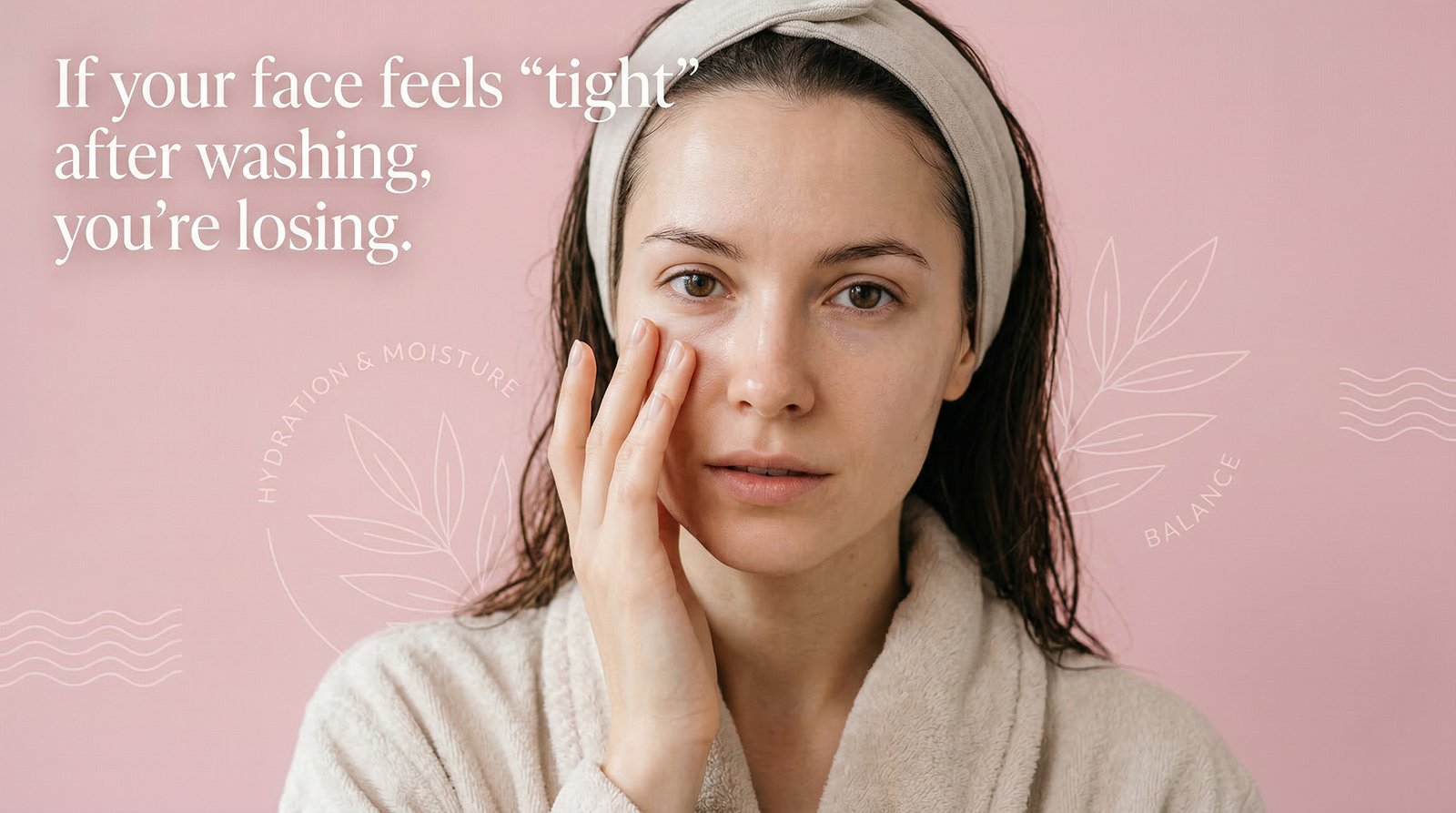
Remove the day without stripping lipids or raising pH dramatically. Your skin should feel soft, not tight or squeaky.
One smart serum or treatment that delivers what your skin needs without overwhelming it. If you want antioxidant support, it should come in a stable form that doesn’t oxidize on your shelf.
A moisturizer that reinforces your ceramide-lipid matrix. This is where real moisture retention and recovery happen.
Morning:
Same foundation, plus protection. A good mineral sunscreen if you’re going out. That’s it. No multiple actives fighting each other. No guessing whether today’s Vitamin C is still good.
Moisture sandwiching works here too: apply treatments on damp skin, then seal immediately with your moisturizer. Simple. Effective.
Common Vitamin C mistakes that destroy results
Fresh Vitamin C can help with brightening and collagen when done right. Oxidized Vitamin C just adds stress.
What real antioxidant support looks like
Stable, well-formulated options exist. Formulas that pair antioxidants thoughtfully or use derivatives that don’t oxidize as fast. Ones packaged to minimize air and light exposure.
But even better? Building a routine where your barrier does most of the heavy lifting. Then any antioxidant you add has a solid foundation to work on. Your skin doesn’t need daily hero doses. It needs consistency and fewer disruptions.
A simple "Vitamin C" checklist
Frequently Asked Questions
It oxidized. L-ascorbic acid reacts with air, light, and heat. Once it turns yellow or orange, most of the active ingredient is gone and the leftovers can generate free radicals instead of fighting them.
No. Throw it out. Oxidized Vitamin C loses its benefits and can quietly irritate your skin barrier. You’re not “getting the last use” you’re applying broken-down compounds.
Buy smaller bottles, store it in a cool dark place (fridge is fine), never in the bathroom, and close the cap tightly every time. Even then, many formulas don’t last long once opened.
L-ascorbic acid is the strongest but most unstable. Derivatives are gentler and more stable but usually less potent. Your choice depends on how sensitive your skin is and how well you can maintain fresh product.
Only if your skin is strong and the routine is minimal. Layering Vitamin C (low pH) with acids or retinoids often increases irritation and barrier damage. When in doubt, keep it simple.
Closing thought
The skincare industry loves selling you the next miracle serum. Especially ones that look impressive in photos but fall apart in real life. Your skin thrives when you stop the cycle of constant chasing and start supporting its core functions: barrier integrity, microbiome balance, and calm inflammation response.
At this point, your skin doesn’t need another unstable active. It needs a cleanser that doesn’t strip, a treatment that delivers without drama, and a moisturizer that actually seals.
Focus there first. Watch how much less you need everything else.That quiet confidence? It comes from routines that work with your skin instead of constantly fighting it. Strip back. Observe. Use stable, thoughtful formulas. Give your barrier what it actually needs.
Your skin will look brighter and healthier not because of one orange-turned serum, but because you finally stopped breaking it down in the name of “self-care.”