
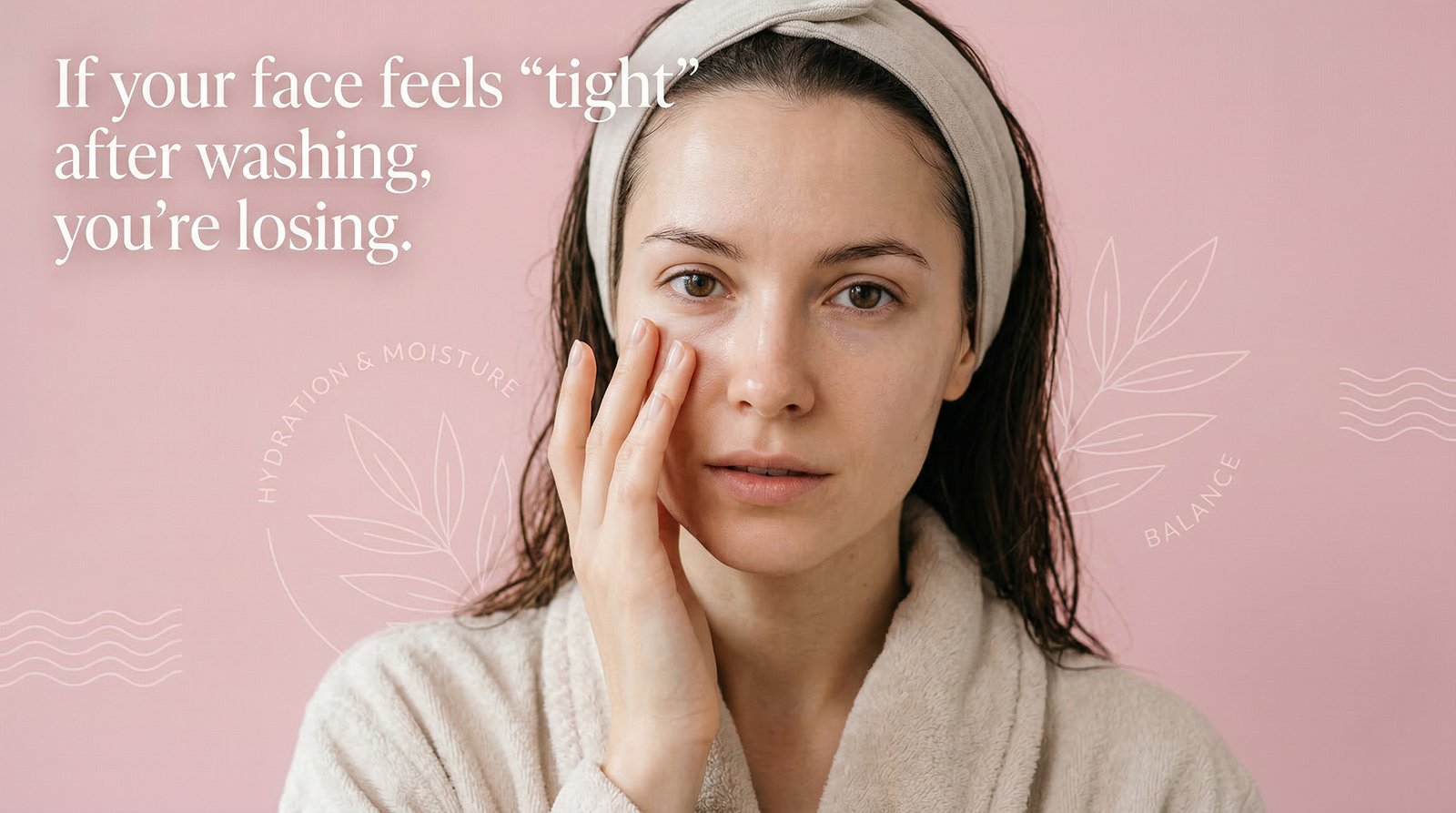
“While slugging works wonders for dry skin, it can worsen oiliness, clog pores, and trigger breakouts here’s why you should stop and what to do instead for healthy, balanced oily skin.”
The Oily Skin Slugging Mistake Nobody Talks About
Somewhere between a TikTok trend and a desperate attempt to fix your skin, you discovered slugging.
You smeared Vaseline across your face, went to sleep expecting glass skin, and woke up to clogged pores, congestion, and a complexion that looked more like a grease trap than a glow.
Here’s the truth nobody in your algorithm wanted to say out loud: slugging was never designed for oily skin. And continuing to do it or feeling guilty for quitting is costing your barrier more than it’s saving it. This isn’t about shaming a trend. It’s about understanding what your skin actually needs, biologically, versus what the internet told you it needs aesthetically.
Those are two very different things.
Oily Skin Doesn't Mean Your Barrier Is Fine
This is the assumption that starts the whole problem. Because your skin produces visible sebum, most people and honestly, most outdated dermatology advice assume oily skin is inherently well-protected. That the oil is the barrier. It isn’t. Sebum and your skin’s lipid barrier are not the same thing. Sebum is produced by sebaceous glands and sits on the surface. Your skin barrier the stratum corneum is built from a completely different set of lipids: ceramides, cholesterol, and free fatty acids in a tightly organized matrix.
Research published across multiple barrier function studies on PubMed has shown that oily skin can simultaneously have elevated sebum production and a disrupted lipid barrier meaning high surface oil with low structural protection underneath.
You can be greasy and barrier-damaged at the same time.
That’s not a contradiction. That’s actually one of the most common skin conditions people are walking around with, completely undiagnosed, blaming everything on hormones.
What Slugging Is Actually Doing Under the Surface
Let’s be specific about the mechanism, because “slugging clogs pores” is an oversimplification that doesn’t explain the full picture.
Petroleum jelly the base of every slugging routine is an occlusive. Its job is to form a physical seal over the skin to reduce transepidermal water loss, or TEWL. For dry, compromised, or eczema-prone skin, that seal can be genuinely therapeutic. For oily skin, here’s what that seal is doing instead. It’s trapping everything underneath it residual cleanser, dead skin cells, sebum, and any bacteria already sitting in your follicles. That includes Cutibacterium acnes, the bacteria most associated with inflammatory acne which, importantly, is anaerobic. It thrives in low-oxygen environments.
An occlusive seal is precisely the low-oxygen environment it loves most.
Beyond acne, the occlusion disrupts your skin’s natural nighttime processes. Your skin sheds dead cells and regulates itself while you sleep. A heavy occlusive layer can interfere with that desquamation process, contributing to congestion, milia, and the kind of texture that no filter can fix.
So, yes you’re sealing in moisture. You’re also sealing in everything you don’t want.
Your Skin's Moisture Problem Isn't What You Think It Is
Here’s the counterintuitive part. Stay with it.
When your skin feels tight, dehydrated, or reactive even under a layer of oil the instinct is to pile on more. More layers, more moisture, heavier products, petroleum jelly on top of everything.
But hydration and moisture are not the same thing, and confusing them is where most oily-skin routines collapse.
Hydration refers to water content in the skin managed primarily by humectants like glycerin and hyaluronic acid that attract and bind water to skin cells.
Moisture refers to your skin’s ability to retain that water managed by your lipid barrier: ceramides, fatty acids, cholesterol.
If your barrier is damaged, you can layer on all the humectants you want. The water will absorb and evaporate almost immediately, because there’s nothing structural holding it in place. This is why slugging feels like it’s working it forces water retention via an external occlusive but it doesn’t actually repair the barrier that should be doing that job naturally. You’re outsourcing a function your skin was built to perform. The fix isn’t a heavier seal. It’s rebuilding the barrier that makes the seal unnecessary.
The Cleanser That's Making Everything Worse
Before we talk about what to apply, we need to talk about what you’re removing.
Oily skin and harsh cleansing have a codependent, deeply dysfunctional relationship. Your skin produces oil, you strip it aggressively to compensate, your skin reads that stripping as a threat and overproduces more oil in response and the cycle continues.
More than the oil cycle, aggressive cleansing is destroying the microbial diversity your skin needs to function.
Your skin hosts a complex microbiome a community of bacteria, fungi, and other microorganisms that regulate inflammation, protect against pathogens, and support barrier integrity. Research on the skin microbiome has consistently shown that over-cleansing with high-pH, surfactant-heavy formulas disrupts this balance, depleting beneficial species and creating an environment where inflammatory bacteria take over.
The result isn’t clean skin. It’s dysbiotic skin reactive, inflamed, prone to breakouts, and paradoxically, more oily. If your cleanser leaves your face feeling squeaky, tight, or “clean,” it’s doing damage. That sensation is your acid mantle being stripped, your barrier being compromised, and your microbiome being thrown into chaos. You need a cleanser that removes what doesn’t belong without touching what does. Low pH, minimal surfactants, no fragrance. Something your skin barely notices because that’s the point.
“Minimals” gentle pH-balanced cleanser was formulated precisely for this: effective enough to clear the day without triggering the rebound oil cycle that harsher formulas create.
Ceramides Are the Conversation You Should Be Having Instead
If slugging was an attempt to protect your barrier from the outside in, ceramides are how you rebuild it from the inside out.
Ceramides are naturally occurring lipids that make up approximately 50% of your stratum corneum’s structure. They act as the mortar between skin cells, maintaining the tight junctions that prevent water loss and keep irritants out.
Studies on ceramide depletion have found that people with acne-prone and oily skin often show measurably lower ceramide levels than those with normal skin meaning the skin that looks most “moisturized” on the surface is often most structurally vulnerable underneath.
When you apply a ceramide-containing moisturizer, you’re not just hydrating. You’re literally supplementing the building blocks your barrier uses to repair itself overnight.
This is barrier-first skincare the principle that your skin’s long-term health and resilience is built on structural integrity, not surface occlusion. It also means you can use a lightweight formulation and still get real, lasting results. No petroleum jelly required.
The ideal ceramide moisturizer for oily skin is non-comedogenic, fragrance-free, and light enough to not contribute additional heaviness while still delivering the lipid replenishment your barrier actually needs. Minimals’ ceramide moisturizer sits in exactly that space: clinically relevant actives in a formula oily skin can wear without dread.
Why Layering More Actives Is Quietly Backfiring
Here’s where most skincare enthusiasts get themselves into trouble.
You’ve read that niacinamide controls oil. That retinol speeds cell turnover. That AHAs exfoliate congestion. That vitamin C brightens. So you use all of them sometimes in the same routine and wonder why your skin is more reactive than before you started “taking care of it.”
The problem is stacking. Every active you apply is a stressor, even a beneficial one. Your skin has a finite capacity to process and respond to actives before it shifts from repair mode into inflammation mode.
Research on topical active interactions has documented how combining certain actives particularly exfoliating acids with retinoids, or high-concentration vitamin C with niacinamide can trigger a stress response that manifests as redness, sensitivity, breakouts, or stalled results.
This is an inflammation loop. You apply actives to fix a problem. The actives irritate a compromised barrier. The irritation causes inflammation. The inflammation triggers breakouts. You apply more actives to fix the breakouts.
The exit from this loop isn’t a new serum. It’s a period of deliberate restraint.
Strip your routine back to basics for two to four weeks. Cleanser, ceramide moisturizer, SPF. Let your barrier close before you ask it to do anything else. Then and only then reintroduce actives one at a time, spaced weeks apart, so you can actually assess what’s working.
The "More Is More" Routine Is Exhausting Your Skin
If your current routine takes more than ten minutes, you need to hear this.
Every step is a variable. Every product is a potential irritant, a potential interaction, a potential disruption to the barrier you spent the previous step trying to protect.
Oily skin in particular is often over-routined. Multiple cleansing steps, multiple serums, heavy moisturizers to “balance” the actives, then an occlusive on top to “lock it all in.” The result is a skin surface overwhelmed by inputs it can’t process, producing even more oil as a defensive response to the chaos. Skinimalism isn’t a minimalist aesthetic. It’s a biological argument. Your skin barrier has the same regenerative machinery it’s always had. Your job isn’t to overwrite it it’s to stop undermining it long enough for it to do its work.
Less intervention, more consistently, produces better results than a rotating ten-step routine that keeps your barrier permanently destabilized.
The Reality Check You Didn't Ask For But Need
If you’re slugging every night and still breaking out, the petroleum jelly isn’t the only problem. It’s the signal. It’s telling you that something earlier in your routine or several things is creating the very damage you’re trying to seal over. And sealing over damage doesn’t heal it. It preserves it.
Ask yourself honestly: Is your cleanser too harsh? Are you exfoliating more than twice a week? Are you using three or more actives regularly? Have you ever given your skin a full month off from everything, just to see what it actually does on its own?
If the answer to any of those is yes, the fix isn’t finding a lighter occlusive. The fix is going back to zero and rebuilding deliberately.
The Minimal Routine That Actually Works for Oily Skin
This isn’t a ten-step reset. It’s four steps with a clear purpose.
Morning
Rinse with water or use a low-pH, gentle cleanser if you wore sunscreen the night before. Your skin was not dirty while you slept.
If you’re at a stable baseline and want to reintroduce an active, this is where it goes. One active. Niacinamide at 5 to 10% is the most barrier-compatible starting point for oily skin it regulates sebum, strengthens the barrier, and doesn’t cause the irritation profile of most other actives
A ceramide-based moisturizer, lightweight enough that you’re not fighting it all day. Minimals’ moisturizer is formulated for exactly this: enough barrier support to matter, light enough to forget you’re wearing it.
SPF 30 minimum, every morning, regardless of what your plans are. UV damage is the single most significant driver of barrier degradation, hyperpigmentation, and accelerated skin aging. There is no treatment that undoes what consistent sun exposure does. None.
Evening
This time, you actually need it. Double cleanse if you wore SPF or makeup: an oil cleanser first to break down what’s on the surface, then your low-pH cleanser to clear the residue.
Retinol belongs here if you’re at the point of adding it back. Start with the lowest concentration available. Use it twice a week. Do not use it the same night as any acid.
The same ceramide moisturizer. That’s it. That’s the routine.
No slugging. No heavy occlusive. Your barrier rebuilt with the right lipids will retain moisture better on its own than petroleum jelly on top of a compromised structure ever could.
Common mistakes we all make
A simple "Barrier-Reset " checklist
Frequently Asked Questions
Yes and this is one of the most misunderstood things about oily skin. Sebum and water content are completely separate. Your skin can produce excess oil and still be critically short on water. That tight, uncomfortable feeling under the grease? That’s dehydration. Not dryness. Not a reason to slug.
Realistically, four to six weeks of consistent, minimal intervention. That means no harsh actives, no over-cleansing, no experimenting with new products. Your barrier rebuilds in layers and every time you disrupt it mid-process, the clock resets.
In very specific, targeted situations a dry patch, a compromised spot, chapped lips. Not as a full-face nightly routine. The difference between therapeutic occlusion and problematic occlusion is surface area and frequency.
It will temporarily. That’s rebound sebum production, and it’s your skin recalibrating after a period of heavy occlusion. Give it two to three weeks before you judge the results. The overproduction settles once your barrier stabilises.
For most oily skin types, no. A well-formulated ceramide moisturiser works morning and night. The real distinction is SPF in the morning not a completely different product. Doubling up on moisturisers usually means doubling up on ingredients your skin doesn’t need.
Closing thought
You Don’t Need More. You Need the Right Things, Consistently.
The skincare industry profits when you treat your skin like a problem that needs constant fixing. It doesn’t.
Your skin is already highly capable. Most of the issues come from over-stripping, over-treating, and over-sealing it. Stopping slugging isn’t about replacing one trend with another it’s about stepping back and supporting your skin barrier with minimal, effective care.
Fewer steps. Better ingredients. Real consistency. That’s the actual solution.