
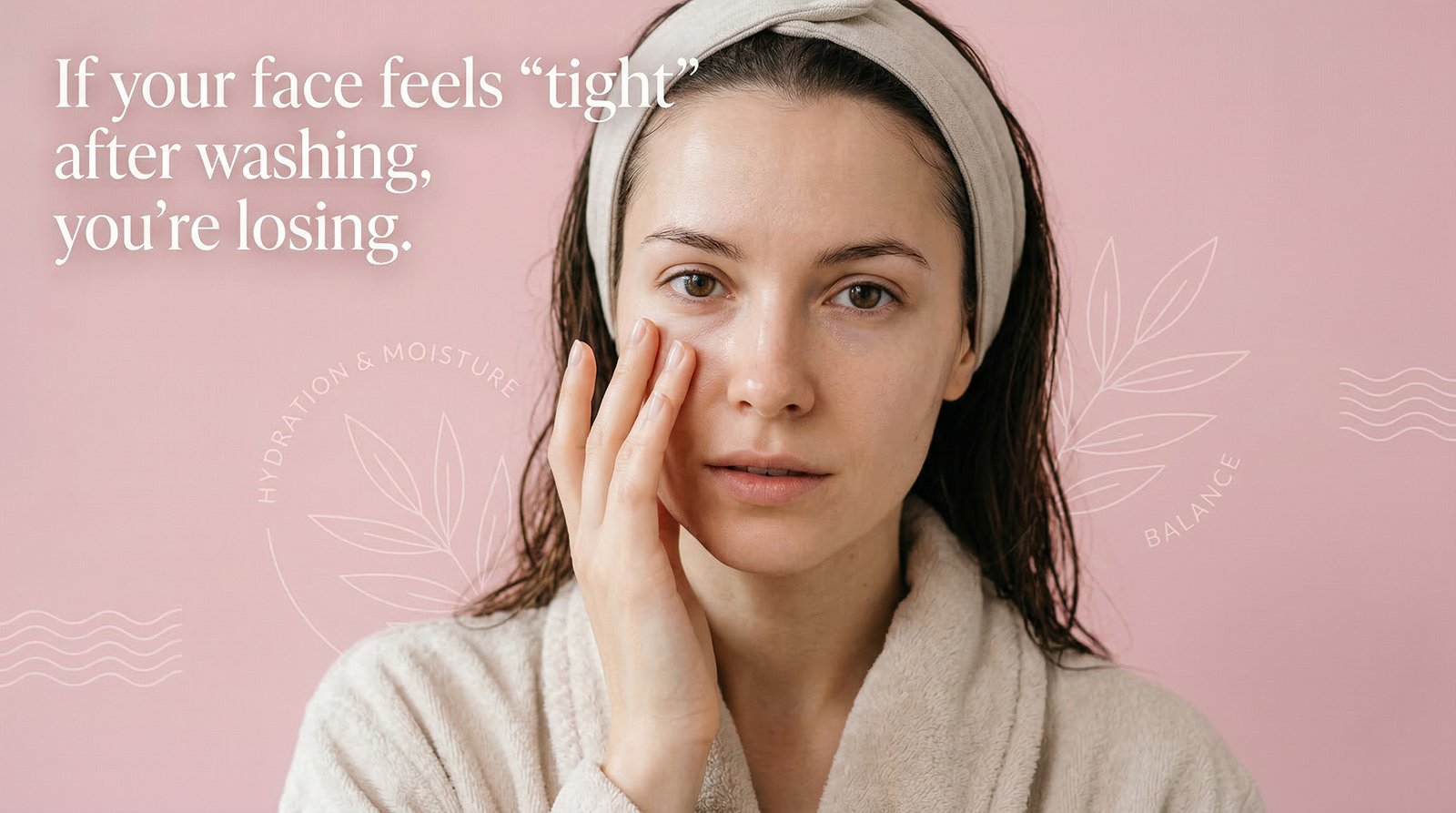
“Discover simple, effective ways to quickly soothe red, irritated skin and restore a calm, healthy complexion.”
Your red skin isn’t “just sensitive.” It’s trying to tell you something.
You’ve tried the soothing creams. The green-tinted primers. The “calming” serums with 47 ingredients. Yet every time you look in the mirror, your skin still looks pissed off patchy redness, tightness, that low-level burn that makes you wonder if you’re allergic to your own face.
Here’s the uncomfortable truth: most of what you’re doing to fix it is making it worse. Your 10-step “calming” routine is probably the main culprit.
I’m not here to shame your shelf. I’m here because I’ve seen this pattern too many time smart people with angry skin, chasing fixes that ignore how skin actually works. Let’s cut through the noise.
The Real Reason Your Skin Won’t Calm Down
Redness isn’t random. It’s usually your skin barrier screaming for help.
Your outer layer the stratum corneum functions like brick-and-mortar. The “bricks” are skin cells. The “mortar” consists of lipids, mainly ceramides, cholesterol, and fatty acids. When that mortar cracks, transepidermal water loss (TEWL) spikes. Water escapes. Irritants and allergens get in. Inflammation follows. Redness appears. Most people attack the redness with more actives. More acids. More “soothing” botanicals that actually disrupt things further. The result? An endless inflammation loop. Your skin isn’t inflamed because it lacks products. It’s inflamed because you’ve stripped its defenses.
Over-cleansing wrecks your microbiome too. Those beneficial bacteria on your skin help regulate inflammation and keep pathogens in check. Harsh surfactants and frequent washing wipe them out, leaving room for imbalance that shows up as redness and sensitivity.
You don’t have “hormonal redness.” You have a damaged barrier and a pissed-off ecosystem.
Why “Hydration” Often Makes Redness Worse
Here’s a counterintuitive hit: slapping on hydrating ingredients without sealing them in can backfire.
Hydration adds water. Moisture prevents that water from escaping. If your barrier is compromised, those humectants (glycerin, hyaluronic acid, etc.) can pull water out instead of in, especially in dry environments. You end up with tighter, redder skin.
This is why some people “hydrate” religiously yet stay dehydrated and reactive. They’re missing the lipids that rebuild the mortar.
The Layering Trap Most People Fall Into
You know the drill: toner, essence, serum, another serum, cream, oil, mask. Each layer sounds logical in isolation. Together they create chaos. Too many actives even gentle ones overwhelm a compromised barrier. Your skin spends energy processing ingredients instead of repairing itself. Inflammation increases. Redness persists. Skinimalism isn’t about doing nothing. It’s about doing the few things that actually support repair instead of fighting your skin’s natural processes.
Stop Doing These Things Immediately
Your foaming cleanser is likely enemy #1. Those sulfate-heavy formulas strip lipids and shift your skin’s pH, inviting more redness. If your skin feels tight after cleansing, you already know this.
Daily exfoliation? Big mistake for red, reactive skin. Even mild chemical exfoliants remove the very layers your barrier needs to rebuild. Over-exfoliation is a fast track to chronic redness and sensitivity.
Essential oils and fragrance. “Natural” doesn’t mean safe. Many trigger contact dermatitis in compromised skin.
Hot water. It feels nice but dissolves barrier lipids faster than almost anything else.
What Actually Works: Barrier-First Thinking
Repair starts with stopping the damage, then giving your skin the raw materials it needs. Ceramides top the list. Research shows ceramide-dominant formulas restore barrier function, reduce TEWL, and calm inflammation in irritated skin. They work because they mimic what your skin already makes. Your skin doesn’t need exotic plants or trendy peptides right now. It needs consistency in the basics.
The “Less, But Better” Shift
This is where “Minimals” comes from not as another brand throwing products at problems, but as a response to the exhaustion of complicated routines. When your skin is red and reactive, it doesn’t need another step. It needs formulas that do multiple jobs without adding irritation.
Myth: You Need Separate “Calming” and “Repair” Products
Reality: the best repair is calming.
A well-designed moisturizer with ceramides, cholesterol, and fatty acids in the right ratios does both. It reduces redness by fixing the underlying issue instead of masking symptoms. At this point, your skin doesn’t need another soothing mask. It needs a moisturizer that already supports the lipid matrix it’s missing.
The Over-Exfoliation Trap You Didn’t See Coming
Many people with redness blame “sensitive skin” when the real issue is barrier damage from too much “glow” chasing.
That nightly acid you love? It might be keeping you in a cycle of micro-damage. Your skin turns over faster to compensate, but without proper support, you get redness, flaking, and rebound sensitivity. Pausing exfoliation for a few weeks while focusing on repair often clears redness faster than any targeted “anti-redness” treatment.
Wait what if stopping actives makes my skin worse at first? That initial purge or adjustment period is usually just your skin finally being allowed to recalibrate without constant assault.
Cleansing: The Most Important Step You’re Probably Botching
You don’t need to strip your skin twice a day to feel clean. A gentle, non-foaming cleanser that respects pH and doesn’t nuke your lipids makes a bigger difference than any serum. Look for something that cleans without surfactants that leave your skin squeaky. Your barrier (and microbiome) will thank you.
“Minimals” approach here is simple: cleanse effectively but minimally, so the rest of your routine can actually absorb and work.
The Inflammation Loop Most Routines Ignore
Red skin often creates a vicious cycle: damage → inflammation → more damage as you try to fix it.
Breaking it requires patience and restraint. Anti-inflammatory ingredients help, but only after you stop feeding the fire. This is why barrier repair often outperforms pure “soothing” actives long-term. Fix the structure, and the symptoms fade.
Your Minimal Routine for Calming Red Skin
Keep it to 3-4 steps. Consistency beats complexity every time.
That’s it. No 7-layer sandwich. No rotating actives. Just support.
Moisture sandwiching works well here: apply your moisturizer on slightly damp skin to lock in what’s there, then let the formula do its job reinforcing the lipids.
The Reality Check No One Wants
If your routine feels complicated, that’s the problem.
Complicated routines sell products. Simple ones heal skin.
You’ve probably spent more money chasing calm than it would cost to strip everything back and rebuild properly. Most people resist this because it feels like giving up. It’s actually the smartest move.
Your skin is remarkably good at repairing itself when you stop interfering.
What to Look For in Products That Actually Help
A good barrier cream should make your skin feel comfortable, not like you’ve added another layer of film.
This is where “Minimals” fits naturally. Their formulas prioritize the lipids and simplicity your barrier actually needs no filler, no nonsense. When your skin is red and reactive, you want a moisturizer that already combines repair and calm in one step.
How Long Until You See Change?
Real barrier repair takes time usually 2-4 weeks of consistent minimal care before you notice less redness and reactivity. Some people see hydration improvements sooner, but structural repair doesn’t happen overnight.
Be patient. The skin you’re trying to fix has been through a lot.
Track TEWL indirectly: less tightness, less stinging when applying products, more even tone. Those are your signs it’s working.
Common Setbacks and How to Handle Them
Initial purging or adjustment: Normal. Stick with it.
Life stress or travel throwing things off: Double down on the basics. Your barrier hates disruption.
Temptation to add “just one more thing”: Resist. One active too many can reset your progress.
Seasonal changes: Winter usually demands richer textures. Listen to your skin.
Common mistakes we all make
You’re not alone. Most people with red, reactive skin make the same errors even when they’re trying hard to fix it.
Foaming cleansers and twice-daily stripping routines feel productive, but they destroy your lipid barrier and microbiome. Tight skin after washing isn’t clean it’s damaged. This is often the #1 reason redness won’t calm down.
Centella, niacinamide, azelaic, licorice, green tea… layering them all on a broken barrier creates more inflammation, not less. Your skin isn’t a sponge. It’s overwhelmed.
Hyaluronic acid and glycerin are great, but without ceramides and lipids they can’t fix anything long-term. Hydration without moisture is why your skin stays tight and red.
Your damaged skin isn’t the same as it was months ago. That retinoid, acid, or serum you once tolerated is now feeding the redness. Sentimentality keeps many stuck in chronic irritation.
Hot showers melt barrier lipids. Rough towels create micro-tears. Both quietly make every other problem worse.
When nothing improves in a week, you panic and add another product. This constant tweaking prevents your barrier from ever stabilizing.
Fixing red skin usually starts with stopping these mistakes, not adding another miracle cream. Simple, but brutally effective.
A simple "Do This Instead" checklist
Frequently Asked Questions
Real barrier repair takes 2-4 weeks of consistent minimal care. Some notice less tightness and stinging in 7-10 days, but full calming usually needs patience. Skin didn’t get this irritated overnight it won’t fix overnight either.
Not right now. Pause all exfoliants and strong actives until your barrier stabilizes. Continuing them is one of the fastest ways to stay stuck in redness. Once your skin feels calm and resilient, you can slowly reintroduce them one at a time, very carefully.
Not always. Many people think they have rosacea when they actually have a damaged barrier. True rosacea needs medical diagnosis. If your redness improves with barrier repair and gentle care, it’s more likely barrier-related. Still see a dermatologist if it persists or worsens.
Use the least possible while repairing. Mineral-based, non-comedogenic formulas are gentlest. Always remove it with a minimal cleanser at night never sleep in makeup. As your barrier strengthens, you’ll likely need less coverage anyway.
Food can influence inflammation, but it rarely fixes a damaged barrier on its own. Focus on the skincare mistakes first. Once your routine is solid, reducing alcohol, spicy food, and excessive sugar can help some people, but it’s secondary.
Closing thought
Once your barrier strengthens, you stop needing rescues. Your skin simply handles environmental stress better. Products that once made you red become tolerable. Redness shifts from constant to rare.
This isn’t about chasing perfect glass skin. It’s about having skin that doesn’t hurt to live in. You don’t need more products. You need fewer that actually work formulas built for repair instead of endless consumption. Your red skin isn’t a flaw to cover up. It’s feedback. Listen to it. Give it what it’s been asking for: protection, lipids, and space to heal.
Start tonight. Simplify. Support the barrier. The redness will follow.
You’ve got this. Your skin is far more resilient than the industry wants you to believe.